Viswanatha Satyanarayana
Born 10 September 1895 ยท Andhra Pradesh
Died 18 October 1976
Authoring the epic Telugu poem 'Veyipadagalu' which won the Sahitya Akademi Award in 1970.
๐ Add birthday reminderViswanatha Satyanarayana was a 20th-century Telugu writer. His works included poetry, novels, dramatic play, short stories and speeches, covering a wide range of subjects such as analysis of history, philosophy, religion, sociology, political science, linguistics, psychology and consciousness studies, epistemology, aesthetics and spiritualism. He was a student of the illustrious Telugu writer Chellapilla Venkata Sastry, of the Tirupati Venkata Kavulu duo. Viswanatha's wrote in both a modern and classical style, in complex modes.
โจ A detail that surprised us
Viswanatha Satyanarayana's childhood fascination with street folk performances, involving extempore poetry and dance, directly shaped his layered narrative style that combined oral traditions with classical Telugu grammar.
1. In 1895, Viswanatha Satyanarayana was born in Nandamuru village, Krishna District, Andhra Pradesh, where the vibrant street folk arts deeply influenced his storytelling style.
2. ๐ By age 11, he transitioned from informal Veedhi Badi schooling to Nobel College in Bandar, as his father Sobhanadri, who had lost much wealth to charity, sought English education to secure his future.
3. His literary output spanned poetry, novels, plays, and speeches that explored not only art but also history, sociology, philosophy, and consciousness studies, all while maintaining classical poetic rules like yati, prasa, and chandassu.
4. In 1959, he became the first principal of Karimnagar Government College, marking his influence on academia beyond writing.
5. ๐ His 1950 novel "Veyipadagalu" (The Thousand Hoods) intricately depicted the social, political, and spiritual fabric of ancient and medieval Indian society, blending historical narrative with literary artistry.
6. Despite the rise of free-verse Telugu literature, he remained committed to classical forms, sparking debates about tradition versus modernity in Telugu literary circles.
7. ๐ In 1970, he received the Jnanpith Award, the first Telugu writer to do so, followed by the Padma Bhushan in 1971, recognizing his vast and complex contributions.
8. โ How did Viswanatha Satyanarayana's fidelity to classical Telugu poetic structures influence or limit the evolution of Telugu literature in the post-independence era?
Awards & Honours
- ๐ Jnanpith Award
๐ One thing most people don't know
Viswanatha studied under Chellapilla Venkata Sastry, part of the famous Tirupati Venkata Kavulu poet duo, grounding him firmly in classical Telugu poetics during the early 20th century.
๐ผ๏ธ Through the Years
๐ท No photos yet
๐ The Journey
๐๏ธ Discoveries
๐ฅ Speeches & Recordings
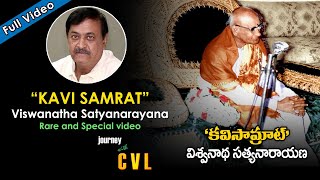
Viswanatha Satyanarayana Rare & Special Video || KAVI SAMRAT || Journey with CVL | CVL Narasimha Rao
YouTube๐ Curated Sources
๐ฑ What changed because of them
His refusal to abandon classical Telugu poetic forms preserved centuries-old literary traditions within modern Telugu literature, sparking critical debates on poetic form that influenced generations of writers. His leadership roles in institutions like Karimnagar Government College helped institutionalize Telugu literary studies. The Jnanpith Award in 1970 brought national recognition to Telugu literature, elevating its profile across India.
๐ฌ Social Buzz
๐ฆ
What are people saying about Viswanatha Satyanarayana?
Found a post from a historian, journalist or notable voice? Share it here and help tell their story. ๐ฎ๐ณ