Vainu Bappu, Astronomer
Astronomer

Vainu Bappu

· Karnataka

Co-discovered the Wilson-Bappu effect linking stellar luminosity to spectral line width.

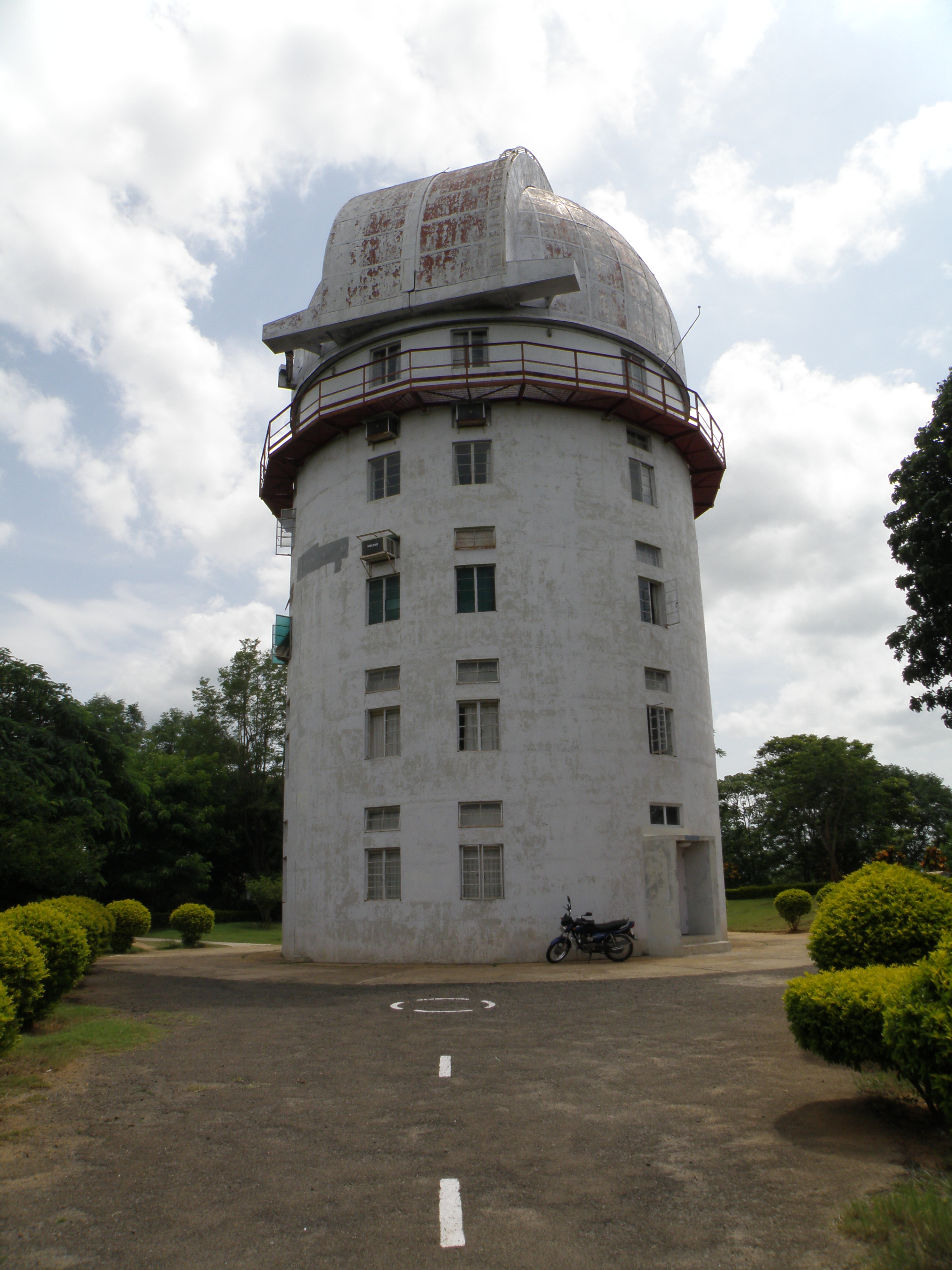
The Vainu Bappu Observatory is an astronomical observatory owned and operated by the Indian Institute of Astrophysics. It is located at Kavalur in the Javadi Hills, near Vaniyambadi in Tirupathur district, Vellore region in the Indian state of Tamil Nadu. It is 200 km south-west of Chennai and 175 km south-east of Bangalore.

✨

A detail that
surprised us

“

The Bappu-Bok-Newkirk comet discovered in 1949 is the only comet named after an Indian, discovered by a Harvard graduate student who was simultaneously reprimanded for not focusing solely on his scholarship studies.

The Story

1
🌠 On July 2, 1949, while a Harvard graduate student, Vainu Bappu exposed a photographic plate with the Jewett Schmidt telescope and discovered a comet later named Bappu-Bok-Newkirk, marking the only comet bearing an Indian name.
2
In 1957, Bappu and American astronomer Olin Chaddock Wilson identified the Wilson–Bappu effect, linking the width of Ca II emissions in stars to their brightness, opening new avenues in stellar chromosphere research.
3🌄 After returning to India, Bappu led the relocation of the Uttar Pradesh observatory to Nainital and later moved the Kodaikanal solar observatory to Kavalur, Tamil Nadu, where he founded the Vainu Bappu Observatory with its large optical telescope in 1971.
4In 1960, Bappu installed and operated the solar tunnel telescope at Kodaikanal Observatory, enhancing detailed studies of solar prominences and chromospheric phenomena, contributing to long-term solar cycle research.

🏅 Awards & Honours

—
Padma Bhushan

🔍 One thing most people don't know

“

In 1949, shortly after discovering the Bappu-Bok-Newkirk comet, Bappu was officially admonished by the Hyderabad government for diverting from his photoelectric photometry work, highlighting a rare clash between scientific discovery and administrative expectations.

📸 Through the Years

📷

No photos yet

Help preserve history — add a photo of this icon

🗓️ A Life in Moments

🕊️
Birth
Birth of Vainu Bappu
Born in Chennai to Manali Kukuzhi Bappu, an astronomer at Nizamiah Observatory, and Kallat Sunanna Bappu.
1927
⚡
Career
Discovery of Bappu-Bok-Newkirk comet
While a Harvard PhD student, Bappu discovered a comet using the Jewett Schmidt telescope, later named after him and colleagues.
1949
📚
Education
PhD completion at Harvard
Bappu completed his doctoral studies in astronomy at Harvard University.
1952
📖
Publication
Publication of Wilson–Bappu effect
Bappu and Olin C. Wilson published a paper describing a correlation between spectral line widths and stellar luminosity.
1957
⚡
Career
Headed Kodaikanal Observatory
Bappu took charge of Kodaikanal solar observatory and installed new solar instruments including the solar tunnel telescope.
1960
⚡
Career
Founding of Vainu Bappu Observatory
Established the Vainu Bappu Observatory with a large optical telescope in Kavalur, Tamil Nadu, under the Indian Institute of Astrophysics.
1971
🕊️
Death
Death of Vainu Bappu
Passed away in Munich after cardiac surgery; his ashes were immersed in the river Kaveri as per his wishes.
1982
More moments to come...
+ Add a moment

🗝️Discoveries

Swipe to uncover hidden stories
01 / 04
🏆ACHIEVEMENT

The Wilson–Bappu effect, described in 1957, correlates the width of Ca II emission lines in star spectra with their absolute magnitude, allowing astronomers to estimate stellar distances without parallax measurements.

02 / 04
🔍LESSER KNOWN

Bappu’s grandfather was a Sanskrit poet and scholar from an aristocratic Thiyya family in Tellichery, Kerala, linking the scientist to a rich cultural and literary heritage.

03 / 04
🌍HISTORICAL IMPACT

The Vainu Bappu Observatory, founded in 1971 in the Javadi Hills, Tamil Nadu, houses one of India’s largest optical telescopes, a project Bappu led to establish indigenous astronomical research facilities.

No quote recorded for Vainu Bappu yet.

🌱 What changed because of them

Vainu Bappu established key astronomical infrastructure in India, including relocating observatories to Nainital and Kavalur, and founding the Vainu Bappu Observatory, which became central to Indian astrophysics. His work on the Wilson–Bappu effect provided a new method for measuring stellar distances and luminosities, influencing global stellar research. These institutions and discoveries paved the way for India’s modern astronomical research capabilities.

💬 Social Buzz

💬

What are people saying about Vainu Bappu?

Share posts from historians, journalists and notable voices about this icon. 🇮🇳

💭 Memories & Tributes

Share your memory of Vainu Bappu...
Loading memories...
Is this profile accurate?