V. S. Ramachandran
Born 10 August 1951 · Tamil Nadu
Invented the mirror box to treat phantom limb pain in amputees.
🔔 Add birthday reminderVilayanur Subramanian Ramachandran is an Indian-American neuroscientist. He is known for his experiments and theories in behavioral neurology, including the invention of the mirror box. Ramachandran is a distinguished professor in UCSD's Department of Psychology, where he is the director of the Center for Brain and Cognition.
✨ A detail that surprised us
Ramachandran’s mirror box therapy, devised in 1990, uses a simple box and mirror to alleviate phantom limb pain affecting 90% of amputees, a major clinical challenge.
1. In 1978, Ramachandran earned his PhD at Trinity College, Cambridge, focusing on experimental neuroscience that later shaped his behavioral neurology studies.
2. 🌟 In 1990, Ramachandran introduced the mirror box therapy, a device that tricked the brain to reduce excruciating phantom limb pain in amputees, transforming clinical approaches worldwide.
3. Between 2000 and 2006, he collaborated on the "Broken Mirrors" theory, linking autism spectrum disorders to mirror neuron dysfunction, pioneering EEG studies showing abnormal Mu wave suppression in autistic children.
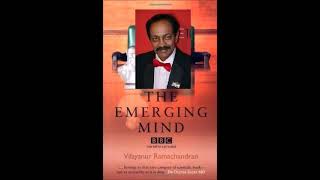
4. His 1998 book, "Phantoms in the Brain," detailed bizarre neurological conditions like Capgras syndrome and synesthesia, blending clinical cases with neuroscience insights that challenged brain-mind assumptions.
5. In 1983, Ramachandran began as assistant professor at UC San Diego, advancing to distinguished professor by 1988 and directing the Center for Brain and Cognition, fostering interdisciplinary research on brain plasticity.
6. 🌍 Born in Tamil Nadu in 1951, Ramachandran’s lineage includes Alladi Krishnaswamy Iyer, a framer of India’s constitution, while his father’s diplomatic career gave him a global upbringing influencing his scientific worldview.
7. Since 2019, Ramachandran has also held a professorship in UCSD's Medical School Neurosciences program and adjunct role at the Salk Institute, bridging psychology and medical neuroscience.
❓ How might Ramachandran’s mirror therapy and theories on brain plasticity reshape treatments for neurological disorders still considered untreatable?
Awards & Honours
- 🏅Henry Dale Prize
🔍 One thing most people don't know
In 1991, Ramachandran demonstrated that neurons in the sensory cortex can adapt by studying phantom limb phenomena, revealing brain plasticity in adult humans.
🖼️ Through the Years
📅 The Journey
🗝️ Discoveries
"There is no more reason to believe that any human brain will be immortal than there is to think that one of my phonographic cylinders will be immortal…"
— V. S. Ramachandran
🎥 Speeches & Recordings
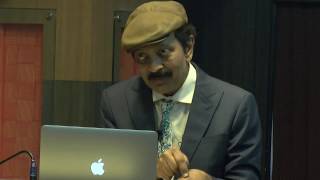
Illusions, delusions and the brain. A Ramachandran lecture on body image and mind body interactions.
YouTube📖 Curated Sources
🌱 What changed because of them
Ramachandran’s invention of mirror therapy revolutionized treatment for phantom limb pain and stroke rehabilitation, adopted globally in neurology clinics. His "Broken Mirrors" theory sparked new autism research directions, influencing diagnostic and therapeutic strategies. At UCSD, his interdisciplinary Center for Brain and Cognition fostered collaborations that propelled behavioral neurology into new experimental realms.
💬 Social Buzz
🐦
What are people saying about V. S. Ramachandran?
Found a post from a historian, journalist or notable voice? Share it here and help tell their story. 🇮🇳