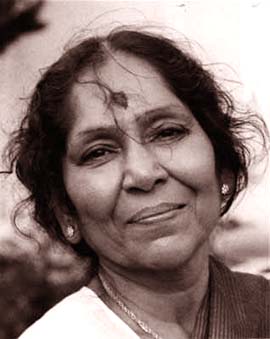
T. Balasaraswati, Dancer
Dancer

T. Balasaraswati

Born 13 May 1918 · Tamil Nadu

Died 9 February 1984

Popularized Bharatanatyam globally through her performances and teaching in the 20th century.

🔔 Add birthday reminder

Tanjore Balasaraswati, also known as Balasaraswati, was an Indian dancer, and her rendering of Bharatanatyam, a classical dance style originated in the South Indian state of Tamil Nadu, made this style of dancing well known in different parts of India and many parts of the world.

✨ A detail that surprised us

Balasaraswati is the only Bharatanatyam dancer to receive the Sangeetha Kalanidhi award from the Madras Music Academy, a prize normally reserved exclusively for musicians.

1. In 1925, at only seven years old, T. Balasaraswati gave her arangetram (debut performance) at a shrine to goddess Devi in Kanchipuram, stunning the audience with her precise rhythmic movements and emotive abhinaya.

2. 🌍 In 1934, she took Bharatanatyam beyond South India with her first performance in Calcutta, marking the beginning of her efforts to present this temple art form on wider Indian and global stages.

3. Under the tutelage of K. Kandappan Pillai from the prestigious Thanjavur Nattuvanar family, her dance fused with the musical lineage of her grandmother Veenai Dhanammal, blending rigorous nattuvangam with Carnatic melodies.

4. 🎥 In 1976, acclaimed filmmaker Satyajit Ray made the documentary Bala, capturing her artistry on film, a rare visual record since she was seldom filmed despite decades of performances.

5. 🏆 Awarded the Padma Bhushan in 1957 and the Padma Vibhushan in 1977, she also received the Sangeetha Kalanidhi in 1973, a rare honor for a dancer typically reserved for musicians, underscoring her dual mastery.

6. Her family’s legacy spans centuries: her ancestor Papammal was a mid-18th century Thanjavur court dancer, and her grandson Aniruddha Knight continues performing and teaching her traditional style in India and the US.

7. ❓ How did Balasaraswati maintain the devadasi tradition’s sacred essence in Bharatanatyam while navigating the social stigma and changing cultural landscape of post-independence India?

Awards & Honours

  • 🏅Padma Bhushan · 1957
  • 🏅Padma Vibhushan · 1977

🔍 One thing most people don't know

In 1973, Balasaraswati was awarded the Sangeetha Kalanidhi by the Madras Music Academy, an honor almost exclusively given to musicians, highlighting her exceptional musicality as a dancer.

🖼️ Through the Years

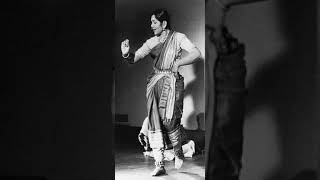
T. Balasaraswati
Balasaraswati with Gauri Ammal

📅 The Journey

← Drag to explore →
🕊️

Birth in Madras

Tanjore Balasaraswati was born into a devadasi family with deep roots in Thanjavur's musical and dance traditions.

Wikipedia

Arangetram at Kanchipuram

At age seven, Balasaraswati gave her debut Bharatanatyam performance at a Devi shrine, initiating her public artistic career.

First performance outside South India

Balasaraswati performed in Calcutta, introducing her traditional Bharatanatyam style to a broader Indian audience.

🏅

Sangeet Natak Akademi Award

She received India's prestigious national award for performing arts, recognizing her mastery in Bharatanatyam.

🏅

Padma Bhushan Award

The Government of India honored Balasaraswati with the Padma Bhushan for her contributions to the arts.

🏅

Sangeetha Kalanidhi Award

Balasaraswati was awarded the Sangeetha Kalanidhi by the Madras Music Academy, an unusual honor for a dancer.

🌟

Documentary by Satyajit Ray

Ray directed Bala, a short film documenting her dance, providing rare footage of her performances.

🏅

Padma Vibhushan Award

Balasaraswati received the Padma Vibhushan, India’s second highest civilian award, acknowledging her artistic legacy.

🕊️

Death in Madras

Balasaraswati passed away in Madras, leaving behind a rich heritage of Bharatanatyam performance and pedagogy.

+Add a moment
1918Birth
1925
1934
1955
1957
1973
1976
1977
1984

🗝️ Discoveries

🌏

Her grandmother, Veenai Dhanammal (1867–1938), was considered one of the most influential musicians of her time, embedding a deep musical tradition into Balasaraswati’s dance from infancy.

Source: Wikipedia

🔍

Despite decades of performance, Balasaraswati was rarely filmed; the 1976 documentary by Satyajit Ray, Bala, remains one of the few cinematic tributes to her art.

Source: Britannica

👤

Her debut public Bharatanatyam performance took place at a shrine dedicated to goddess Devi in Kanchipuram when she was just seven years old, in 1925.

Source: Britannica

👤

Balasaraswati’s brothers, T. Ranganathan and T. Viswanathan, became prominent Carnatic musicians, complementing her dance with familial musical support in performances.

Source: Wikipedia

🌏

Her grandson Aniruddha Knight continues to teach and perform her Bharatanatyam style internationally, sustaining a living tradition over 300 years old.

Source: Wikipedia

🎥 Speeches & Recordings

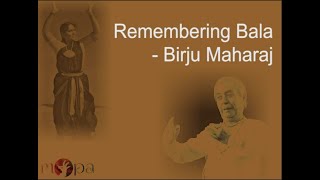
"Balasaraswati - Her Life & Art" - Review

Discover the legacy of Balasaraswati, a legendary dancer and musician who shaped the future of Bharatanatyam.

YouTube

Bala (1976) - Satyajit Ray Documentary on T. Balasaraswati

Explore the artistry of T. Balasaraswati through this rare 1976 documentary by Satyajit Ray showcasing her Bharatanatyam mastery.

YouTube

📖 Curated Sources

🌱 What changed because of them

Balasaraswati revived and preserved the devadasi tradition's authentic Bharatanatyam style, influencing institutions like the Madras Music Academy and inspiring international performers and scholars. Her lineage continues through her family and disciples who maintain her unique blend of dance and Carnatic music, ensuring this cultural heritage thrives globally. The 1976 Satyajit Ray documentary further cemented her place in the visual history of Indian classical arts.

💬 Social Buzz

🐦

What are people saying about T. Balasaraswati?

Found a post from a historian, journalist or notable voice? Share it here and help tell their story. 🇮🇳

💭 Memories & Tributes

Share your memory of T. Balasaraswati...
Loading memories...
Is this profile accurate?