SH
Sculptor and Printmaker

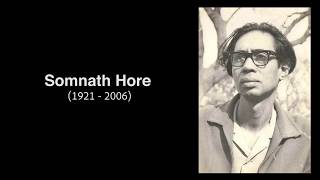
Somnath Hore

Born 1 January 1921 · Bangladesh — Died 1 January 2006

Created powerful sculptures and prints depicting the Bengal Famine of 1943 and Tebhaga movement.

Somnath Hore (1921–2006) was an Indian sculptor and printmaker. His sketches, sculptures and prints were a reaction to major historical crises and events of 20th century Bengal, such as the Bengal Famine of 1943 and the Tebhaga movement. He was a recipient of the Indian civilian honour of the Padma Bhushan.

✨

A detail that
surprised us

“

Somnath Hore’s largest known sculpture, Mother and Child, created as a tribute to Vietnam’s suffering, was stolen from Kala Bhavan soon after its completion and has never been recovered.

The Story

1
🎨 In 1943, Somnath Hore documented the Bengal famine through sketches and reports for the Communist Party’s magazine Jannayuddha, capturing the brutal human suffering in real time in Bengal.
2
In 1946, Hore closely followed the Tebhaga movement, a peasant uprising in Bengal, translating its turmoil and hope into graphic woodcut prints and drawings that merged art with political activism.
3🖼️ By 1958, Hore was appointed head of the Printmaking Department at Delhi Polytechnic, where he pioneered new printmaking techniques including his signature pulp-print method used in the acclaimed Wounds series.
4In 1968, Hore took charge of the Graphics and Printmaking Department at Kala Bhavan, Santiniketan, working alongside influential artists like Ramkinkar Baij and K.G. Subramanyan, which deepened his artistic experimentation.

🏅 Awards & Honours

—
Padma Bhushan

🔍 One thing most people don't know

“

In 1949, when the Indian government banned the Communist Party, Hore went underground despite being close to graduation, reflecting the intense political climate shaping his early artistic work.

📸 Through the Years

📷

No photos yet

Help preserve history — add a photo of this icon

🗓️ A Life in Moments

🕊️
Birth
Birth in Chittagong
Somnath Hore was born in Barama village, Chittagong, now in Bangladesh, beginning his life in a region soon to be scarred by famine and political unrest.
1921
⚡
Career
Documented Bengal Famine
Hore created visual reports of the Bengal famine for the Communist Party’s magazine Jannayuddha, marking his entrance as a politically engaged artist.
1943
⚡
Career
Tebhaga Movement Artwork
Following the Tebhaga peasant uprising, Hore produced woodcut prints and sketches documenting the struggle of sharecroppers in Bengal.
1946
⚡
Career
Led Printmaking at Delhi Polytechnic
Hore was appointed in charge of the Graphic section at Delhi Polytechnic, where he developed innovative printmaking techniques.
1958
⚡
Career
Headed Kala Bhavan Printmaking
Hore took over the Graphics and Printmaking Department at Kala Bhavan, Santiniketan, influencing many artists and integrating sculpture into his practice.
1968
⚡
Career
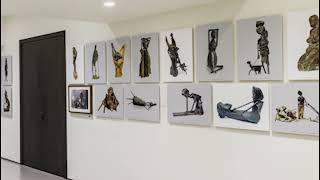
Created Iconic Bronze Sculptures
Hore began making contorted bronze figurines symbolizing famine and war, including the Mother and Child sculpture tribute to Vietnam.
1970
🕊️
Death
Death at Age 85
Somnath Hore passed away in 2006, leaving behind a legacy enshrined in Indian printmaking and sculpture collections like the National Gallery of Modern Art.
2006
More moments to come...
+ Add a moment

🗝️Discoveries

Swipe to uncover hidden stories
01 / 04
🏆ACHIEVEMENT

Hore developed the pulp-print technique, a unique printmaking process that uses paper pulp to create textured impressions, first employed in his Wounds series, which remains a landmark in Indian graphic arts.

Wikipedia
02 / 04
💡SURPRISING

His artistic training included tutelage under Haren Das at the Government College of Art and Craft in Calcutta, connecting Hore to a lineage of printmakers deeply engaged with social themes.

Wikipedia
03 / 04
🌍HISTORICAL IMPACT

In the 1940s, Hore’s early drawings for the Communist Party’s publications fused art and political propaganda, using linocuts and woodcuts to visually chronicle the Tebhaga movement and famine.

No quote recorded for Somnath Hore yet.

🎙️ Speeches & Recordings

These recordings preserve the legacy of Bharat's icons
Somnath Hore - A Sculptor Devoted to Humanity | AstaGuru | Modern Indian Art
More from this archive
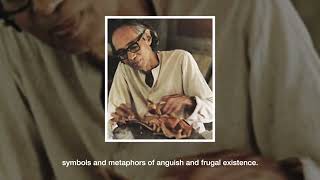
Somnath Hore - A Sculptor Devoted to Humanity | AstaGuru | Modern Indian Art
01
Somnath Hore - A Sculptor Devoted to Humanity | AstaGuru | Modern Indian Art
Somnath Hore (1921-2006)
02
Somnath Hore (1921-2006)
Somnath Hore: A Centenary Exhibition Curated by K.S. Radhakrishnan | 19th June – 24th July, 2022
03
Somnath Hore: A Centenary Exhibition Curated by K.S. Radhakrishnan | 19th June – 24th July, 2022

🌱 What changed because of them

Somnath Hore redefined Indian printmaking by inventing new techniques that conveyed raw human suffering, influencing generations of artists at institutions like Kala Bhavan and Delhi Polytechnic. His visual documentation of political upheavals like the Bengal famine and Tebhaga movement preserved critical historical moments in public memory through art. Posthumously, his works continue to challenge and inspire discourse around art’s role in socio-political activism.

💬 Social Buzz

💬

What are people saying about Somnath Hore?

Share posts from historians, journalists and notable voices about this icon. 🇮🇳

💭 Memories & Tributes

Share your memory of Somnath Hore...
Loading memories...
Is this profile accurate?