SM
Theatre Actor and Director

Sombhu Mitra

Born 14 November 1915 · West Bengal

Died 19 May 1997

Founded the Bohurupee theatre group in Kolkata in 1948, revolutionizing Bengali theatre.

🔔 Add birthday reminder

Sombhu Mitra was an Indian film and stage actor, director, playwright, reciter and an Indian theatre personality, known especially for his involvement in Bengali theatre, where he is considered a pioneer. He remained associated with the Indian People's Theatre Association (IPTA) for a few years before founding the Bohurupee theatre group in Kolkata in 1948. He is most noted for films like Dharti Ke Lal (1946), Jagte Raho (1956), and his production of Rakta Karabi based on Rabindranath Tagore's play in 1954 and Chand Baniker Pala, his most noted play as a playwright.

✨ A detail that surprised us

In 1944, Nabanna, co-directed by Sombhu Mitra, was among the first Indian plays to graphically portray the Bengal famine, performed under the banner of IPTA to raise awareness.

1. 🎭 In 1939, Sombhu Mitra made his debut on the Rangmahal Theatre stage in North Kolkata, beginning a career that would redefine Bengali theatre.

2. 🌟 In 1944, Mitra co-directed the play Nabanna for the Indian People's Theatre Association (IPTA), breaking theatrical conventions with its raw portrayal of Bengal's famine.

3. In 1948, he founded the Bohurupee theatre group in Kolkata, catalyzing the group-theatre movement that challenged commercial theatre norms in West Bengal.

4. In December 1950, Bohurupee premiered three plays at New Empire theatre, including Mitra's original Ulukhagra, showcasing his emerging directorial voice.

5. 🎬 His 1946 film Dharti Ke Lal stands out as one of the earliest Indian films to depict the Bengal famine, linking his stage activism to cinema.

6. In 1954, his production of Rabindranath Tagore’s Rakta Karabi became a landmark, bringing Tagore’s revolutionary themes alive on stage through innovative direction.

7. 🏆 Mitra received the Padma Bhushan in 1970 and the Ramon Magsaysay Award in 1976, recognizing his influence beyond Bengali theatre into Indian cultural history.

8. ❓ How did Sombhu Mitra’s collaborations with his wife Tripti Mitra and the Bohurupee group reshape perceptions of theatre as a tool for social change in post-independence India?

Awards & Honours

  • 🏅Padma Bhushan

🔍 One thing most people don't know

In 1944, the play Nabanna, co-directed by Sombhu Mitra, broke theatrical conventions by realistically depicting the Bengal famine and was staged by IPTA as a form of political activism.

🖼️ Through the Years

📷 No photos yet

📅 The Journey

← Drag to explore →
🕊️

Birth in Calcutta

Sombhu Mitra was born on August 22, 1915, in Calcutta, the sixth child in his family.

Wikipedia

Stage debut at Rangmahal Theatre

He made his first appearance on the Bengali theatre stage at Rangmahal Theatre in North Kolkata.

Co-directed Nabanna with IPTA

Co-directed Nabanna, a groundbreaking play on the Bengal famine, staged by Indian People's Theatre Association.

Acted in Dharti Ke Lal

Featured in Dharti Ke Lal, a film portraying social issues including famine.

Founded Bohurupee theatre group

Established Bohurupee in Kolkata, initiating the group-theatre movement in West Bengal.

Staged Rakta Karabi

Directed Bohurupee’s production of Tagore’s Rakta Karabi, enhancing modern Bengali theatre.

🏅

Awarded Padma Bhushan

Received India's third highest civilian award for contributions to theatre.

🏅

Received Ramon Magsaysay Award

Honored with the Ramon Magsaysay Award recognizing his cultural work.

🕊️

Death

Sombhu Mitra passed away on May 19, 1997.

+Add a moment
1915Birth
1939
1944
1946
1948
1954
1970
1976
1997

🗝️ Discoveries

🏆

Bohurupee’s 1954 production of Rakta Karabi, directed by Mitra, blended Tagore’s poetry with modern stagecraft, introducing innovative theatrical techniques uncommon in Bengali theatre at the time.

Source: Wikipedia

🔍

Sombhu Mitra’s first stage appearance was in 1939 at Rangmahal Theatre, a venue that was pivotal for Kolkata’s theatre scene but is lesser known today.

Source: Wikipedia

👤

He and his wife Tripti Mitra formed a powerhouse duo in Bengali theatre, with their daughter Shaoli also becoming a noted theatre personality, continuing the legacy.

Source: Wikipedia

🌏

Sombhu Mitra acted in Dharti Ke Lal (1946), one of the earliest Indian films to depict social realities like famine and poverty, linking his theatre activism to cinema.

Source: Wikipedia

🎥 Speeches & Recordings

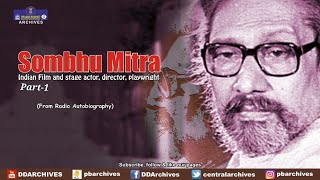
Sombhu Mitra | Indian Film & Theatre Personality | Radio Autobiography | Part 1

Explore the life and legacy of Sombhu Mitra through his own words in this rare radio autobiography from AIR Archives.

YouTube

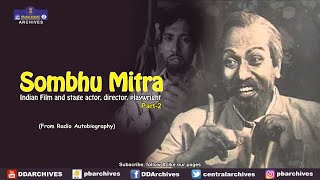
Sombhu Mitra | Indian Film & Theatre Personality | Radio Autobiography | Part 2

Continue the journey into Sombhu Mitra's impactful career in Indian theatre and film with this insightful radio autobiography.

YouTube

📖 Curated Sources

🌱 What changed because of them

Sombhu Mitra’s founding of Bohurupee in 1948 initiated the group-theatre movement in West Bengal, steering Bengali theatre away from commercial melodrama towards socially relevant narratives. His adaptations of global classics and Tagore’s works expanded theatrical language and themes, influencing generations of actors and directors. The awards he received amplified the status of theatre as a serious cultural and political medium in India.

💬 Social Buzz

🐦

What are people saying about Sombhu Mitra?

Found a post from a historian, journalist or notable voice? Share it here and help tell their story. 🇮🇳

💭 Memories & Tributes

Share your memory of Sombhu Mitra...
Loading memories...
Is this profile accurate?