Sidney Dillon Ripley, Ornithologist and Conservationist
Ornithologist and Conservationist

Sidney Dillon Ripley

Born 6 February 1913 · United States — Died 12 March 2001

Led the Smithsonian Institution's expansion as secretary from 1964 to 1984.

Sidney Dillon Ripley II was an American ornithologist and wildlife conservationist. He served as secretary of the Smithsonian Institution for 20 years, from 1964 to 1984, leading the institution through its period of greatest growth and expansion. For his leadership at the Smithsonian, he was awarded the Presidential Medal of Freedom by Ronald Reagan in 1985.

✨

A detail that
surprised us

“

In 1943, while serving as a World War II intelligence officer in India, Ripley conducted genuine birding expeditions simultaneously with his espionage duties.

The Story

1. 🦅 In 1913, Sidney Dillon Ripley was born into a wealthy New York family with ties to the Union Pacific Railroad, setting the stage for a life intertwined with legacy and exploration. 2. At age 13 in 1926, Ripley's journey through India—including a walking tour of Ladakh and falcon flights in Kashmir—ignited his lifelong fascination with Indian birds. 3. 📚 By 1943, Ripley had earned a PhD in Zoology from Harvard while working at the US Museum of Natural History and soon joined WWII intelligence operations in India and Southeast Asia, blending science with espionage. 4. In 1937-39, Ripley took part in expeditions to New Guinea and Sumatra, describing his first new bird species and deepening his field expertise before his wartime service. 5. 🌍 From 1964 to 1984, as Secretary of the Smithsonian Institution, Ripley expanded its reach to include new museums, research stations worldwide, and launched the Folklife Festival on the National Mall. 6. 📖 Between 1964 and 1974, Ripley co-authored a 10-volume handbook on Indian birds, a landmark in taxonomy that remains a key reference for scientists and birdwatchers alike. 7. Ripley played a key role in drafting the Endangered Species Preservation Act and worked closely with Indian ornithologist Sálim Ali to advance conservation efforts across the subcontinent. 8. ❓ How did Ripley’s dual roles as a wartime intelligence officer and passionate ornithologist uniquely position him to influence both global science and policy during the Cold War era?

🏅 Awards & Honours

—
National Medal of Science

🔍 One thing most people don't know
“

During World War II, Ripley worked for the Office of Strategic Services in India, Thailand, and Ceylon, where he was officially an ornithologist but covertly gathered intelligence for the U.S. government.

🖼️

Through the Years

6 photographs from the archives
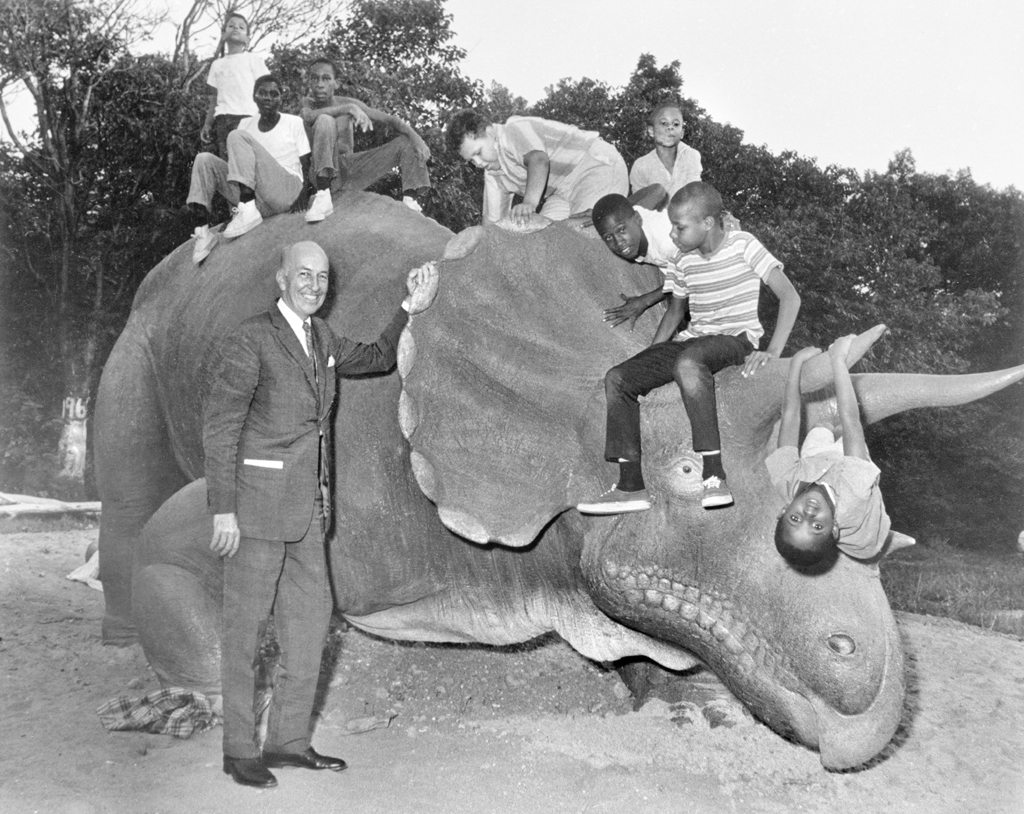
Sidney Dillon Ripley at the opening of the Anacostia Neighborhood Museum with Uncle Beazley dinosaur (1967).
1967
Sidney Dillon Ripley with his wife Mary Livingston Ripley and Salim Ali during a research trip in India (1976).
Sidney Dillon Ripley with First Lady Betty Ford and designer Frankie Welch at Smithsonian gown presentation (1976).
Sidney Dillon Ripley sitting on a roof overlooking the Smithsonian Quadrangle (1987).
Sidney Dillon Ripley at the groundbreaking ceremony for the Smithsonian Quadrangle Complex (1983).

🗓️ A Life in Moments

🕊️
Birth
Born in New York City
Sidney Dillon Ripley II was born into a wealthy family connected to the Union Pacific Railroad legacy.
1913
🌟
Other
Exploration in India at age 13
Ripley traveled extensively in India and Kashmir, including a walking tour to Ladakh and Tibet, sparking his passion for Indian birds.
1926
📚
Education
Graduated Yale University
Completed Bachelor of Arts at Yale and committed to ornithology over law.
1936
⚡
Career
New Guinea Expedition
Participated in the Denison-Crockett Expedition to New Guinea, marking the start of his scientific fieldwork.
1937
📚
Education
PhD from Harvard & OSS service
Earned a PhD in Zoology and served as an intelligence officer in India and Southeast Asia during WWII.
1943
⚡
Career
Became Smithsonian Secretary
Started 20-year tenure expanding the Smithsonian's museums, research, and public programs.
1964
🏅
Award
Received Presidential Medal of Freedom
Awarded by President Ronald Reagan for leadership at the Smithsonian Institution.
1985
🕊️
Death
Death
Sidney Dillon Ripley passed away, leaving a lasting imprint on conservation and museum leadership.
2001
More moments to come...
+ Add a moment

🗝️Discoveries

Swipe to uncover hidden stories
01 / 04
🏆ACHIEVEMENT

Ripley’s 10-volume handbook on the birds of India took ten years to complete (1964–1974) and is still a definitive scientific resource over 40 years later.

02 / 04
👤PERSONAL

At just 13 years old, Ripley undertook a walking tour into Ladakh and western Tibet in 1926, an unusual and remote journey for a boy of his age and status.

03 / 04
🌍HISTORICAL IMPACT

Ripley’s great-grandfather, Sidney Dillon, drove the ceremonial last spike of the first U.S. transcontinental railroad in 1869, linking Ripley’s family history to monumental American infrastructure.

No quote recorded for Sidney Dillon Ripley yet.

🌱 What changed because of them

Sidney Dillon Ripley transformed the Smithsonian Institution, expanding its museums and research footprint globally and fostering public engagement through initiatives like the Folklife Festival. His scientific partnership with Sálim Ali and his input on U.S. conservation laws helped establish enduring frameworks for protecting endangered species and advancing ornithological research, especially in the Indian subcontinent.

💬 Social Buzz

💬

What are people saying about Sidney Dillon Ripley?

Share posts from historians, journalists and notable voices about this icon. 🇮🇳

💭 Memories & Tributes

Share your memory of Sidney Dillon Ripley...
Loading memories...
Is this profile accurate?