Shyam Saran, Diplomat
Diplomat

Shyam Saran

Born 4 September 1946 · verify

Negotiated the Indo-US Civil Nuclear Agreement as Prime Minister's Special Envoy.

🔔 Add birthday reminder

Shyam Saran is an Indian career diplomat. He joined the Indian Foreign Service in 1970 and rose to become the Foreign Secretary to the Government of India from 2004 to 2006. Prior to his appointment as the Foreign Secretary he served as India's ambassador to Myanmar, Indonesia and Nepal and as its High Commissioner to Mauritius. Upon retiring as the Foreign Secretary, he was appointed the Prime Minister's Special Envoy for Indo-US Civil Nuclear Issues and later as Special Envoy and Chief Negotiator on Climate Change.

✨ A detail that surprised us

In April 2006, Shyam Saran publicly stated that India had no obligation to define its minimum credible nuclear deterrent, a rare official stance amid global nuclear disarmament pressures.

1. 🌏 In 1970, Shyam Saran entered the Indian Foreign Service and later served in diplomatic missions across Beijing, Tokyo, and Geneva, navigating Cold War tensions firsthand.

2. Between 2004 and 2006, he was India’s Foreign Secretary, during which he led the delegation in the 15th India-China Joint Working Group on the boundary issue in Beijing in March 2005.

3. 🇮🇳 As Joint Secretary in the Prime Minister's Office in 1991-92, Saran advised on nuclear and defense policies during a period when India faced significant geopolitical shifts post-Cold War.

4. He served as ambassador to Myanmar, Indonesia, and Nepal, and High Commissioner to Mauritius, managing complex regional relationships especially with Nepal amid its political changes under King Mahendra.

5. 💥 Post-retirement in 2006, he became the Prime Minister’s Special Envoy for the Indo-US Civil Nuclear deal, helping negotiate a pact that redefined India’s global nuclear posture.

6. From 2009 onwards, he acted as Special Envoy and Chief Negotiator on Climate Change, representing India at global forums while balancing development and environmental concerns.

7. 🛡️ Until 2015, he chaired the National Security Advisory Board, influencing India’s security discourse in an era of shifting alliances and emerging threats.

8. ❓ How did Saran’s deep engagement with China and nuclear diplomacy shape India's strategic autonomy in the 21st century?

Awards & Honours

  • 🏅

🔍 One thing most people don't know

In 1991-92, Shyam Saran served as Joint Secretary in the Prime Minister’s Office, uniquely positioned to advise on nuclear and defense policy during India’s economic reforms.

🖼️ Through the Years

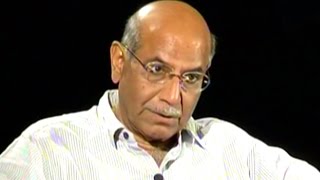
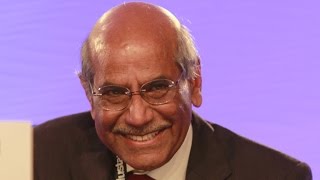
Shyam Saran portrait photograph clearly showing his face (2018)
2018
Shyam Saran signing the Cultural Exchange Programme with Bangladesh in Dhaka (2005)
2005
Shyam Saran receiving the Padma Bhushan Award from President Pratibha Patil in New Delhi (2011)
2011
Shyam Saran addressing the Symposium on India Independent in New Delhi (2010)
2010
Shyam Saran with Ambassador Nicholas Burns in 2023
2023

📅 The Journey

← Drag to explore →
🕊️

Birth of Shyam Saran

Shyam Saran was born on September 4, 1946.

Wikipedia

🕊️

Birth of Shyam Saran

Born on 4 September 1946; state of birth is verify.

Joined Indian Foreign Service

Shyam Saran began his diplomatic career by joining the Indian Foreign Service.

Joins Indian Foreign Service

Shyam Saran joined the Indian Foreign Service, starting his diplomatic career with postings in Beijing, Tokyo, and Geneva.

Advised PM on nuclear and defense policy

As Joint Secretary in the Prime Minister's Office, he advised on foreign policy, nuclear, and defense issues during 1991-92.

Joint Secretary in PMO

Advised the Prime Minister on foreign policy, nuclear and defense issues during a critical post-Cold War transition period.

Appointed Foreign Secretary

Shyam Saran took office as Foreign Secretary of India, serving until 2006.

Appointed Foreign Secretary

Became Foreign Secretary of India, overseeing key diplomatic engagements including boundary talks with China.

Visited China for Boundary Talks

In March 2005, he led India’s delegation to the 15th India-China Joint Working Group on boundary issues.

Leads India-China Boundary Talks

Visited Beijing for the 15th India-China Joint Working Group on boundary issues during his Foreign Secretaryship.

Retired as Foreign Secretary

He retired in September 2006 but continued as Special Envoy for Indo-US nuclear issues.

States India's Nuclear Policy

Declared India had no obligation to define its minimum credible nuclear deterrent in response to US suggestions.

Retires as Foreign Secretary

Chose to retire despite PMO's willingness to extend his term; appointed Special Envoy for Indo-US nuclear issues thereafter.

🏅

Awarded Padma Bhushan

Received the Padma Bhushan for contributions to civil service and diplomacy.

🏅

Awarded Padma Bhushan

Received India’s third highest civilian honor, recognizing his service in diplomacy and civil service.

Chairman, National Security Advisory Board

Served as Chairman of India’s National Security Advisory Board until 2015.

Ends NSAB Chairmanship

Concluded tenure as Chairman of the National Security Advisory Board, influencing India's security policies.

+Add a moment
1946Birth
1946
1970
1970
1991
1991
2004
2004
2005
2005
2006
2006
2006
2011
2011
2015
2015

🗝️ Discoveries

🔍

In 1991-92, as Joint Secretary in the Prime Minister's Office, Shyam Saran advised on nuclear and defense issues during India’s economic liberalization, a period critical for redefining India’s foreign policy approach.

Source: Wikipedia

🔍

He headed the East Asia Division in the Ministry of External Affairs, managing India’s relations with China and Japan before becoming Foreign Secretary.

Source: Wikipedia

💡

During his tenure as Foreign Secretary, Shyam Saran led the 15th meeting of the India-China Joint Working Group on boundary issues in March 2005 in Beijing, a key diplomatic engagement amid long-standing border tensions.

Source: Wikipedia

🏆

Even after retirement, he served as the Prime Minister’s Special Envoy for Indo-US nuclear issues, continuing to shape one of India’s most sensitive strategic partnerships.

Source: Wikipedia

👤

After retiring as Foreign Secretary in 2006, despite the PMO’s willingness to extend his tenure, Shyam Saran opted to retire and immediately took on the role of Special Envoy for the Indo-US Civil Nuclear deal.

Source: Wikipedia

🌏

In December 2012, Saran wrote about Pakistan’s nuclear arsenal expansion, noting it was aimed at deterring potential American attacks rather than India, highlighting nuanced strategic assessments.

Source: Wikipedia

💡

In December 2012, he publicly analyzed Pakistan’s nuclear arsenal growth as a deterrent against possible American attacks, not just India.

Source: Wikipedia

🔍

Shyam Saran was India’s High Commissioner to Mauritius, a post linking India’s diplomacy to a key Indian Ocean island nation with strategic importance.

Source: Wikipedia

🔍

Shyam Saran chaired the Research and Information System for Developing Countries, a think tank focusing on economic and trade issues, reflecting his expertise beyond diplomacy into economic policy studies.

Source: Wikipedia

🎥 Speeches & Recordings

Nothing but the truth: Shyam Saran says cross border terrorism is reality

Exclusive interview with Shyam Saran discussing the reality of cross-border terrorism.

YouTube

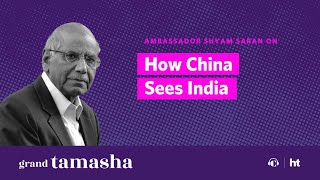
'China's territorial patterns are disturbing' - Shyam Saran | HT Leadership Summit 2013

Shyam Saran shares his insights on China's territorial strategies at the HT Leadership Summit.

YouTube

📖 Curated Sources

🌱 What changed because of them

Shyam Saran played a crucial role in shaping India’s diplomatic relations with key neighbors such as China and Nepal, especially through boundary talks and managing Nepal’s political shifts under King Mahendra. His negotiation of the Indo-US Civil Nuclear Agreement altered India’s strategic and energy landscape, enabling civilian nuclear cooperation with the US despite India not being a signatory to the NPT. Additionally, his tenure as Chairman of the National Security Advisory Board helped steer India’s security policies in a complex international environment.

💬 Social Buzz

🐦

What are people saying about Shyam Saran?

Found a post from a historian, journalist or notable voice? Share it here and help tell their story. 🇮🇳

💭 Memories & Tributes

Share your memory of Shyam Saran...
Loading memories...
Is this profile accurate?