Shivkumar Sharma
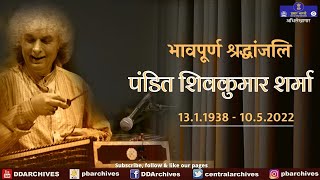
Born 13 January 1938 · Jammu and Kashmir
Died 10 May 2022
Adapting the santoor for Indian classical music and composing hit Bollywood film scores with Shiv–Hari.
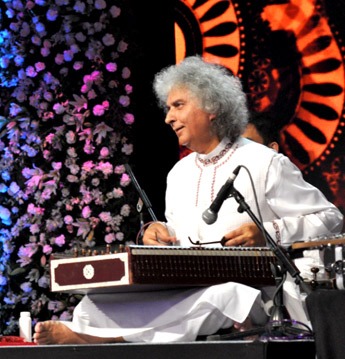
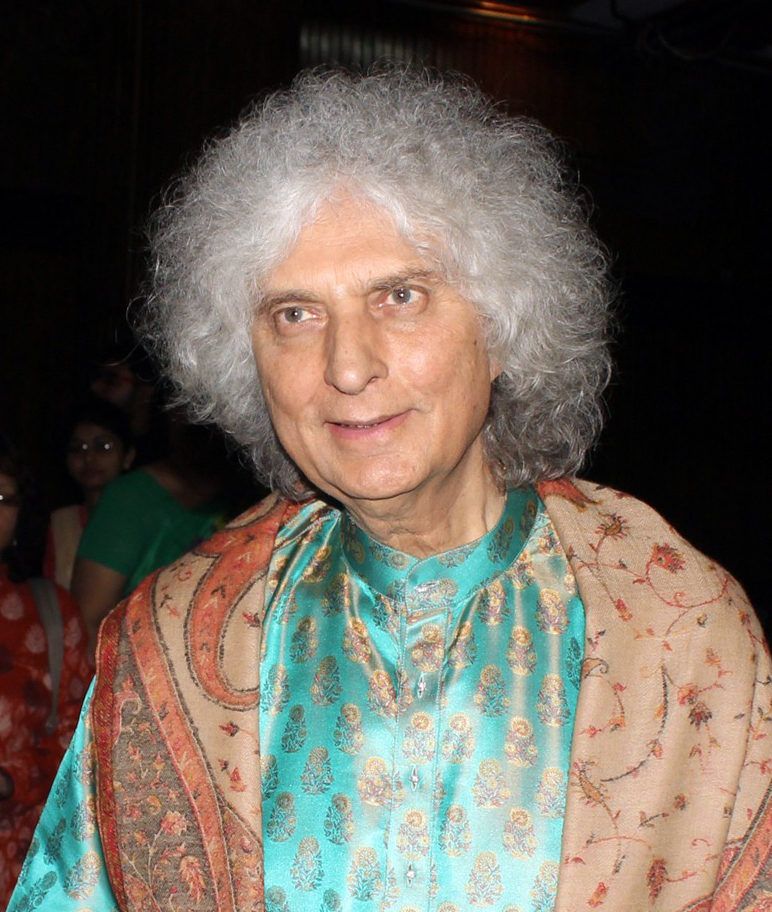
🔔 Add birthday reminderShivkumar Sharma was an Indian classical musician and santoor player who is credited with adapting the santoor for Indian classical music. As a music composer, he collaborated with Indian flautist Hariprasad Chaurasia under the collaborative name Shiv–Hari and composed music for such hit Indian films as Faasle (1985), Chandni (1989), and Lamhe (1991).
✨ A detail that surprised us
Shivkumar Sharma’s first public santoor performance in 1955 lasted a full hour with an unbroken rendition of Raga Yaman, which was unusual for introducing a folk instrument into classical music audiences.
1. In 1955, a 17-year-old Shivkumar Sharma stunned Mumbai’s classical music audience with a full-hour rendition of Raga Yaman on the santoor, leaving listeners shouting ‘Encore!’ for an instrument then unknown in classical circles.
2. 🎶 By 1967, Sharma collaborated with flautist Hariprasad Chaurasia and guitarist Brij Bhushan Kabra to produce the iconic album Call of the Valley, a work that blended traditional ragas with contemporary sounds, reshaping Indian classical music's reach.
3. In 1981, Sharma and Chaurasia began composing for Hindi cinema as the duo Shiv–Hari, debuting with Silsila and later delivering memorable soundtracks for blockbusters like Chandni (1989) and Lamhe (1991).
4. 🏆 He received the Sangeet Natak Akademi Award in 1986 and was honored with the Padma Shri in 1991 and the Padma Vibhushan in 2001, recognizing his role in evolving the santoor from a Kashmiri folk instrument to a concert staple.
5. Sharma’s father, Umadutt, introduced him to the santoor at age 13, a move that transformed the folk instrument known as Shatatantri Veena into a classical instrument through technical adaptations Sharma himself developed.
6. 🎥 Beyond concerts, Sharma’s tabla playing appeared in the 1965 film Guide’s song “Mo Se Chhal Kiye Jaaye,” revealing his versatility in both rhythm and melody within Indian film music contexts.
7. His seamless musical dialogues with his son Rahul Sharma created performances where distinguishing their individual phrases became nearly impossible, underscoring a unique familial musical synergy.
❓ How did Shivkumar Sharma’s fusion of folk roots and classical rigor redefine the sonic boundaries of Indian music for future generations?
Awards & Honours
- 🏅Padma Vibhushan
🔍 One thing most people don't know
Shivkumar Sharma played tabla on the 1965 hit song “Mo Se Chhal Kiye Jaaye” from the film Guide, at the insistence of music director S. D. Burman, highlighting his multifaceted musicianship beyond the santoor.
🖼️ Through the Years
📅 The Journey
🗝️ Discoveries
🎥 Speeches & Recordings
Pt. Shivkumar Sharma Ji talking about Pancham Da
YouTube📖 Curated Sources
🌱 What changed because of them
Shivkumar Sharma redefined the santoor’s identity, elevating it from a regional folk instrument of Kashmir to a respected voice in Indian classical music, influencing music curricula and concert repertoires across India. His collaborative albums and film scores under the Shiv–Hari banner shaped the soundscape of 1980s and 1990s Hindi cinema, inspiring a generation of musicians to explore classical instruments in popular media.
💬 Social Buzz
🐦
What are people saying about Shivkumar Sharma?
Found a post from a historian, journalist or notable voice? Share it here and help tell their story. 🇮🇳