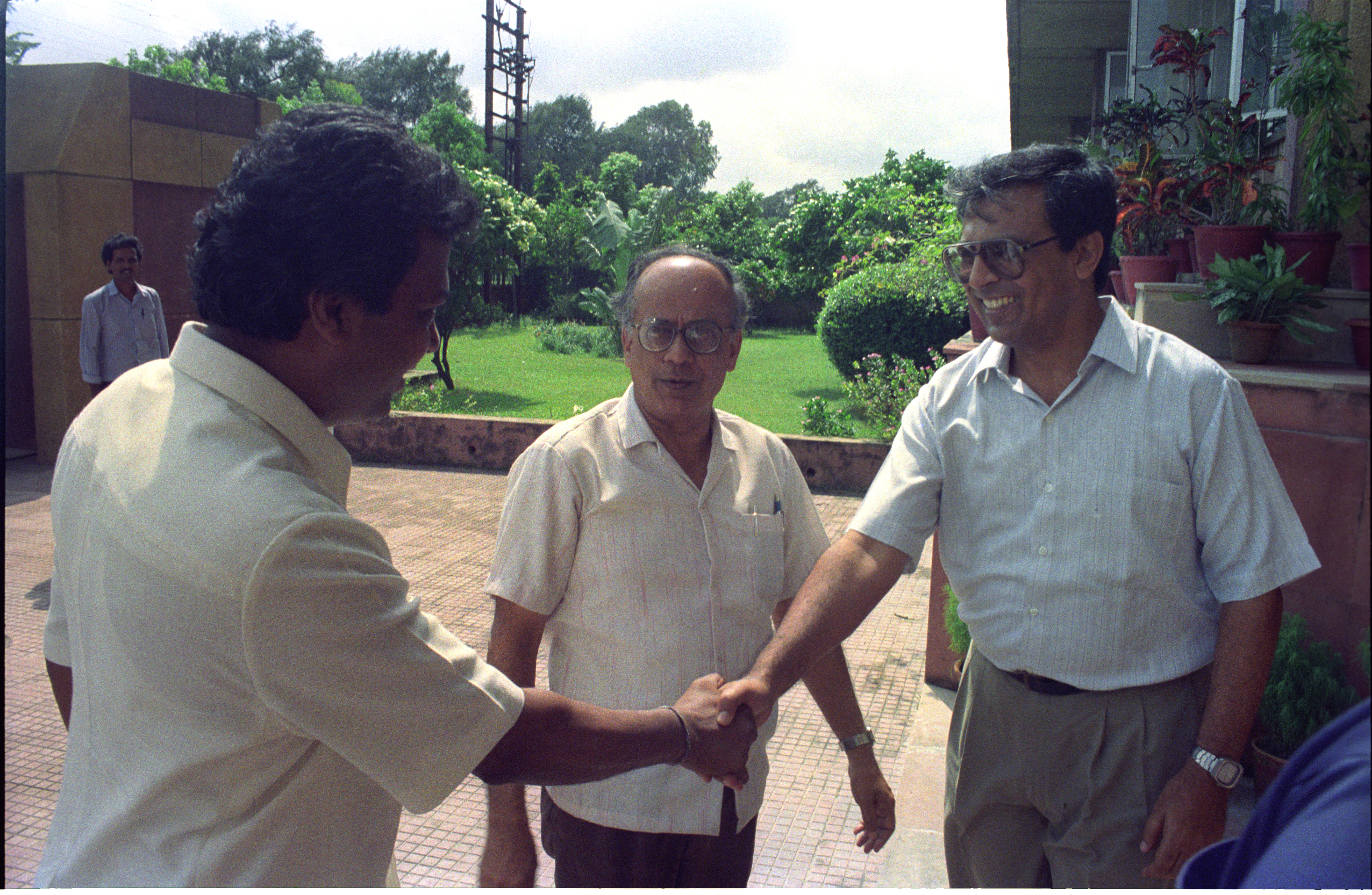
Saroj Ghose, Science Communicator and Museum Expert
Science Communicator and Museum Expert

Saroj Ghose

Born 1 September 1935 ยท West Bengal

Died 17 May 2025

Led the National Council of Science Museums as director general, expanding science museums across India.

๐Ÿ”” Add birthday reminder

Saroj Ghose was an Indian science popularizer and museum maker. He was the director of Birla Industrial & Technological Museum and director general of the National Council of Science Museums, Government of India. He was also the President of the International Council of Museums in Paris from 1992 to 1998. During his 60 years of professional experience, he received numerous national and international awards, including the Padma Bhushan and Padma Shri, the third and fourth highest civilian awards in India, respectively.

โœจ A detail that surprised us

In 1965, Saroj Ghose introduced the Museobus, a science exhibition mounted on trucks with 28 exhibit cabinets, to reach rural India with interactive science displays.

1. In 1965, Saroj Ghose launched India's first indigenously developed travelling science exhibition, the Mobile Science Museum, inaugurated by West Bengal's Chief Minister Prafulla Chandra Sen, aiming to bring science to remote areas.

2. ๐ŸŒŸ After earning a Masters in Control Engineering from Harvard in 1964, Ghose returned to India and revolutionized science museums by introducing the Museobus concept, transforming mobile science exhibitions with 28 exhibit cabinets mounted on trucks.

3. Between 1971 and 1974, Ghose researched the history of the electric telegraph in India at the Smithsonian Institution, later earning a PhD from Jadavpur University for his thesis on this subject.

4. As founding director of the National Council of Science Museums (NCSM) in 1979, Ghose led the growth of over 1,000 science museums and centers across India, shaping the country's science popularization infrastructure until his retirement in 1997.

5. ๐ŸŒ From 1992 to 1998, Ghose was President of the International Council of Museums (ICOM) in Paris, guiding global museum policies and earning an Honorary Lifetime Membership in 2016.

6. In the mid-1980s, Ghose masterminded the international travelling exhibition โ€œIndia: a Heritage of Science,โ€ which toured countries including the USA, France, and the Soviet Union, showcasing Indiaโ€™s scientific legacy on a global stage.

7. ๐Ÿ•Š๏ธ After passing away in Seattle in 2025, Ghose donated his body to the University of Washington Willed Body Program, continuing his commitment to science even in death.

8. โ“ What challenges did Ghose face in convincing a vast and diverse India to embrace science museums as tools for education and cultural transformation?

Awards & Honours

  • ๐Ÿ…

๐Ÿ” One thing most people don't know

In 1965, Ghose launched the Mobile Science Museum, the first indigenously developed travelling science exhibition in India, inaugurated by West Bengal's Chief Minister Prafulla Chandra Sen.

๐Ÿ–ผ๏ธ Through the Years

Saroj Ghose attending an international conference on museums at Indian Museum, Kolkata (2014).
2014
Saroj Ghose with Anil Shrikrishna Manekar at a museum seminar in Science City, Kolkata (2014).
2014
Saroj Ghose at the inaugural function of MSE Golden Jubilee Celebration in Science City, Kolkata (2015).
2015
Saroj Ghose with NCSM dignitaries at Mobile Science Exhibition Golden Jubilee in Kolkata (2015).
2015
Saroj Ghose present during a meeting at NCSM for Science City development in Calcutta (1994).
1994

๐Ÿ“… The Journey

โ† Drag to explore โ†’
๐Ÿ•Š๏ธ

Born in Calcutta, West Bengal

Saroj Kumar Ghose was born as an only child in Calcutta, starting his life in the cultural hub of eastern India.

โ€” Wikipedia

๐Ÿ“š

Graduated from Jadavpur University

Ghose earned a 1st Class Honours degree in Electrical Communication Engineering from Jadavpur University, Kolkata.

๐Ÿ“š

Earned Masters from Harvard University

Ghose completed his Masters in Control Engineering at Harvard, USA, before returning to India.

โšก

Launched Mobile Science Museum

Inaugurated by West Bengal Chief Minister, this innovative travelling science exhibition reached rural India.

๐Ÿ“š

PhD on Electric Telegraph in India

Ghose earned his PhD from Jadavpur University based on Smithsonian research about the electric telegraph's introduction in India.

โšก

Became Director General of NCSM

Ghose founded and led the National Council of Science Museums, expanding science centres across India.

โšก

Elected President of ICOM

Ghose became President of the International Council of Museums, serving two terms until 1998.

๐Ÿ•Š๏ธ

Passed away in Seattle, USA

Ghose died at age 89 and donated his body to medical research at the University of Washington.

+Add a moment
1935Birth
1956
1964
1965
1974
1979
1992
2025

๐Ÿ—๏ธ Discoveries

๐Ÿ†

Ghose earned a PhD in Engineering from Jadavpur University in 1974 for his thesis on the introduction and development of the electric telegraph in India, based on research at the Smithsonian Institution.

Source: Wikipedia

๐Ÿ†

Between 1992 and 1998, Ghose was President of the International Council of Museums (ICOM) in Paris, an uncommon role for an Indian museum professional at the time.

Source: Wikipedia

๐ŸŒ

In the mid-1980s, Ghose created โ€œIndia: a Heritage of Science,โ€ a mega international travelling exhibition shown in countries like the USA, France, Soviet Union, China, and Bangladesh.

Source: NCSTC press release

๐Ÿ‘ค

Ghose donated his body to the University of Washington Willed Body Program for medical research after his death in 2025, reflecting his lifetime dedication to science.

Source: Wikipedia

๐ŸŽฅ Speeches & Recordings

๐ŸŽฅ Know a speech or documentary about Saroj Ghose?

๐Ÿ“– Curated Sources

๐ŸŒฑ What changed because of them

Saroj Ghose transformed the landscape of science education in India by creating mobile and permanent science museums, making science accessible to millions, especially children in remote areas. His leadership at the National Council of Science Museums established a nationwide network of science centers that promoted scientific temper as envisioned by Jawaharlal Nehru. Internationally, his presidency at ICOM influenced museum practices worldwide, integrating Indian scientific heritage into global conversations.

๐Ÿ’ฌ Social Buzz

๐Ÿฆ

What are people saying about Saroj Ghose?

Found a post from a historian, journalist or notable voice? Share it here and help tell their story. ๐Ÿ‡ฎ๐Ÿ‡ณ

๐Ÿ’ญ Memories & Tributes

Share your memory of Saroj Ghose...
Loading memories...
Is this profile accurate?