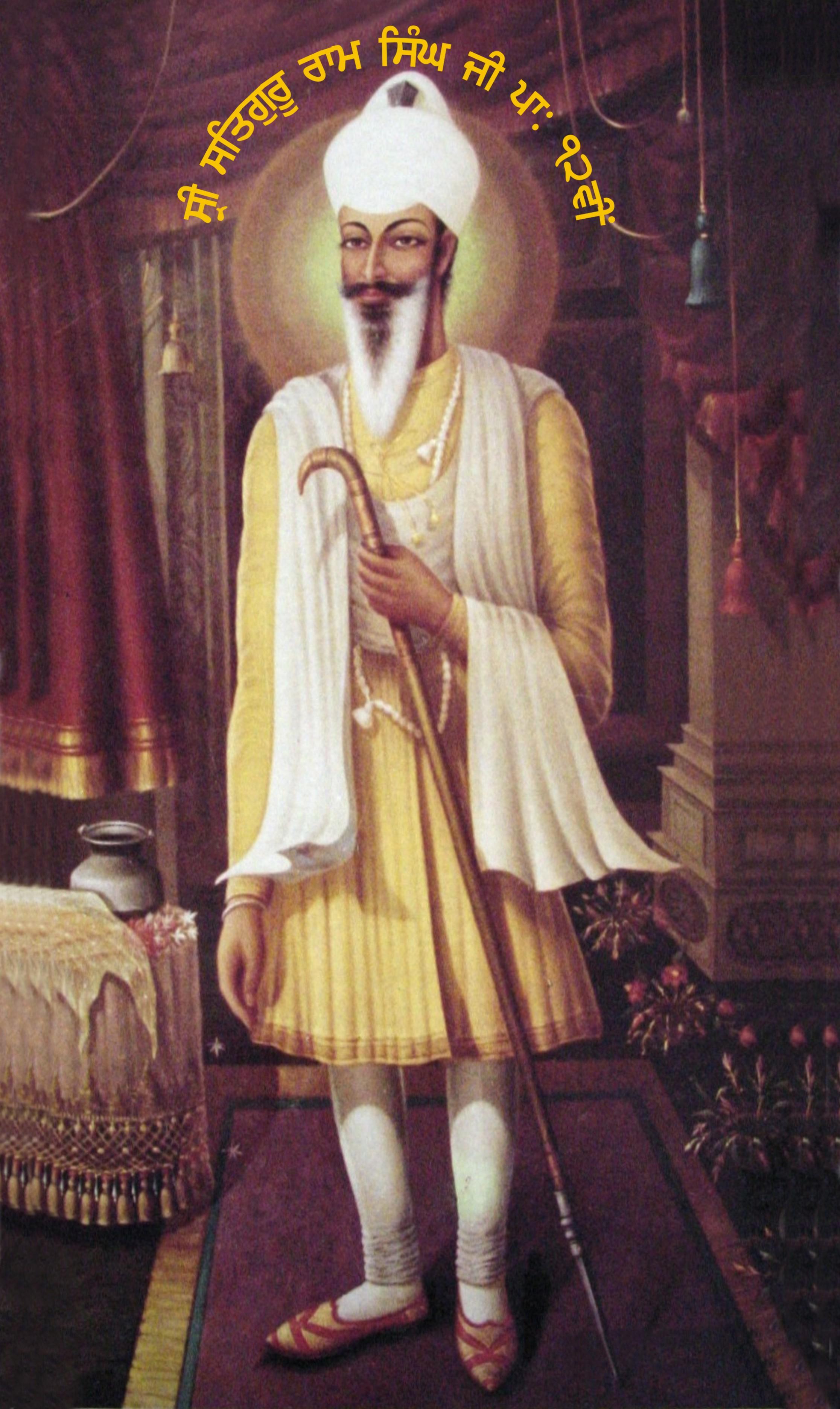
Ram Singh Kuka, Freedom Fighter
Freedom Fighter

Ram Singh Kuka

Born 3 February 1816 · verify

First Indian to use non-cooperation and boycott of British goods as political tools.

Namdhari Guru Ram Singh is known to the Namdhari sect of Sikhism as the twelfth guru, whilst for mainstream Sikhs such as Damdami Taksal and Nihangs, he is regarded as a 'Saint' and not a Guru. He is credited as being the first Indian to use non-cooperation and boycott of British goods and services as a political tool. He was exiled to Rangoon, Burma (Myanmar) by the British colonial government of India on 18 January 1872. In 2016, the Government of India officially decided to commemorate the 200th anniversary of Satguru Ram Singh.

✨

A detail that
surprised us

“

Ram Singh’s Kuka movement was known for its distinct kirtan style where followers shrieked ecstatically near the end, a practice that gave the sect its nickname 'Kuka', meaning 'scream' or 'shriek'.

The Story

1
🌾 Born on 3 February 1816 in the small farming village of Sri Bhaini Sahib near Ludhiana, Ram Singh was raised in a Tarkhan family deeply rooted in Guru Nanak’s teachings, learning Punjabi literacy early on.
2
⚔️ At age 20, Ram Singh served in the Khalsa army under Kanwar Naunihal Singh, Maharaja Ranjit Singh’s grandson, participating in the Baghel Regiment missions to Peshawar and Hazro Fort, where a pivotal meeting with Guru Balak Singh marked his spiritual succession.
3In 1857, Ram Singh founded the Namdhari or Kuka movement, promoting strict social reforms like inter-caste marriage bans, widow remarriage encouragement, and a call to reject alcohol and opium, directly challenging prevailing Sikh practices.
4🧥 The Kukas were visually distinct, wearing only handwoven white robes and unique turbans, carrying wooden staves and wool rosaries, and practicing a peculiar kirtan style involving intense shrieks called "kuka," which named the sect.

🔍 One thing most people don't know

“

Ram Singh was exiled by the British government to Rangoon (now Yangon, Myanmar) on 18 January 1872 for leading a boycott movement against British goods, marking one of the earliest uses of political exile by the colonial administration against a freedom activist.

🖼️

Through the Years

4 photographs from the archives
Letter from Namdhari Guru Ram Singh to the Sikh congregation with spiritual guidance (1872).
1872
Telegram reporting the supposed death of Ram Singh Kuka in British Burma (1885).
Portrait of Ram Singh Kuka, the second Namdhari Guru, painted by Sant Waryam Singh (2019).
Equestrian painting of Ram Singh Kuka with his appointed governors spreading Sikhism (null).

🗓️ A Life in Moments

🕊️
Birth
Birth at Sri Bhaini Sahib, Punjab
Ram Singh was born into a Tarkhan family near Ludhiana and raised with Guru Nanak’s teachings.
1816
⚡
Career
Joined Sikh Khalsa Army
At age 20, Ram Singh joined the Khalsa army under Kanwar Naunihal Singh and served in the Baghel Regiment.
1836
⚡
Career
Founded Namdhari/Kuka Movement
Ram Singh initiated the Kuka movement promoting social reforms and resistance against British rule.
1857
🌟
Other
Exiled to Rangoon by British
British authorities exiled Ram Singh to Rangoon for leading boycotts against colonial goods.
1872
🕊️
Death
Death in Exile
Ram Singh died in exile, with followers refusing to believe in his death.
1885
🌟
Other
200th Birth Anniversary Commemoration
The Indian government officially commemorated Ram Singh’s bicentenary, highlighting his legacy.
2016
More moments to come...
+ Add a moment

🗝️Discoveries

Swipe to uncover hidden stories
01 / 04
💡SURPRISING

The Kuka sect under Ram Singh rejected all British-made cloth and promoted handwoven white robes, making economic boycott a visible daily practice among thousands in Punjab during the mid-19th century.

02 / 04
🔍LESSER KNOWN

Ram Singh’s followers believed so strongly in his spiritual power that even after his death in 1885, they refused to accept it, expecting his return to lead them again.

03 / 04
👤PERSONAL

Ram Singh was appointed successor by Guru Balak Singh through a ritual involving sugar bubbles (patasha), coconut, and five paise coins—symbols rarely associated with religious succession ceremonies in Sikhism.

No quote recorded for Ram Singh Kuka yet.

🌱 What changed because of them

Ram Singh’s early use of non-cooperation and boycott tactics prefigured the mass civil disobedience strategies of the 20th century Indian independence movement. The Namdhari sect’s social reforms challenged entrenched caste norms and inspired Sikh identity renewal. His commemoration by the Indian government and Punjab state acknowledges his complex role as both a spiritual leader and political rebel against colonial rule.

💬 Social Buzz

💬

What are people saying about Ram Singh Kuka?

Share posts from historians, journalists and notable voices about this icon. 🇮🇳

💭 Memories & Tributes

Share your memory of Ram Singh Kuka...
Loading memories...
Is this profile accurate?