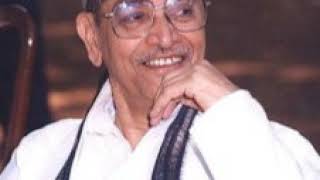
Pandurang Shastri Athavale
Born 19 October 1920 · Maharashtra
Died 25 October 2003
Founded the Swadhyaya Parivar movement based on Bhagavad Gita self-study in 1954.
🔔 Add birthday reminderPandurang Shastri Athavale, also known as Dada /Dadaji, was an Indian activist, philosopher, spiritual leader, social revolutionary, and religion reformist, who founded the Swadhyaya Parivar in 1954. Swadhyaya is a self-study process based on the Bhagavad Gita which has spread across nearly 100,000 villages in India, Americas, Europe, the Middle East, Oceania and other Asian countries with five million adherents. Noted for his discourses on the Bhagavad Gita, the Vedas and the Upanishads.
✨ A detail that surprised us
At age 12, Pandurang Athavale was educated through a Tapovan-style system set up by his father, resembling ancient Indian hermitage learning methods.
1. In 1920, Pandurang Shastri Athavale was born in Roha, Maharashtra, into a family where his father was a Sanskrit teacher who started a unique Tapovan-style education for him at age twelve.
2. 🌏 By 1954, Athavale presented his Vedic philosophy at the Second World Philosophers' Conference in Japan, impressing Nobel laureate Arthur Holly Compton, who invited him to spread his ideas in the USA—an offer Athavale declined to focus on India.
3. 🛤️ From the 1950s onward, he personally visited tens of thousands of Indian villages on foot or bicycle, planting the seeds of the Swadhyaya movement that would grow to reach nearly 100,000 villages across continents.
4. 📽️ Since 1978, Swadhyaya Parivar adherents have gathered weekly in India and abroad to watch Athavale's recorded discourses on the Bhagavad Gita, creating a network of five million followers practicing his self-study method.
5. His teachings transcended strict religious and social boundaries by emphasizing the Indwelling God and universal love, transforming communities across India and countries like the USA, UAE, and Sweden.
6. 🏆 Between 1986 and 1999, Athavale received multiple honors including the Vision of God award (1986), Ramon Magsaysay Award (1996), Templeton Prize (1997), and Padma Vibhushan (1999), marking recognition from both Indian and international institutions.
7. ❓ How did Athavale’s refusal to globalize his teachings early on shape the grassroots nature and social fabric of the Swadhyaya movement that continues to thrive in villages rather than just urban centers?
Awards & Honours
- 🏅Padma Vibhushan
- 🏅Templeton Prize
🔍 One thing most people don't know
In 1954, at the World Philosophers' Conference in Japan, Nobel physicist Arthur Holly Compton was so impressed by Athavale’s Vedic philosophy that he offered him a chance to spread his ideas in the US, which Athavale declined to focus on India instead.
🖼️ Through the Years
📷 No photos yet
📅 The Journey
🗝️ Discoveries
🎥 Speeches & Recordings
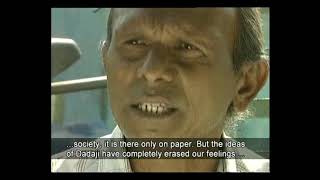
Swadhyaya - A Silent Singing Revolution
YouTube📖 Curated Sources
🌱 What changed because of them
Athavale founded the Swadhyaya Parivar, which transformed spiritual self-study from scripture into a mass social movement impacting nearly 100,000 villages worldwide. His work broke caste and religious barriers by promoting universal love and self-realization based on the Bhagavad Gita, creating a model community of millions practicing Vedic ideals in daily life. His grassroots visits on foot and bicycle laid a foundation for sustained village-level transformation rather than centralized leadership.
💬 Social Buzz
🐦
What are people saying about Pandurang Shastri Athavale?
Found a post from a historian, journalist or notable voice? Share it here and help tell their story. 🇮🇳