Norman Borlaug
Born 25 March 1914 · United States
Died 12 September 2009
Developed high-yield, disease-resistant wheat varieties that sparked India's Green Revolution.
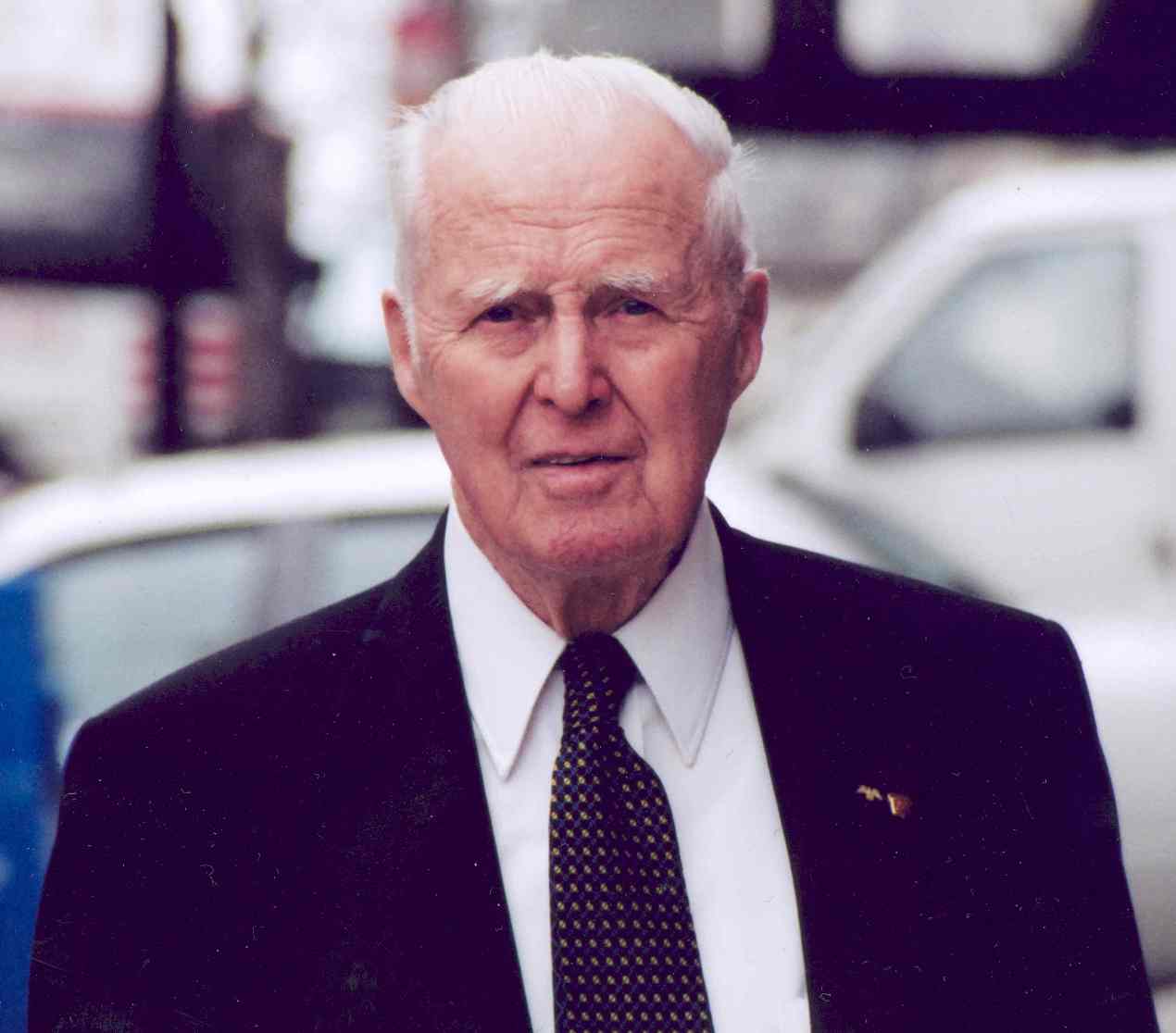
🔔 Add birthday reminderNorman Ernest Borlaug was an American agronomist who led initiatives worldwide that contributed to the extensive increases in agricultural production termed the Green Revolution. Borlaug was awarded multiple honors for his work, including the Nobel Peace Prize, the Presidential Medal of Freedom and the Congressional Gold Medal, one of only seven people to have received all three awards.
✨ A detail that surprised us
Despite his monumental agricultural achievements, Norman Borlaug was also an accomplished college wrestler and was inducted into the National Wrestling Hall of Fame.
1. In 1944, Norman Borlaug arrived in Mexico to lead the Cooperative Wheat Research and Production Program, a Rockefeller Foundation and Mexican government collaboration, where he pioneered semi-dwarf, disease-resistant wheat varieties that transformed agricultural yields.
2. 🌾 Between 1965 and 1970, Borlaug’s wheat innovations nearly doubled crop yields in India and Pakistan, turning these nations from chronic food importers to self-sufficient producers and averting widespread famine.
3. By 1963, Mexico had become a net exporter of wheat, a remarkable turnaround attributed to Borlaug’s shuttle breeding method that used two experimental plots in different Mexican climates to accelerate wheat adaptation.
4. 🏆 In 1970, Borlaug became the only agricultural scientist awarded the Nobel Peace Prize, recognized for helping to ease global food shortages during a time when population growth outpaced food production.
5. Borlaug’s work extended beyond the Americas; throughout the 1960s and later, he advised countries across Asia, Africa, and the Middle East—including Egypt, Tunisia, and Afghanistan—on adopting high-yield crop strains and modern farming techniques.
6. 🌍 In 1987, Borlaug founded the World Food Prize to honor exceptional achievements in improving food quality and availability worldwide, institutionalizing recognition for agricultural innovation.
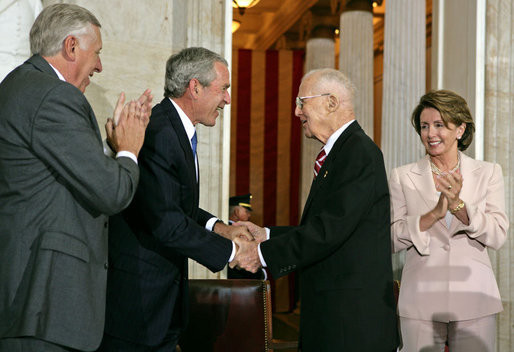
7. In 2006, Borlaug joined an elite group of only seven people to receive the Nobel Peace Prize, Presidential Medal of Freedom, and Congressional Gold Medal, reflecting his unique contribution to science and humanity.
❓ How did Borlaug’s scientific breakthroughs in wheat genetics challenge traditional farming practices and global food policy during the Cold War era?
Awards & Honours
- 🏅Nobel Peace Prize
- 🏅Padma Vibhushan
🔍 One thing most people don't know
Borlaug’s shuttle breeding technique involved growing wheat in two distinct Mexican locations—north and near Mexico City—allowing two crop cycles per year, speeding the development of robust wheat strains by 1940s standards.
🖼️ Through the Years
📅 The Journey
🗝️ Discoveries
"If you desire peace, cultivate justice, but at the same time cultivate the fields to produce more bread; otherwise there will be no peace."
— Norman Borlaug
🎥 Speeches & Recordings
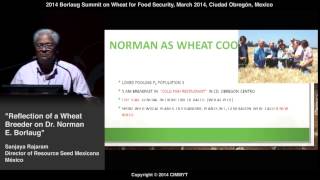
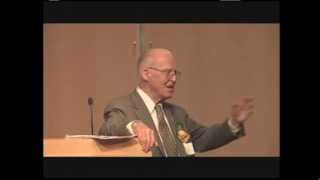
Reflection of a Wheat Breeder on Dr. Norman E Borlaug by Sanjaya Rajaram (Mexico)
YouTube📖 Curated Sources
🌱 What changed because of them
Norman Borlaug’s development of high-yield, disease-resistant wheat varieties directly triggered the Green Revolution, which transformed food security in Mexico, India, and Pakistan, drastically reducing famine risks. His founding of the World Food Prize created a lasting global platform celebrating agricultural innovation, influencing policies that prioritize sustainable food production. Institutions like the Norman Borlaug Institute for International Agriculture continue his work in training scientists worldwide.
💬 Social Buzz
🐦
What are people saying about Norman Borlaug?
Found a post from a historian, journalist or notable voice? Share it here and help tell their story. 🇮🇳