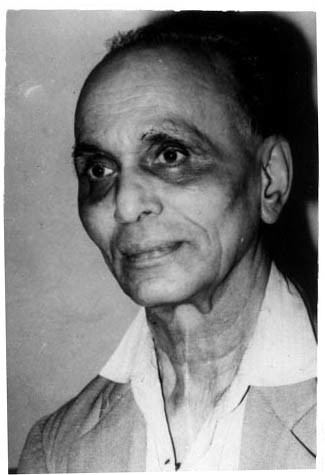
Narayan Sitaram Phadke, Writer
Writer

Narayan Sitaram Phadke

Born 4 August 1894 · Maharashtra — Died 22 October 1978

Authoring over 60 novels and essays in Marathi and English, enriching Maharashtra's literary heritage.

Narayan Sitaram Phadke (1894–1978) was a writer from Maharashtra, India. wrote in his native Marathi as well as English.

✨

A detail that
surprised us

“

Margaret Sanger, a leading American birth control activist, wrote the foreword for Phadke's 1927 book Sex Problem in India, linking Indian and Western birth control movements decades ago.

The Story

1
In 1919, Narayan Sitaram Phadke began his literary journey as assistant editor of the Maratha newspaper, a role that placed him at the heart of Maharashtra's vibrant press scene.
2
🎓 Between 1926 and 1951, he shaped minds as a professor of Philosophy and Psychology at Rajaram College, Kolhapur, influencing generations while juggling editorial duties for magazines like Ratnakar and Zhankar.
3✍️ His debut novel, Allaha Ho Akbar (1917), was a Marathi translation of Marie Corelli's The Temporal Power, signaling his early engagement with cross-cultural literary currents.
4📚 By his lifetime's end, Phadke had authored approximately 150 books including 74 novels, 27 short story collections, and 7 plays, marking him as a prolific voice in both Marathi and English literature.

🏅 Awards & Honours

1962
Padma Bhushan

🔍 One thing most people don't know

“

Phadke married twice; his second wife Kamala, a former student, became a distinguished writer, yet his first wife suffered in silence due to societal conservatism and lack of education, a personal story later revealed by his daughter.

📸 Through the Years

📷

No photos yet

Help preserve history — add a photo of this icon

🗓️ A Life in Moments

🕊️
Birth
Birth in Karjat, Ahmadnagar district
Narayan Sitaram Phadke was born to Sitaram Phadke in Karjat, Maharashtra, marking his entry into a Marathi literary lineage.
1894
📖
Publication
Publication of first novel Allaha Ho Akbar
Phadke released his debut novel, a Marathi translation of Marie Corelli's The Temporal Power, initiating his extensive literary career.
1917
⚡
Career
Assistant editor at Maratha newspaper
He worked as assistant editor of the Maratha newspaper from 1919 to 1920, engaging with contemporary journalistic circles.
1919
⚡
Career
Professor at Rajaram College, Kolhapur
Phadke began teaching Philosophy and Psychology at Rajaram College, a post he held until 1951 while also editing major literary magazines.
1926
📖
Publication
Publishes Sex Problem in India
He published a pioneering book on birth control and eugenics with a foreword by Margaret Sanger, linking Indian and global social reform movements.
1927
⚡
Career
Presides Marathi Sahitya Sammelan, Ratnagiri
Phadke chaired the Marathi Sahitya Sammelan, a prestigious literary conference, and engaged in notable disputes with Acharya P.K. Atre.
1940
🏅
Award
Receives Padma Bhushan award
The Government of India honored Phadke with the Padma Bhushan for his extensive literary work in Marathi and English.
1962
🕊️
Death
Death of Narayan Sitaram Phadke
Phadke passed away, leaving behind a legacy of over 150 literary works and a lasting impact on Marathi literature.
1978
More moments to come...
+ Add a moment

🗝️Discoveries

Swipe to uncover hidden stories
01 / 05
🔍LESSER KNOWN

His first novel, Allaha Ho Akbar (1917), was a Marathi translation of The Temporal Power by British author Marie Corelli, showcasing early 20th-century Marathi engagement with English literature.

02 / 05
🏆ACHIEVEMENT

Phadke edited three literary magazines—Ratnakar, Zhankar, and Anjali—simultaneously during his tenure as a professor from 1926 to 1951, influencing Marathi literary trends across decades.

03 / 05
🌍HISTORICAL IMPACT

In 1927, his book on birth control 'Sex Problem in India' included a foreword by Margaret Sanger, connecting Indian eugenics advocacy with international birth control movements.

No quote recorded for Narayan Sitaram Phadke yet.

🌱 What changed because of them

Phadke's vast literary output expanded Marathi literature’s horizons, blending fiction with social advocacy, notably on birth control and eugenics, influencing public discourse in Maharashtra. His editorship of prominent magazines nurtured literary culture, while his Padma Bhushan award in 1962 underscored the state's recognition of literature's role in modern India. His public feud with Acharya Atre also highlighted ideological divides in Marathi intellectual life during the mid-20th century.

💬 Social Buzz

💬

What are people saying about Narayan Sitaram Phadke?

Share posts from historians, journalists and notable voices about this icon. 🇮🇳

💭 Memories & Tributes

Share your memory of Narayan Sitaram Phadke...
Loading memories...
Is this profile accurate?