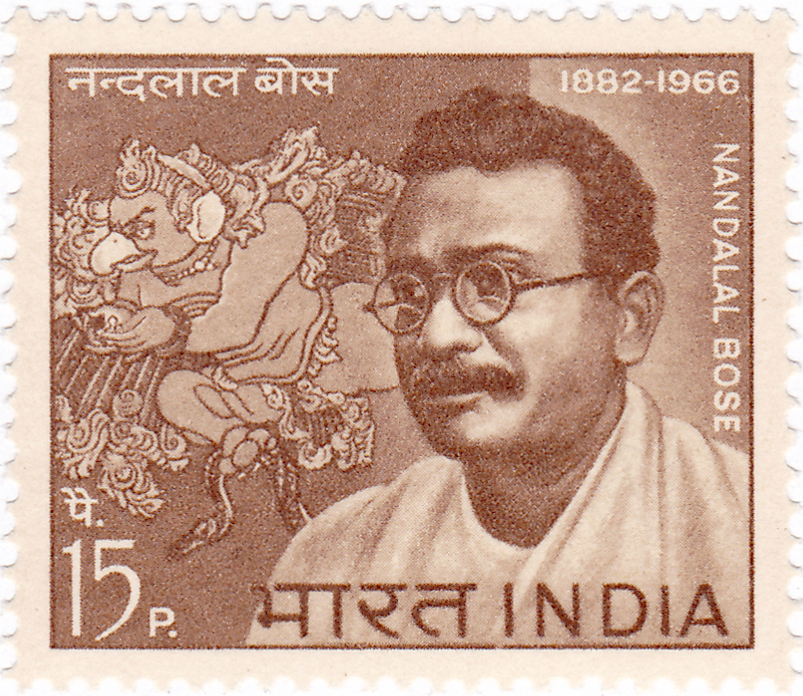
Nandalal Bose
Born 3 December 1882 · Jharkhand
Died 16 April 1966
Created murals for the Indian National Congress session in 1921 at Ahmedabad.
🔔 Add birthday reminderNandalal Bose was one of the pioneers of modern Indian art and a key figure of Contextual Modernism.
✨ A detail that surprised us
Nandalal Bose personally visited the Calcutta Zoo for six months to study the lions that inspired the national emblem’s design, a detail few realize about the symbol’s creation.
1. 🎨 In 1921, Nandalal Bose took charge as principal of Kala Bhavana, Santiniketan, steering a revolutionary art school that blended Indian tradition with modern sensibilities.
2. 🦁 Between 1947 and 1949, at Rabindranath Tagore's Vishwa Bharati, Bose meticulously studied live Asiatic lions at Calcutta Zoo to inspire the national emblem’s three lions design, later illustrated by his student Dinanath Bhargava.
3. ✊ In 1930, Bose created a striking black-and-white linocut of Mahatma Gandhi’s salt march, capturing the essence of non-violent resistance during the Dandi March that became an iconic image of the freedom struggle.
4. In 1947–1949, Bose led the artistic team that illustrated all 22 original artworks of the Indian Constitution, embedding deep symbolism of dharma, justice, and unity into the document’s pages.
5. Inspired by the Ajanta murals, Bose’s paintings merged classical Indian techniques with nationalist themes, creating visuals that were officially declared "art treasures" by the Archaeological Survey of India in 1976.
6. Despite early family opposition, Bose transitioned from commerce studies at Presidency College to arts at Calcutta's School of Art around 1905, showing his determined pursuit of artistic passion.
7. ❓ How did Bose’s unique position between Rabindranath Tagore’s internationalism and Gandhi’s cultural nationalism shape the visual language of India’s freedom and post-independence identity?
Awards & Honours
- 🏅Padma Vibhushan · 1954
- 🏅Fellow of Lalit Kala Akademi
🔍 One thing most people don't know
In 1930, Bose crafted the iconic black-and-white linocut of Gandhi during the Salt March, which became a symbol for the non-violent independence movement.
🖼️ Through the Years
📅 The Journey
🗝️ Discoveries
🎥 Speeches & Recordings
KG Subramanyan - Life at Santiniketan and Nandalal Bose (12/72)
YouTube📖 Curated Sources
🌱 What changed because of them
Nandalal Bose’s integration of Indian mythological imagery and village life into modern art influenced the Bengal School and Indian contextual modernism, redefining nationalist visual identity. His leadership at Kala Bhavana nurtured generations of artists who shaped Indian art education. Most enduringly, his illustrations for the Indian Constitution gave India’s foundational document a unique visual dignity and historical depth, blending art with political ideals.
💬 Social Buzz
🐦
What are people saying about Nandalal Bose?
Found a post from a historian, journalist or notable voice? Share it here and help tell their story. 🇮🇳
