Manmath Nath Gupta, Freedom Fighter, Historian
Freedom Fighter, Historian

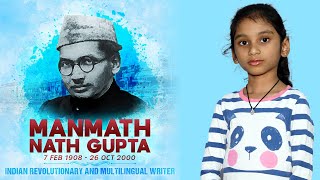
Manmath Nath Gupta

Born 7 February 1908 · Uttar Pradesh

Died 26 October 2000

Participated in the 1925 Kakori train robbery against British colonial rule.

🔔 Add birthday reminder

Manmath Nath Gupta was an Indian Marxist revolutionary writer and author of autobiographical, historical and fictional books in Hindi, English and Bengali. He joined the Indian independence movement at the age of 13 and was an active member of the Hindustan Republican Association. He participated in the famous Kakori train robbery in 1925 and was imprisoned for 14 years. On release from jail in 1937, he started writing against the British government.

✨ A detail that surprised us

Manmath Nath Gupta was imprisoned twice by the British: first for 14 years following the Kakori train robbery and again from 1939 to 1946, narrowly missing India's independence by just one year after his final release.

1. In 1925, at just 17, Manmath Nath Gupta participated in the audacious Kakori train robbery, an act that led to his 14-year imprisonment and placed him firmly in the revolutionary spotlight.

2. 🌟 At 13, in 1921, he boldly distributed anti-British pamphlets in Benares during the Prince of Wales' visit, refusing to cooperate in court and earning a three-month jail term despite harsh treatment.

3. After his 1937 release, he shifted from armed rebellion to penning revolutionary histories and critiques against British rule, writing in Hindi, English, and Bengali, including his notable work, "They Lived Dangerously."

4. He introduced the legendary revolutionary Chandrasekhar Azad to the Hindustan Republican Association, recounting moments of tension including Azad nearly firing a pistol on him while training.

5. ❓ How did Manmath Nath Gupta’s dual role as both a militant revolutionary and a historian shape the way India's freedom struggle is remembered today?

Awards & Honours

🔍 One thing most people don't know

Manmath Nath Gupta was jailed for distributing pamphlets against the 1921 reception of the Prince of Wales, showing youthful defiance at just 13 years old in Benares.

🖼️ Through the Years

📷 No photos yet

📅 The Journey

← Drag to explore →
🕊️

Birth in Benares, British India

Manmath Nath Gupta was born to Veereshvar Gupta in Benares, establishing his roots in a city central to Indian culture and politics.

Wikipedia

First Imprisonment at Age 13

Gupta was jailed for three months in Benares after distributing anti-British pamphlets during the Prince of Wales' visit, refusing to cooperate with the court.

Kakori Train Robbery Participation

At 17, Gupta took part in the Kakori train robbery, a pivotal revolutionary act against British colonial rule, leading to his long imprisonment.

Release and Start of Writing Career

After 14 years in prison, Gupta was released and began writing revolutionary histories and critiques against British rule in multiple languages.

Second Imprisonment

Gupta was sentenced again for anti-British activities, remaining in prison until 1946, just a year before India's independence.

🕊️

Death of Manmath Nath Gupta

Gupta passed away, leaving behind a legacy of revolutionary activism and historical writing on India's freedom struggle.

+Add a moment
1908Birth
1921
1925
1937
1939
2000

🗝️ Discoveries

🌏

He spent 14 years in prison following the Kakori train robbery in 1925, one of the longest sentences among the revolutionaries involved in the incident.

Source: archive.org

🏆

He was not only a revolutionary but also a trilingual author, publishing historical, autobiographical, and fictional works in Hindi, English, and Bengali after his release.

Source: Wikipedia

🔍

Gupta personally introduced Chandrasekhar Azad to the Hindustan Republican Association, a connection pivotal to the revolutionary movement’s leadership.

Source: Wikipedia

🏆

Despite his revolutionary past, Gupta edited the Hindi literary magazine Aajkal, blending activism with literary expression in pre-independence India.

Source: Wikipedia

"We were called revolutionaries but we were just ordinary people ready to sacrifice our lives for our country."

Manmath Nath Gupta

🎥 Speeches & Recordings

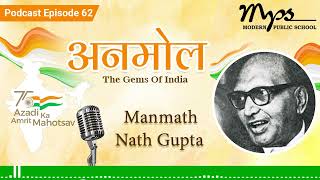
75 Days - 75 Stories - India@75 Podcast Series | Manmath Nath Gupta | 62nd Episode

Explore the inspiring story of Manmath Nath Gupta in this detailed episode of the India@75 podcast series.

YouTube

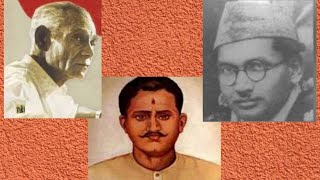
मन्मथनाथ गुप्त, यशपाल और राम प्रसाद बिस्मिल l Manmath Nath Gupta, Yashpal and Ram Prasad Bismil |

Delve into the lives and contributions of Manmath Nath Gupta, Yashpal, and Ram Prasad Bismil in this insightful discussion.

YouTube

📖 Curated Sources

🌱 What changed because of them

Manmath Nath Gupta's writings provided a rare insider's perspective on the revolutionary wing of India's independence movement, influencing later generations' understanding of militant activism. His editorial leadership at the Hindi magazine Aajkal helped sustain revolutionary ideas in literary circles. Institutions and historians have since used his autobiographical accounts as primary sources to study pre-independence revolutionary activities.

💬 Social Buzz

🐦

What are people saying about Manmath Nath Gupta?

Found a post from a historian, journalist or notable voice? Share it here and help tell their story. 🇮🇳

💭 Memories & Tributes

Share your memory of Manmath Nath Gupta...
Loading memories...
Is this profile accurate?