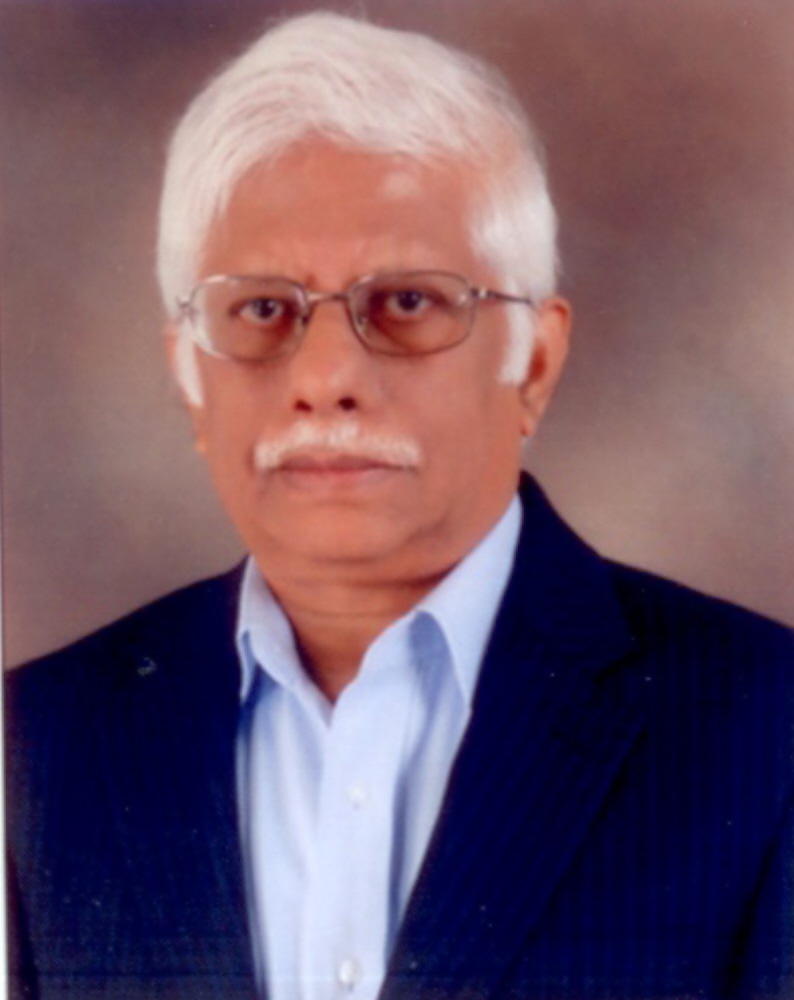
M. R. S. Rao, Engineer, Academic
Engineer, Academic

M. R. S. Rao

Born 21 January 1948 · verify

Died 13 August 2023

Led Jawaharlal Nehru Centre for Advanced Scientific Research as president from 2003 to 2013.

🔔 Add birthday reminder

Manchanahalli Rangaswamy Satyanarayana Rao was an Indian scientist. He was awarded the fourth-highest civilian award, the Padma Shri, for Science and Engineering in 2010. From 2003 to 2013 he was president of Jawaharlal Nehru Centre for Advanced Scientific Research (JNCASR) in Bangalore, India.

✨ A detail that surprised us

M. R. S. Rao was among the earliest Indian scientists to establish a dedicated chromatin biology laboratory, a field scarcely studied in India before the 1980s.

1. In 1973, M. R. S. Rao earned his Ph.D. in biochemistry from the Indian Institute of Science, Bangalore, under Govindarajan Padmanabhan, marking the start of his deep dive into molecular biology.

2. 🌍 Between 1974 and 1976, Rao expanded his expertise as an assistant professor at Baylor College of Medicine, Houston, engaging in postdoctoral research that shaped his future scientific pursuits.

3. Back at IISc in 1978, he began pioneering chromatin biology in India, a field barely explored nationally at the time, mentoring a new generation of researchers.

4. From 1990 to 1993, Rao chaired IISc’s Centre for Genetic Engineering, steering research during a crucial phase of genetic studies in India.

5. 🎓 His presidency at Jawaharlal Nehru Centre for Advanced Scientific Research (JNCASR) from 2003 to 2013 saw the institution gain reputation for cutting-edge biological research, especially in chromatin biology.

6. Rao’s role extended beyond research as he shaped scientific policy, serving on boards of IISER Thiruvananthapuram and Kolkata, and influencing CSIR director selections, impacting India’s research infrastructure.

7. 🏅 In 2010, the Government of India awarded him the Padma Shri in Science and Engineering, recognizing his decade-long leadership and foundational research contributions.

8. ❓ How did Rao’s early work on testis-specific proteins and chromatin behavior influence current understanding of genetic regulation and epigenetics in India’s scientific community?

Awards & Honours

  • 🏅Padma Shri and Shanti Swarup Bhatnagar Prize for Science and Technology · 2010

🔍 One thing most people don't know

From 1974 to 1976, Rao conducted postdoctoral research at Baylor College of Medicine in Houston, a rare opportunity for Indian scientists at the time to engage in advanced molecular biology abroad.

🖼️ Through the Years

M. R. S. Rao at Jawaharlal Nehru Centre for Advanced Scientific Research in Bangalore (2010)
2010
M. R. S. Rao with Dr. Manmohan Singh and Prof. C. N. R. Rao at JNCASR inauguration in Bangalore (2008)
2008

📅 The Journey

← Drag to explore →
🕊️

Birth of M. R. S. Rao

Manchanahalli Rangaswamy Satyanarayana Rao was born on 21 January 1948.

Wikipedia

📚

Ph.D. from IISc Bangalore

Rao obtained his Ph.D. in biochemistry under Govindarajan Padmanabhan at IISc Bangalore.

Postdoctoral Research at Baylor College

Rao performed postdoctoral research and served as assistant professor at Baylor College of Medicine, Houston, Texas.

Joined IISc Biochemistry Faculty

Returned to India and joined IISc’s Department of Biochemistry as assistant professor.

President of JNCASR

Appointed president and chair of Jawaharlal Nehru Centre for Advanced Scientific Research, Bangalore.

🏅

Awarded Padma Shri

Received Padma Shri in Science and Engineering from Government of India.

🕊️

Death of M. R. S. Rao

Passed away at the age of 75 on 13 August 2023.

+Add a moment
1948Birth
1973
1974
1978
2003
2010
2023

🗝️ Discoveries

🏆

Rao’s laboratory was the first in India to focus explicitly on chromatin biology, initiating this field’s study in the country during the 1980s.

Source: Wikipedia

🏆

During his presidency at JNCASR (2003-2013), Rao helped transform the center into a hub for interdisciplinary biological sciences, particularly in chromatin and molecular biology.

Source: Wikipedia

🌏

He served as chairman of the Board of Governors of IISER Thiruvananthapuram and was involved in key selection committees for CSIR directors, influencing Indian scientific governance.

Source: Wikipedia

🔍

Rao’s research included detailed studies on mammalian spermatogenesis, revealing molecular insights into chromosome behavior during sperm development in the early 1990s.

Source: JNCASR CV

🎥 Speeches & Recordings

🎥 Know a speech or documentary about M. R. S. Rao?

📖 Curated Sources

🌱 What changed because of them

M. R. S. Rao laid the scientific groundwork for chromatin biology research in India, directly influencing molecular genetics research at IISc and JNCASR. His leadership roles helped shape premier institutions like IISERs and CSIR, fostering policies and academic environments that continue to nurture cutting-edge biological research. Rao’s mentorship created a lineage of researchers advancing chromatin and genetic studies in India.

💬 Social Buzz

🐦

What are people saying about M. R. S. Rao?

Found a post from a historian, journalist or notable voice? Share it here and help tell their story. 🇮🇳

💭 Memories & Tributes

Share your memory of M. R. S. Rao...
Loading memories...
Is this profile accurate?