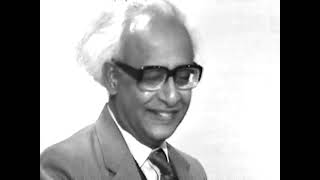
M. N. Srinivas
Born 16 November 1916 · Karnataka
Died 30 November 1999
Developed the concept of 'dominant caste' in Indian sociology through ethnographic study of Rampura.
🔔 Add birthday reminderMysore Narasimhachar Srinivas was an Indian sociologist and social anthropologist. He is mostly known for his work on caste and caste systems, social stratification, Sanskritisation and Westernisation in southern India and the concept of 'dominant caste'. He is considered to be one of the pioneering personalities in the field of sociology and social anthropology in India as his work in Rampura remains one of the early examples of ethnography in India. That was in contrast to most of his contemporaries of the Bombay School, who focused primarily on a historical methodology to conduct research, mainly in Indology.
✨ A detail that surprised us
M. N. Srinivas’s fieldwork in Rampura in the late 1940s is considered among India’s earliest detailed village ethnographies, predating many contemporary social studies in the country.
1. In 1948, M. N. Srinivas began immersive fieldwork in Rampura, a village in Karnataka, producing one of India’s earliest ethnographic case studies that later became the book 'The Remembered Village'.
2. 🌟 By 1959, he had founded the Department of Sociology at the Delhi School of Economics, pioneering institutional sociology education in post-independence India.
3. His concept of 'dominant caste', introduced in the 1950s, reshaped how sociologists understood caste beyond ritual status, focusing instead on economic and political power within villages.
4. Srinivas’s studies in the 1950s and 1960s introduced 'Sanskritisation'—a process where lower castes adopt upper-caste practices to climb social hierarchy, challenging static views of caste.
5. 🌍 At Oxford’s All Souls College, where he was a fellow post-PhD, Srinivas contrasted British Indological historical methods by emphasizing living social structures through direct observation.
6. He held teaching roles across premier institutions like the University of Delhi, Baroda University, and Bangalore’s Institute for Social and Economic Change, shaping generations of Indian sociologists.
7. 🕵️ Srinivas’s unique blend of Sanskritic knowledge and Western sociological frameworks questioned colonial-era assumptions that Indian society was unchanging, influencing how South Asian studies developed globally.
8. ❓ How did Srinivas’s blend of ethnography and sociological theory alter the way caste and social change are studied in India even today?
Awards & Honours
- 🏅Padma Bhushan
🔍 One thing most people don't know
Despite his deep engagement with Western sociology, Srinivas’s early work in Rampura village (1948) remains a cornerstone of indigenous Indian ethnography rather than imported theory.
🖼️ Through the Years
📷 No photos yet
📅 The Journey
🗝️ Discoveries
🎥 Speeches & Recordings
M. N. Srinivas
YouTube📖 Curated Sources
🌱 What changed because of them
Srinivas institutionalized sociology in India by founding the sociology department at Delhi School of Economics, which became a hub for social science research. His concepts of 'dominant caste' and 'Sanskritisation' forged new analytical tools, deeply influencing sociological and anthropological studies on caste and social change across India. His work shifted focus from historical textual analysis to living social realities, impacting both academic curricula and research methods.
💬 Social Buzz
🐦
What are people saying about M. N. Srinivas?
Found a post from a historian, journalist or notable voice? Share it here and help tell their story. 🇮🇳