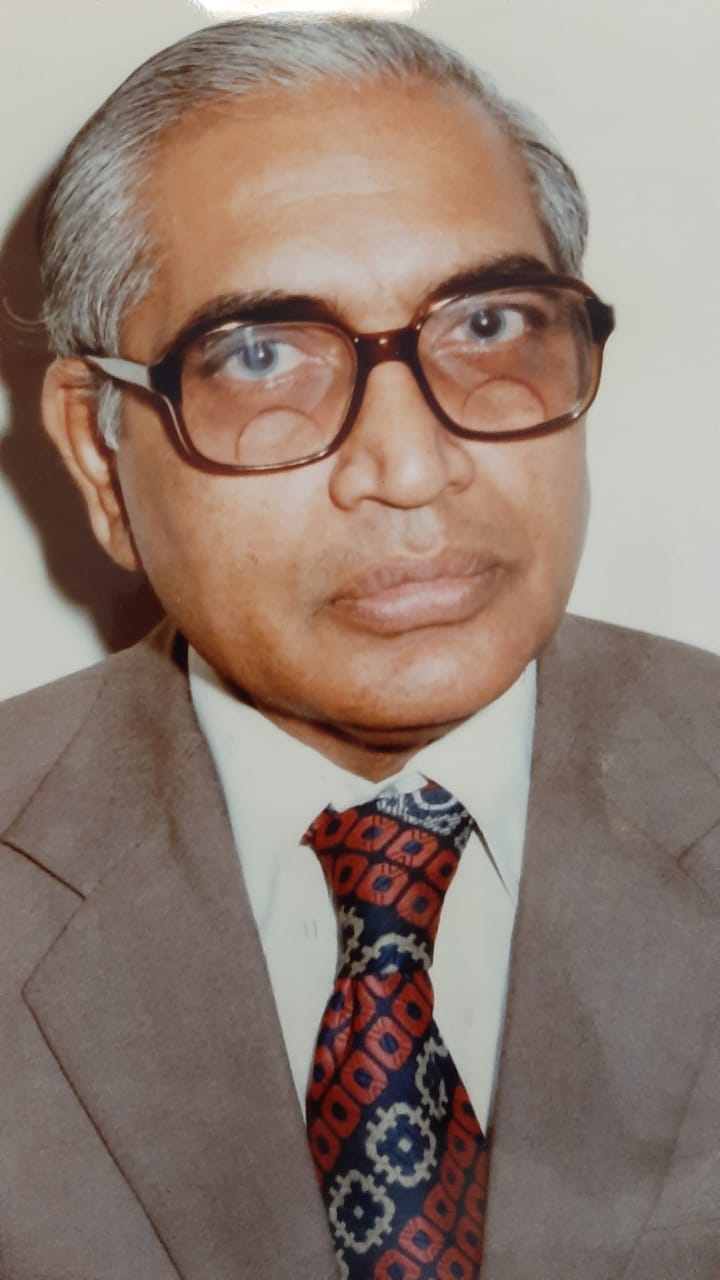
Krishnaswami Ramiah, Agricultural Scientist
Agricultural Scientist

Krishnaswami Ramiah

Born 15 April 1892 · verify

Died 3 August 1988

Founded the Central Rice Research Institute and introduced systematic hybridisation in Indian rice breeding.

🔔 Add birthday reminder

Krishnaswamy Ramiah was an Indian agricultural scientist, geneticist, parliamentarian and the founder director of Central Rice Research Institute, Cuttack, credited with introducing systematic hybridisation programmes in rice breeding in India. The Government of India honoured him in 1957, with the award of Padma Shri, the fourth-highest Indian civilian award for his services to the nation and followed it up with the third-highest civilian honour of the Padma Bhushan in 1970.

✨ A detail that surprised us

The rice variety GEB 24, developed by Ramiah, became the progenitor for 83 rice varieties cultivated internationally.

1. 🌾 In 1914, Krishnaswami Ramiah began his career at the Paddy Breeding Station in Coimbatore, and by 1917, he had already produced new rice crossbreeds using pure line selection techniques.

2. 🧬 In the 1930s, Ramiah pioneered systematic hybridisation programmes in rice breeding, becoming the first Indian scientist to develop such protocols, transforming rice genetics research in India.

3. In 1946, he was appointed the founding director of the Central Rice Research Institute in Cuttack, steering the institution through its formative years and bringing it under the Indian Council of Agricultural Research.

4. 🌍 As an FAO expert based in Bangkok, Ramiah led the International Rice Commission and contributed to the Indo-Japonica Hybridization programme that created nitrogen-responsive rice varieties released across Malaysia, India, and Australia.

5. He conducted advanced research on X-ray induced rice mutations and established one of the earliest gene banks for rice, laying groundwork for modern genetic resource preservation.

6. In 1938, the British government appointed him a Member of the Order of the British Empire (MBE), recognizing his contributions well before India’s independence.

7. 📚 Ramiah authored two specialized books, 'Rice in Madras' and 'Rice Breeding and Genetics,' which detailed his scientific methods and findings, influencing future agricultural research.

8. ❓ How did Ramiah’s early work on rice hybridisation influence later breakthroughs in high-yield and fertilizer-responsive rice varieties like IR8?

Awards & Honours

  • 🏅Padma Shri · 1957
  • 🏅Padma Bhushan · 1970

🔍 One thing most people don't know

In 1938, Ramiah was appointed a Member of the Order of the British Empire (MBE), an honor from the British colonial administration recognizing his scientific achievements before India’s independence.

🖼️ Through the Years

📷 No photos yet

📅 The Journey

← Drag to explore →
🕊️

Birth in Kizhakarai, Madras Presidency

Krishnaswami Ramiah was born in the Ramnad district, now Ramanathapuram, Tamil Nadu, beginning the life of a future agricultural scientist.

Wikipedia

Started at Paddy Breeding Station

Joined research staff at Coimbatore’s Paddy Breeding Station, initiating his work on rice genetics.

Produced new rice crossbreeds

Developed new rice varieties through pure line selection and breed improvement techniques.

🏅

Awarded MBE by British Government

Received the Member of the Order of the British Empire honor for his contributions to agricultural science.

Founded Central Rice Research Institute

Appointed founding director of the Central Rice Research Institute in Cuttack, shaping rice research in India.

🏅

Received Padma Shri Award

Honored by the Government of India for his services to agricultural science with the Padma Shri civilian award.

🏅

Received Padma Bhushan Award

Awarded the Padma Bhushan, the third-highest Indian civilian honor, recognizing his lifelong contributions.

🕊️

Passed away in Bengaluru

Died at age 96 in Bengaluru, leaving behind a legacy in rice genetics and agricultural science.

+Add a moment
1892Birth
1914
1917
1938
1946
1957
1970
1988

🗝️ Discoveries

🏆

Ramiah’s genetic research included pioneering work on X-ray induced mutation in rice, a technique that was advanced for its time and helped expand rice genetic diversity.

Source: Wikipedia

🌏

From 1946 onward, Ramiah directed the Central Rice Research Institute in Cuttack, a key institution founded the same year to boost rice research in post-independence India.

Source: Wikipedia

🏆

Ramiah helped develop the Indo-Japonica Hybridization programme under FAO, which produced rice varieties like Mahsuri and Malinja that were released in Malaysia and influenced international cultivation.

Source: Wikipedia

🔍

The rice variety ADT 27, developed under Ramiah’s hybridization programmes, was officially released in Tamil Nadu, India, illustrating his direct impact on local agriculture.

Source: Wikipedia

👤

Ramiah was a nominated member of the Rajya Sabha, where he represented the scientific community and engaged in parliamentary discussions during post-independence India.

Source: Rajya Sabha PDF

🎥 Speeches & Recordings

🎥 Know a speech or documentary about Krishnaswami Ramiah?

📖 Curated Sources

🌱 What changed because of them

Krishnaswami Ramiah’s introduction of systematic hybridisation transformed rice breeding practices in India and influenced global rice genetics through FAO collaborations. His leadership at the Central Rice Research Institute institutionalized rice research, while his advocacy for gene symbol standardization shaped genetic studies worldwide. The Ramiah Memorial Lecture at IIT Bombay continues to honor his impact on agricultural science.

💬 Social Buzz

🐦

What are people saying about Krishnaswami Ramiah?

Found a post from a historian, journalist or notable voice? Share it here and help tell their story. 🇮🇳

💭 Memories & Tributes

Share your memory of Krishnaswami Ramiah...
Loading memories...
Is this profile accurate?