Krishna Sobti, Novelist
Novelist

Krishna Sobti

Born 18 February 1925 ยท Punjab โ€” Died 25 January 2019

Winning the Sahitya Akademi Award in 1980 for her novel Zindaginama.

Krishna Sobti was an Indian Hindi-language fiction writer and essayist. She won the Sahitya Akademi Award in 1980 for her novel Zindaginama and in 1996, was awarded the Sahitya Akademi Fellowship, the highest award of the Akademi. In 2017, she received the Jnanpith Award for her contribution to Indian literature.

โœจ

A detail that
surprised us

โ€œ

Krishna Sobti married fellow writer Shivnath when both were over 70 years old and shared the exact same birth date, year, and month.

The Story

1
๐ŸŒพ In 1925, Krishna Sobti was born in Gujrat, Punjab (now in Pakistan), a region whose cultural tapestry would deeply influence her vivid literary landscapes.
2
After Partition in 1947, Sobti left Lahore abruptly, marking a painful personal and creative rupture that shaped her exploration of displacement in her writings.
3๐Ÿ–‹๏ธ Her 1966 novel Mitro Marajani broke taboos by portraying a married woman's sexuality with unapologetic frankness, challenging Hindi literary conventions of the time.
4In 1980, she won the Sahitya Akademi Award for Zindaginama, a sprawling narrative capturing the social fabric of rural Punjab during colonial upheaval.

๐Ÿ… Awards & Honours

โ€”
Jnanpith Award

๐Ÿ” One thing most people don't know

โ€œ

In 1966, Sobtiโ€™s novel Mitro Marajani openly depicted a married woman's sexual desires, a groundbreaking and controversial theme in Hindi literature at the time.

๐Ÿ–ผ๏ธ

Through the Years

2 photographs from the archives
Krishna Sobti at a public event in December 2011 showcasing her literary prominence.
2011
Krishna Sobti posing for a formal portrait highlighting her status as a Hindi author (2012).

๐Ÿ—“๏ธ A Life in Moments

๐Ÿ•Š๏ธ
Birth
Born in Gujrat, Punjab
Krishna Sobti was born in Gujrat city, Punjab, British India, an area that later became part of Pakistan after Partition.
1925
๐ŸŒŸ
Other
Partition prompts relocation
Sobti left Lahore amid Partition upheaval, returning to India and starting a new chapter in Delhi and Shimla.
1947
๐Ÿ“–
Publication
Publishes Mitro Marajani
Her novel Mitro Marajani challenged Hindi literary norms with its candid portrayal of a married womanโ€™s sexuality.
1966
๐Ÿ…
Award
Wins Sahitya Akademi Award
Awarded for her novel Zindaginama, capturing rural Punjabโ€™s social dynamics during colonial times.
1980
๐Ÿ…
Award
Receives Sahitya Akademi Fellowship
This highest Akademi honor recognized her lasting impact on Hindi literature.
1996
๐Ÿ…
Award
Awarded Jnanpith Award
Honored for her lifetime contribution to Indian literature, cementing her legacy.
2017
๐Ÿ•Š๏ธ
Death
Death in Delhi
Krishna Sobti passed away after a long illness in her East Delhi apartment.
2019
More moments to come...
+ Add a moment

๐Ÿ—๏ธDiscoveries

Swipe to uncover hidden stories
01 / 05
๐Ÿ‘คPERSONAL

Sobti worked as a governess to Maharaja Tej Singh of Sirohi immediately after Partition, reflecting a rare direct connection to Indian princely states during a chaotic era.

02 / 05
๐Ÿ†ACHIEVEMENT

Her novel Dil-o-Danish was translated into English as The Heart Has Its Reasons and won the 2005 Crossword Award for Indian Language Fiction Translation.

03 / 05
๐ŸŒHISTORICAL IMPACT

Krishna Sobti was born in Gujrat, Punjab in 1925, a city that became part of Pakistan after Partition, deeply influencing her lifelong engagement with themes of divided homelands.

โ€œ

"Bhasha ki jo oorja hai woh maatra lekhak ke antar mein sthit nahi hai" (The energy that a language has is not located only in the interiority of the writer).

โ€” Krishna Sobti

๐ŸŽ™๏ธ Speeches & Recordings

These recordings preserve the legacy of Bharat's icons
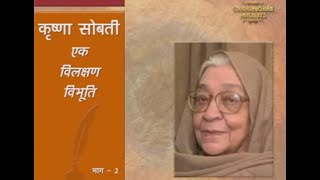
Krishna Sobti - Part 2 | Srijan
More from this archive
Krishna Sobti - Part 2 | Srijan
01
Krishna Sobti - Part 2 | Srijan
Krishna Sobti reading her letter to the President of India at Pratirodh 2
02
Krishna Sobti reading her letter to the President of India at Pratirodh 2
4th Nirmal Smriti Vyakhyan Presidential Remarks by Krishna Sobti 1
03
4th Nirmal Smriti Vyakhyan Presidential Remarks by Krishna Sobti 1

๐ŸŒฑ What changed because of them

Krishna Sobti expanded the boundaries of Hindi literature by introducing bold female characters and blending regional languages, which influenced new narrative styles in Indian fiction. Her fearless treatment of subjects like female sexuality and Partition memory challenged societal taboos and inspired literary discussions on gender and identity. Major Indian literary institutions, including the Sahitya Akademi and Jnanpith, acknowledged her role in enriching Hindi literature's cultural and linguistic diversity.

๐Ÿ’ฌ Social Buzz

๐Ÿ’ฌ

What are people saying about Krishna Sobti?

Share posts from historians, journalists and notable voices about this icon. ๐Ÿ‡ฎ๐Ÿ‡ณ

๐Ÿ’ญ Memories & Tributes

Share your memory of Krishna Sobti...
Loading memories...
Is this profile accurate?