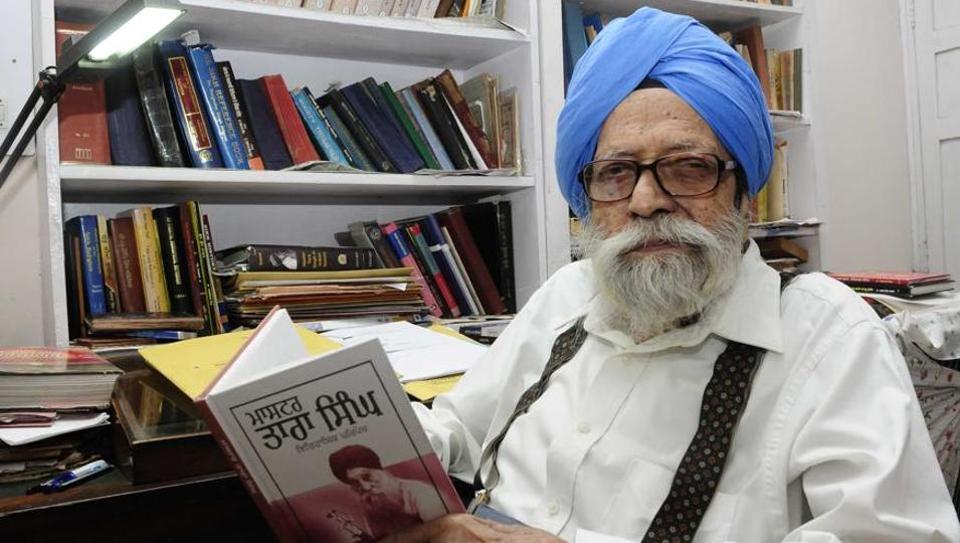
Kirpal Singh Narang
Born 12 April 1912 · Punjab
Serving as the longest-tenured vice-chancellor of Punjabi University from 1966 to 1975.
🔔 Add birthday reminderKirpal Singh Narang was an Indian historian, educationist and the vice-chancellor of Punjabi University. He was the second in line of the vice-chancellors of the university (1966–75) and the longest serving among them. Born on 12 April 1912 in Amritsar in Punjab of the British India, he published several books on the history of Punjab and Sikhs, which included four volumes of Punjab history and a book on Islam. The Government of India awarded him the third highest civilian honour of the Padma Bhushan, in 1975, for his contributions to education and literature.
✨ A detail that surprised us
Kirpal Singh Narang undertook field research in both India and Sri Lanka to critically analyze Sikh Janamsakhi traditions, blending history and folklore in a scholarly pursuit rarely attempted at his time.
1. In 1966, Kirpal Singh Narang stepped into the role of Vice-Chancellor at Punjabi University, Patiala, becoming the second person to hold this position and eventually serving the longest term until 1975.
2. 📚 Between 1953 and 1969, Narang authored and co-authored four detailed volumes on Punjab's history, meticulously covering eras from 1500 to 1858, with publications like 'History of the Punjab, 1526-1849' and collaborative works with Hari Ram Gupta.
3. 🕌 In 1969, he published a focused study titled 'Islam' under Punjabi University, showcasing his scholarly reach beyond Sikh and Punjab history to broader religious studies.
4. His birthplace, Amritsar, in British India, witnessed his birth on 12 April 1912, a city that later shaped much of his historical inquiry into Punjab's socio-political fabric.
5. 🎖️ In 1975, the Government of India recognized Narang with the Padma Bhushan award, citing his contributions to education and literature during a transformative post-independence period for Punjab's academic institutions.
6. He played a pivotal role in critically analyzing Sikh Janamsakhi traditions, conducting extensive research across India and Sri Lanka to distinguish historical facts from lore, a project endorsed during his tenure as Vice-Chancellor.
7. His leadership at Punjabi University coincided with the institution's rise as a key center for Punjabi language and Sikh studies during the 1960s and 1970s, influencing curricula and research focus.
8. ❓ How did Kirpal Singh Narang’s deep archival research and administrative influence reshape the academic narrative around Punjab's history and Sikh traditions in post-colonial India?
Awards & Honours
- 🏅Padma Bhushan · 1974
- 🏅
🔍 One thing most people don't know
In 1969, Narang published a concise book titled 'Islam' at Punjabi University, reflecting his scholarly interest beyond Sikh and Punjab history into broader religious studies.
🖼️ Through the Years
📷 No photos yet
📅 The Journey
🗝️ Discoveries
🎥 Speeches & Recordings
🎥 Know a speech or documentary about Kirpal Singh Narang?
📖 Curated Sources
🌱 What changed because of them
As Vice-Chancellor of Punjabi University from 1966 to 1975, Kirpal Singh Narang cemented the institution's reputation in Punjabi and Sikh historical studies, steering it toward rigorous academic standards. His multi-volume histories of Punjab became foundational references for scholars and students alike, while his Padma Bhushan recognition in 1975 spotlighted the importance of regional history and education in India's post-independence intellectual landscape.
💬 Social Buzz
🐦
What are people saying about Kirpal Singh Narang?
Found a post from a historian, journalist or notable voice? Share it here and help tell their story. 🇮🇳