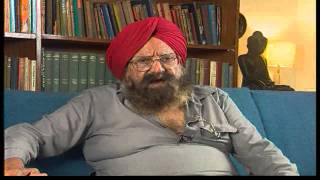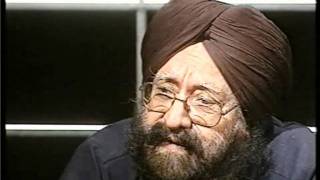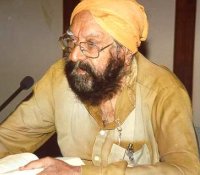
Khushwant Singh, Writer, Journalist
Writer, Journalist

Khushwant Singh

Born 2 February 1915 · Pakistan

Died 20 March 2014

Wrote the novel Train to Pakistan inspired by the 1947 Partition of India.

🔔 Add birthday reminder

Khushwant Singh FKC was an Indian author, lawyer, diplomat, journalist and politician. His experience in the 1947 Partition of India inspired him to write Train to Pakistan in 1956, which became his most well-known novel.

✨ A detail that surprised us

Khushwant Singh’s school birthdate of 2 February 1915 was actually fabricated by his father for enrollment, while his grandmother claimed he was born in August, leading Singh to later choose 15 August as his own birthday.

1. In 1947, Khushwant Singh left his legal career in Lahore High Court to join the Indian Foreign Service at the moment of India’s independence, marking a drastic shift from law to diplomacy.

2. 🌍 Between 1954 and 1956, Singh worked in UNESCO’s Department of Mass Communications in Paris, an experience that deepened his commitment to journalism and writing.

3. ✍️ In 1956, he published "Train to Pakistan," a novel born from his direct experiences during the Partition of 1947, capturing the brutal human cost of that division with unflinching realism.

4. As editor of The Illustrated Weekly of India in the late 1970s, Singh transformed its circulation from 65,000 to 400,000 by fearlessly tackling taboo subjects like sexuality and politics.

5. 🚨 In 1984, Singh returned his Padma Bhushan award in protest of Operation Blue Star, condemning the Indian Army’s assault on the Golden Temple and challenging the government’s actions publicly.

6. Between 1980 and 1986, Singh served as a nominated Member of Rajya Sabha, where he engaged in heated debates on Punjab’s regional tensions and communal harmony, defending India’s unity amid rising religious fundamentalism.

7. 📚 His 1966 Rockefeller Foundation fellowship funded pioneering research on Sikh history, culminating in his authoritative multi-volume "A History of the Sikhs."

8. ❓ How did Khushwant Singh’s sharp wit and fearless secularism manage to unsettle both political powers and societal norms throughout his nearly century-long life?

Awards & Honours

  • 🏅Padma Bhushan
  • 🏅Padma Vibhushan

🔍 One thing most people don't know

Khushwant Singh was born Khushal Singh in Hadali, Punjab (now in Pakistan), but changed his name to avoid childhood teasing; his chosen name was initially self-manufactured and meaningless.

🖼️ Through the Years

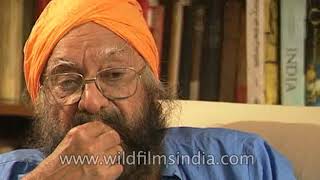
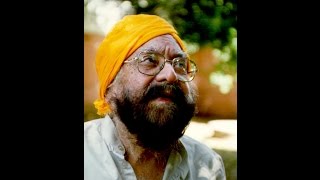
Khushwant Singh portrait clearly showing the noted Indian writer (2009)
2009
Prime Minister Manmohan Singh releasing Khushwant Singh's book in New Delhi (2006)
2006
President A.P.J. Abdul Kalam presenting Padma Vibhushan to Khushwant Singh in New Delhi (2007)
2007
Lok Sabha Speaker Somnath Chatterjee presenting National Amity Award to Khushwant Singh in New Delhi (2008)
2008

📅 The Journey

← Drag to explore →
🕊️

Khushwant Singh's birth in Hadali, Punjab

Born as Khushal Singh in what is now Pakistan, his birthdate was later adjusted for school enrollment purposes.

Wikipedia

Begins legal practice in Lahore

Started practicing law at Lahore High Court after completing LL.B. and being called to the London Inner Temple bar.

Joins Indian Foreign Service

Switched career from law to diplomacy immediately following India’s independence.

Joins All India Radio as journalist

Started journalism career, marking a shift from diplomacy to mass communication.

📖

Publishes 'Train to Pakistan'

Novel based on Partition experiences becomes his most famous literary work.

🏅

Awarded Padma Bhushan

Received the third-highest civilian award from the Government of India for literature.

Nominated to Rajya Sabha

Served as nominated Member of Parliament until 1986, engaging in debates on communal issues and national unity.

🌟

Returns Padma Bhushan

Returned award in protest against Operation Blue Star military action in Amritsar.

🕊️

Khushwant Singh passes away

Died at age 99, leaving behind a vast legacy in literature and journalism.

+Add a moment
1915Birth
1939
1947
1951
1956
1974
1980
1984
2014

🗝️ Discoveries

🌏

In 1974, Singh was awarded the Padma Bhushan but returned it in 1984 protesting the Indian Army’s Operation Blue Star, a rare public act of dissent by a prominent literary figure.

Source: Wikipedia

🏆

During his tenure at The Illustrated Weekly of India, Singh increased the magazine’s circulation more than sixfold, from 65,000 to 400,000 readers, by addressing taboo topics openly.

Source: Global Indian

🔍

Khushwant Singh studied law at King's College London and was called to the bar at the Inner Temple, yet he left a promising legal career to serve as a diplomat immediately after India’s independence in 1947.

Source: Wikipedia

🏆

His 1956 novel 'Train to Pakistan' was adapted into a film in 1998, maintaining the novel’s raw portrayal of Partition’s brutal human consequences decades after its publication.

Source: Wikipedia

🌏

Despite his strong secular views and sharp wit, Singh served as a Member of Parliament in the Rajya Sabha from 1980 to 1986, directly influencing political debates on communalism and national integration.

Source: Grokipedia

"History is the essence of innumerable biographies."

Khushwant Singh

🎥 Speeches & Recordings

Khushwant Singh on the book 'The Goddess of Small Things'

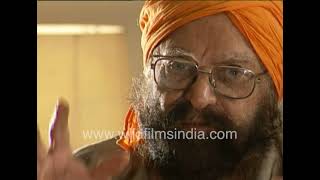
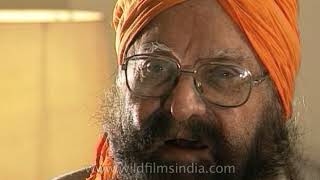
Khushwant Singh shares his thoughts on the acclaimed book 'The Goddess of Small Things' in this insightful interview.

YouTube

India Rejtelmei-The Mysteries of India - Khushwant Singh (1915-2014)

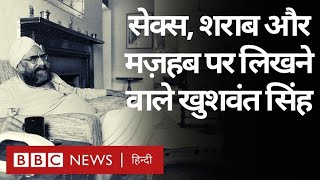
Explore the life and legacy of Khushwant Singh, an eminent Indian journalist, writer, and scholar, in this detailed documentary.

YouTube

📖 Curated Sources

🌱 What changed because of them

Khushwant Singh reshaped Indian journalism by pushing open doors on taboo subjects and infusing secular critique into public discourse, influencing editorial standards at major publications like The Illustrated Weekly of India. His vivid portrayal of Partition in "Train to Pakistan" brought the human tragedy of 1947 into the literary mainstream, while his parliamentary interventions highlighted the complexities of communal and regional identities in modern India. His decision to return the Padma Bhushan set a precedent for literary dissent against government policy.

💬 Social Buzz

🐦

What are people saying about Khushwant Singh?

Found a post from a historian, journalist or notable voice? Share it here and help tell their story. 🇮🇳

💭 Memories & Tributes

Share your memory of Khushwant Singh...
Loading memories...
Is this profile accurate?