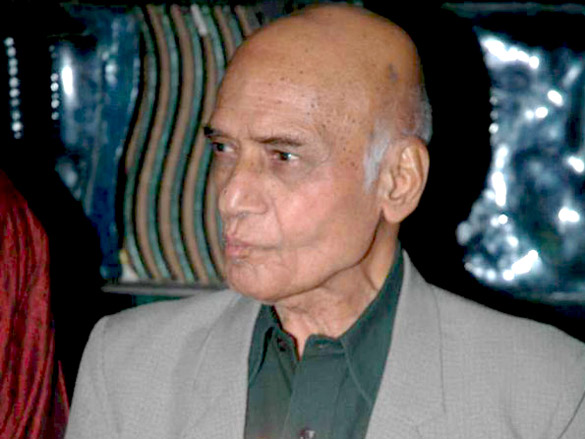
Khayyam, Music Composer
Music Composer

Khayyam

Born 18 February 1927 · Iran

Died 4 December 1131

Composed the music for the classic Bollywood film 'Umrao Jaan' (1981).

🔔 Add birthday reminder

Omar Khayyam (1048–1131) was a Persian poet and polymath, known for his contributions to mathematics, astronomy, philosophy, and Persian literature. He was born in Nishapur, Iran and lived during the Seljuk era, around the time of the First Crusade.

✨ A detail that surprised us

Omar Khayyam’s geometric solution to cubic equations involved intersecting conic sections, a method later credited to Descartes but developed by Khayyam in the 11th century.

1. In 1048, Omar Khayyam was born in Nishapur, Iran, a key city of the Seljuk Empire, where he later memorized the Quran and studied under prominent scholars like Mawlana Qadi Muhammad and Khawjah Abu’l-Hasan al-Anbari.

2. 🌟 Around 1070, Khayyam revolutionized algebra by using geometric methods to solve cubic equations, predating René Descartes' work on the subject by centuries.

3. By 1079, he had challenged the foundations of Euclidean geometry in his treatise Risāla fī šarḥ mā aškala min muṣādarāt kitāb Uqlīdis, which introduced what is now called the Khayyam–Saccheri quadrilateral.

4. 🌞 In 1079, Khayyam helped design the Jalali calendar, a solar calendar with an intricate 33-year intercalation cycle, achieving a precision unmatched by the Gregorian calendar used today.

5. His quatrains (rubāʿiyāt), though debated in authorship, were popularized in 1859 by Edward FitzGerald's English translation, sparking Western fascination with Khayyam’s poetic philosophy.

6. 🪐 Khayyam’s astronomical calculations refined the length of the solar year to unprecedented accuracy, influencing Persian timekeeping and science throughout the medieval era.

7. ❓ How did Khayyam’s mathematical and poetic legacies intertwine to shape both the scientific and cultural worlds centuries after his death in 1131?

Awards & Honours

  • 🏅Padma Bhushan

🔍 One thing most people don't know

In 1859, Edward FitzGerald’s English translation of Khayyam’s rubāʿiyāt popularized Persian quatrains in the West, decades after Khayyam’s death in 1131.

🖼️ Through the Years

Illustration from Rubaiyat of Omar Khayyam featuring Khayyam's poetry (1905)
1905

📅 The Journey

← Drag to explore →
🕊️

Birth in Nishapur, Iran

Omar Khayyam was born in Nishapur, a major city of the Seljuk Empire, known for its scholarly environment. His horoscope was recorded by historian Bayhaqi.

Wikipedia

📚

Early studies under Mawlana Qadi Muhammad

Khayyam memorized much of the Quran and studied religious sciences, Arabic grammar, and literature during his youth.

Mathematical innovations on cubic equations

Khayyam developed geometric solutions for cubic polynomials using intersecting conic sections, a method centuries ahead of its European rediscovery.

Contribution to calendar reform

Khayyam helped design the Jalali calendar, implementing a precise solar calendar system with a 33-year intercalation cycle.

📖

Published treatise on Euclid's axioms

Khayyam authored Risāla fī šarḥ mā aškala min muṣādarāt kitāb Uqlīdis, challenging Euclid's parallel postulate and describing the Khayyam–Saccheri quadrilateral.

🕊️

Death in Nishapur

Omar Khayyam passed away in his hometown of Nishapur, leaving a polymath legacy spanning poetry, mathematics, and astronomy.

📖

Western popularization of rubāʿiyāt

Edward FitzGerald’s English translation of Khayyam’s quatrains brought his poetry to the anglophone world, sparking Orientalist interest.

+Add a moment
1048Birth
c.1060
c.1070
c.1079
c.1080
1131
1859

🗝️ Discoveries

🏆

Khayyam’s Jalali calendar, designed in 1079, features a 33-year intercalation cycle that surpasses the accuracy of the Gregorian calendar introduced 400 years later.

Source: Wikipedia

🌏

The Khayyam–Saccheri quadrilateral, named partly after Khayyam, was first described in his 11th-century work critiquing Euclid’s parallel postulate.

Source: Wikipedia

🏆

Khayyam’s method for solving cubic equations used the intersection of conic sections, a geometric approach not common until the 17th century in Europe.

Source: Wikipedia

🔍

Despite popular association, there remains scholarly debate about which poems in the rubāʿiyāt are authentically Khayyam’s, reflecting cultural transmission complexities.

Source: Wikipedia

👤

Born under Gemini with sun and Mercury ascendant, Khayyam’s horoscope was recorded by historian Bayhaqi, an unusual practice for medieval scholars.

Source: Wikipedia

🏆

Khayyam studied Ptolemy’s Almagest, grounding his astronomical work in classical knowledge while advancing solar year calculations.

Source: Wikipedia

🎥 Speeches & Recordings

🎥 Know a speech or documentary about Khayyam?

📖 Curated Sources

🌱 What changed because of them

Khayyam’s work on the Jalali calendar laid the groundwork for the Persian calendar still used today, impacting timekeeping in Iran for nearly a millennium. His treatise on Euclid’s parallel postulate influenced later developments in non-Euclidean geometry. Additionally, the popularization of his rubāʿiyāt by Edward FitzGerald introduced Persian poetic thought to Western literature, bridging cultural understandings across continents.

💬 Social Buzz

🐦

What are people saying about Khayyam?

Found a post from a historian, journalist or notable voice? Share it here and help tell their story. 🇮🇳

💭 Memories & Tributes

Share your memory of Khayyam...
Loading memories...
Is this profile accurate?