Kailas Nath Kaul, Botanist and Ecologist
Botanist and Ecologist

Kailas Nath Kaul

Born 1 January 1905 · verify — Died 1 January 1983

Founded India's National Botanical Research Institute to advance botanical research and infrastructure.

Kailas Nath Kaul (1905–1983) was an Indian botanist, naturalist, agricultural scientist, horticulturist, herbalist, plant collector and herpetologist, and a world authority on Arecaceae. He founded India's National Botanical Research Institute and was instrumental in organizing the country's modern scientific infrastructure. He is regarded as a vital influence behind his niece Indira Gandhi's proactive role in environmental protection by means of extensive legislative and policy interventions.

A detail that
surprised us

Kaul’s 1947 aerial surveys over Jodhpur’s desert directly led to discovering freshwater aquifers, a breakthrough in solving water scarcity through vegetation pattern analysis.

The Story

1
✈️ In 1947, Kailas Nath Kaul used Maharaja Umaid Singh's private aircraft to conduct aerial surveys over Jodhpur's Thar Desert, discovering underground freshwater aquifers that led to a desert reclamation scheme solving critical water shortages.
2
🌳 In 1948, Kaul founded the National Botanical Research Institute in Lucknow and transformed it into one of the world's top five botanical gardens by 1965, alongside Kew, Bogor, Paris, and New York.
3From 1953 to 1965, Kaul conducted an unprecedented botanical survey covering all of India, from the Karakoram mountains to Kanyakumari, and from the North East Frontier Agency to the Rann of Kutch, mapping diverse flora across vast terrains.
4💧 Kaul pioneered the “Banthra Formula” in Uttar Pradesh, reclaiming thousands of acres of alkaline soil using ecological and vegetation-based methods, enabling sustainable agriculture on previously unusable land.

🏅 Awards & Honours

Padma Shri

🔍 One thing most people don't know
In 1947, Kaul flew over the Thar Desert in a plane owned by the Maharaja of Jodhpur to identify hidden freshwater aquifers, an uncommon use of aerial botany at the time.

🖼️

Through the Years

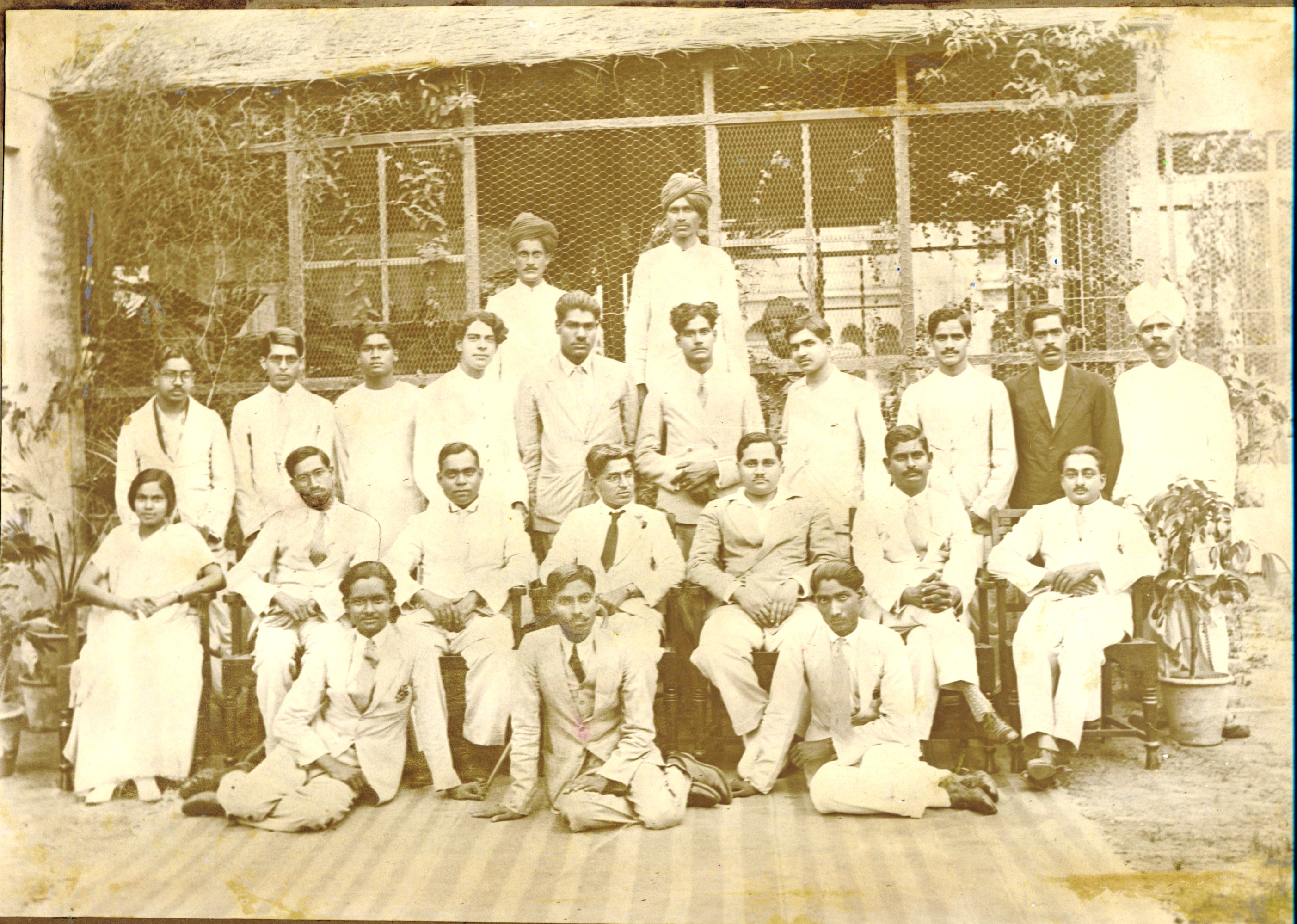
1 photograph from the archives
Kailas Nath Kaul standing in the M.Sc Botany final batch photo at Lucknow University (1928)
1928

🗓️ A Life in Moments

🕊️
Birth
Birth of Kailas Nath Kaul
Born in 1905, Kaul hailed from the Jhelum Valley region of Kashmir, setting the stage for his lifelong botanical interests.
1905
🌟
Other
Boosted Santonin production in Kashmir
Kaul’s research on Artemisia brevifolia increased Santonin yields sixfold, making its production economically viable in India.
1929
Career
Aerial surveys discover desert aquifers
Using the Maharaja of Jodhpur’s aircraft, Kaul identified freshwater aquifers beneath the Thar Desert, aiding water resource management.
1947
Career
Founded National Botanical Research Institute
Kaul established the National Botanical Research Institute in Lucknow, serving as its director until 1965.
1948
Career
Started India-wide botanical survey
Kaul undertook an extensive botanical survey across India, covering diverse ecological zones until 1965.
1953
🏅
Award
Elected President of Palaeobotanical Society
Recognized for his work in ancient plant sciences, Kaul became president of India’s Palaeobotanical Society.
1968
Career
Director of Gardens, Jammu & Kashmir
Kaul took charge of floral conservation and Mughal garden restoration in Jammu and Kashmir, advising the Chief Minister.
1969
Career
First Vice Chancellor at Kanpur Agriculture University
Appointed the inaugural Vice Chancellor of Chandra Shekhar Azad University of Agriculture and Technology, Kanpur.
1975
🕊️
Death
Death of Kailas Nath Kaul
Kaul passed away after a career that shaped botany and ecology in independent India.
1983
More moments to come...
+ Add a moment

🗝️Discoveries

Swipe to uncover hidden stories
01 / 06
🏆ACHIEVEMENT

Between 1953 and 1965, Kaul botanically surveyed the entire Indian subcontinent, from the Karakoram mountains to Kanyakumari, a feat rarely attempted by Indian scientists then.

02 / 06
🏆ACHIEVEMENT

Kaul’s work on Artemisia brevifolia in Kashmir in 1929 increased Santonin production six times, making India economically self-sufficient in this pharmaceutical compound.

03 / 06
🔍LESSER KNOWN

Kaul contributed to the design and development of botanical gardens not only in India but also in Peradeniya (Sri Lanka), Singapore, Bogor (Indonesia), Bangkok (Thailand), Hong Kong, Tokyo (Japan), and Manila (Philippines).

No quote recorded for Kailas Nath Kaul yet.

🌱 What changed because of them

Kaul established the National Botanical Research Institute, which became a premier center for botanical research and conservation in India, influencing plant taxonomy and ecological restoration practices nationally. His pioneering reclamation of saline lands and water resource studies shaped India’s environmental and agricultural policies, inspiring leaders like Indira Gandhi to prioritize environmental legislation and conservation efforts. These efforts contributed to modern scientific infrastructure and botanical gardens across South and Southeast Asia.

💬 Social Buzz

💬

What are people saying about Kailas Nath Kaul?

Share posts from historians, journalists and notable voices about this icon. 🇮🇳

💭 Memories & Tributes

Share your memory of Kailas Nath Kaul...
Loading memories...
Is this profile accurate?