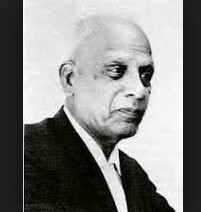
K. R. Ramanathan, Physicist, Meteorologist
Physicist, Meteorologist

K. R. Ramanathan

Born 28 February 1893 · Tamil Nadu

Died 31 December 1984

First director of Physical Research Laboratory, Ahmedabad, pioneering space and atmospheric research in India.

🔔 Add birthday reminder

Kalpathi Ramakrishna Ramanathan was an Indian physicist and meteorologist. He was the first director of the Physical Research Laboratory, Ahmedabad. From 1954 to 1957, Ramanathan was President of the International Union of Geodesy and Geophysics (IUGG). Ramanathan was awarded the Padma Bhushan in 1965 and the Padma Vibhushan in 1976.

✨ A detail that surprised us

In 1923, Ramanathan observed an unusual fluorescence effect in water diffracted light, a phenomenon linked to molecular vibrations that was ahead of its time in optical physics.

1. In 1922, at the University of Madras, K. R. Ramanathan earned the first-ever D.Sc. degree awarded by the institution, marking a pioneering academic achievement in Indian science.

2. 🌦️ Between 1925 and 1945, he mapped the monsoon patterns of India and created the first rainfall map of Travancore, blending physics with meteorology at the India Meteorological Department.

3. As director of the Kodaikanal Solar Physics Observatory in the 1940s, Ramanathan played a key role in transforming it into what became the Indian Institute of Astrophysics, positioning India on the global solar research map.

4. 🌍 From 1954 to 1957, he served as President of the International Union of Geodesy and Geophysics, an unusual honor for an Indian scientist during the early post-independence era.

5. In 1948, after reaching retirement age, he became the first director of the Physical Research Laboratory in Ahmedabad, an institution that would become central to India’s space and atmospheric sciences.

6. 🎖️ Awarded the Padma Bhushan in 1965 and later the Padma Vibhushan in 1976, Ramanathan’s recognitions spanned two decades, reflecting his enduring influence in science policy and research.

7. ❓ How did Ramanathan’s early work on atmospheric ozone and solar radiation influence India’s approach to climate research and space exploration decades later?

Awards & Honours

  • 🏅Padma Bhushan
  • 🏅Padma Vibhushan

🔍 One thing most people don't know

In 1922, Ramanathan received the first D.Sc. degree awarded by the University of Madras, a milestone marking the formal recognition of advanced scientific research in India.

🖼️ Through the Years

📷 No photos yet

📅 The Journey

← Drag to explore →
🕊️

Born in Kalpathi, Tamil Nadu

K. R. Ramanathan was born to Ramakrishna Sastrigal, a Sanskrit scholar and astrologer, setting a scholarly family background.

Wikipedia

📚

Earned B.A. (Hons.) in Physics

Graduated from Presidency College, Madras, laying the foundation for his scientific career.

📚

Received D.Sc. from University of Madras

Awarded the first D.Sc. degree by the university after studies on X-ray diffraction in liquids under C. V. Raman.

Joined India Meteorological Department

Started as senior scientist, focusing on atmospheric ozone, monsoons, and solar radiation.

Retired from government service

Left India Meteorological Department at the age of 55 and later became first director of Physical Research Laboratory.

Became President of IUGG

Led the International Union of Geodesy and Geophysics from 1954 to 1957.

🏅

Awarded Padma Bhushan

Received one of India’s highest civilian honors for contributions to science.

🏅

Awarded Padma Vibhushan

Received India’s second highest civilian award recognizing his lifelong scientific work.

🕊️

Passed away

Died at the age of 91, leaving a legacy in meteorology and physics.

+Add a moment
1893Birth
1914
1922
1925
1948
1954
1965
1976
1984

🗝️ Discoveries

🔍

During the 1920s, he developed the first rainfall map of Travancore by traveling extensively across the region, combining fieldwork with meteorological theory.

Source: Wikipedia

🌏

As director of the Colaba and Alibag Magnetic Observatories, Ramanathan was instrumental in their transformation into the Indian Institute of Geomagnetism, a key step in institutionalizing Earth science research in India.

Source: Wikipedia

🌏

He was appointed Superintending Meteorologist at the Poona Observatory during World War II, where he trained meteorological personnel for the expanding Indian Air Force.

Source: Wikipedia

🏆

Ramanathan was president of the International Union of Geodesy and Geophysics from 1954 to 1957, a rare international leadership role for an Indian scientist in the mid-20th century.

Source: Wikipedia

🏆

He received the Padma Bhushan in 1965 and the Padma Vibhushan in 1976, awards that frame his contributions over a sustained period rather than a single event.

Source: Wikipedia

🎥 Speeches & Recordings

🎥 Know a speech or documentary about K. R. Ramanathan?

📖 Curated Sources

🌱 What changed because of them

Ramanathan’s leadership at the Physical Research Laboratory laid the groundwork for India’s space research initiatives, directly influencing institutions like ISRO. His meteorological studies improved monsoon prediction models critical for Indian agriculture and disaster preparedness. The conversion of solar and magnetic observatories under his guidance established foundational centers for astrophysics and geomagnetism in India.

💬 Social Buzz

🐦

What are people saying about K. R. Ramanathan?

Found a post from a historian, journalist or notable voice? Share it here and help tell their story. 🇮🇳

💭 Memories & Tributes

Share your memory of K. R. Ramanathan...
Loading memories...
Is this profile accurate?