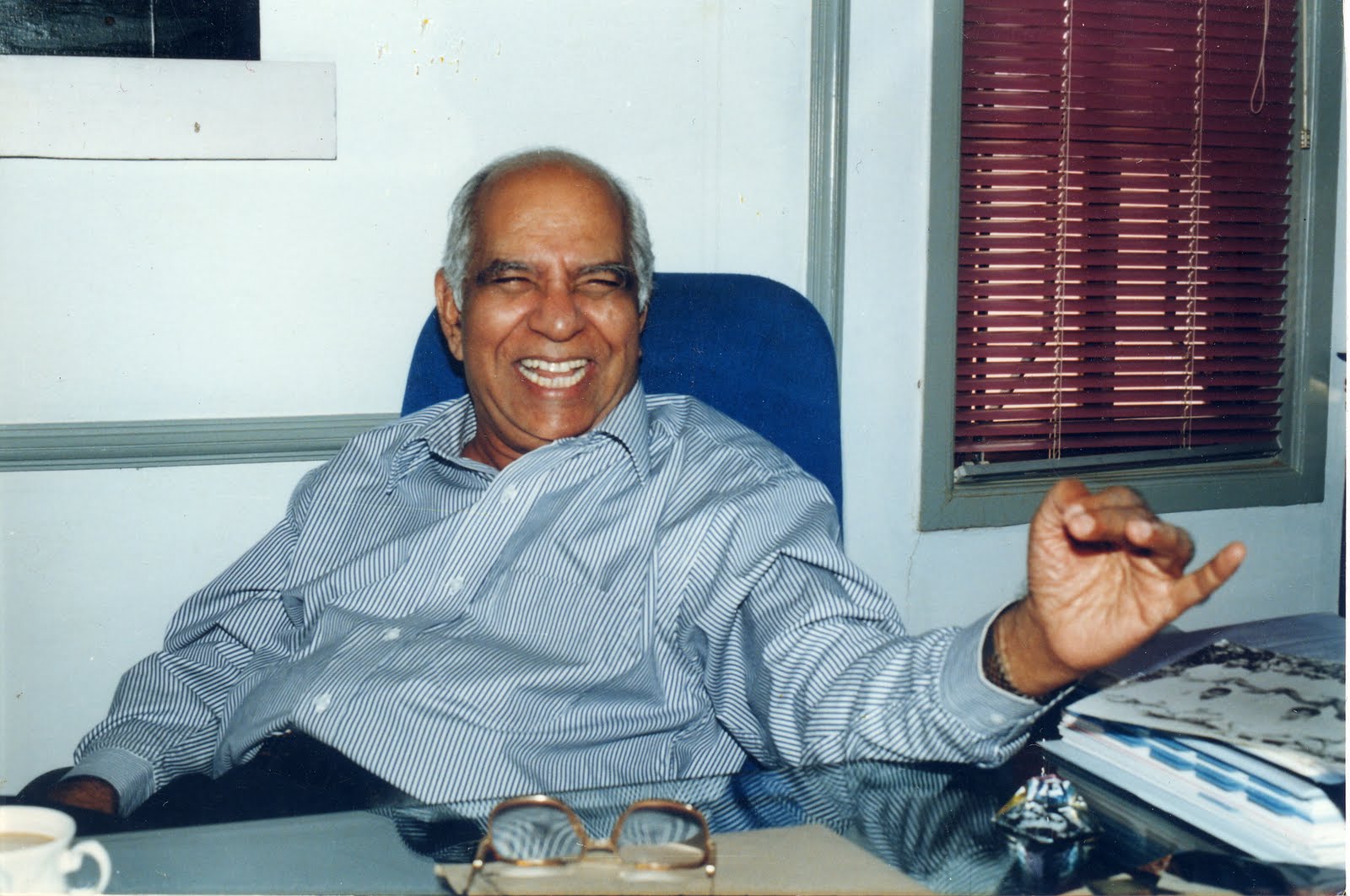
K. P. P. Nambiar, Industrialist and Technocrat
Industrialist and Technocrat

K. P. P. Nambiar

Born 15 April 1929 · Kerala — Died 30 June 2015

Founded the Electronics Corporation of India Limited (ECIL) in 1967 to advance indigenous electronics technology.

Kunnath Puthiyaveettil Padmanabhan Nambiar DIC (Lond), FIEE (Lond), CEngg (Lond.), more popularly known as K.P.P. Nambiar, was an Indian industrialist and technocrat, known for his work in the field of industrial development and technology. He was awarded Padma Bhushan by Government of India for his contributions to the field of technology in 2006.

A detail that
surprised us

Nambiar was behind the introduction of silicon transistor radios in India in 1968, a groundbreaking shift from vacuum tube radios that revolutionized Indian consumer electronics.

The Story

1
In 1951, K.P.P. Nambiar left Kerala for London to study transistors and semiconductors at Imperial College, diving into a technology barely known in India at the time.
2
🌍 Between 1954 and 1957, he was a research scholar at Imperial College and then worked at Texas Instruments in the USA, gaining cutting-edge experience before returning to India in 1963 under Nehru’s scientist pool scheme.
3In 1967, at Bharat Electronics Limited, Nambiar established India’s first communication crystals factory in Bangalore, laying groundwork for indigenous electronics manufacturing.
4⚙️ That same year, he transformed Tata Electric Companies’ consumer electronics division by launching the country’s first silicon transistor radios and pioneering products like electronic calculators and motor speed controllers.

🏅 Awards & Honours

2006
Padma Bhushan

🔍 One thing most people don't know

In 1963, Nambiar returned to India as part of Jawaharlal Nehru’s scientist pool scheme, a program designed to bring Indian scientists back from abroad to boost domestic technology development.

📸 Through the Years

📷

No photos yet

Help preserve history — add a photo of this icon

🗓️ A Life in Moments

🕊️
Birth
Birth in Kerala
Kunnath Puthiyaveettil Padmanabhan Nambiar was born in Kerala on April 15, 1929.
1929
📚
Education
Joined Imperial College, London
Started higher studies in transistors and semiconductors at Imperial College of Science & Technology, University of London.
1951
Career
Research Scholar at Imperial College
Worked as a research scholar in semiconductor technology from 1954 to 1957.
1954
Career
Returned to India under Scientist Pool Scheme
Returned to India as part of Nehru’s program to bring back Indian scientists from abroad.
1963
Career
Set Up Communication Crystals Factory
At Bharat Electronics Limited, he established the first communication crystals factory in Bangalore.
1967
Career
Launched Silicon Transistor Radios
Introduced silicon transistor radios to India through Tata’s National Radio & Electronics Company (NELCO).
1967
Career
Appointed Chairman of Keltron
Became first chairman and managing director of Kerala State Electronics Development Corporation Limited (Keltron).
1973
Career
Founded Electronics Research and Development Centre
Set up ER & DC at Thiruvananthapuram to boost electronics R&D supporting Keltron's manufacturing.
1980
Career
Appointed Chairman, Department of Electronics
Indira Gandhi appointed him chairman and managing director of the Department of Electronics.
1985
🏅
Award
Received Padma Bhushan
Awarded the Padma Bhushan by the Government of India for contributions to technology.
2006
🕊️
Death
Death
K.P.P. Nambiar passed away on June 30, 2015.
2015
More moments to come...
+ Add a moment

🗝️Discoveries

Swipe to uncover hidden stories
01 / 04
🏆ACHIEVEMENT

During his time at Tata Electric Companies in 1967, Nambiar was instrumental in introducing India’s first silicon transistor radios through National Radio & Electronics Company (NELCO), marking a technological leap in Indian consumer electronics.

02 / 04
🌍HISTORICAL IMPACT

Keltron’s Electronics Research and Development Centre, established by Nambiar in 1980 in Thiruvananthapuram, served as a model for other states like Maharashtra and Uttar Pradesh to create their own electronics development corporations.

03 / 04
🔍LESSER KNOWN

Nambiar’s career began with specialized research in semiconductors at Imperial College, London, between 1954 and 1957, when semiconductor technology was still in its infancy worldwide.

No quote recorded for K. P. P. Nambiar yet.

🌱 What changed because of them

K.P.P. Nambiar’s work at Keltron and his establishment of the Electronics Research and Development Centre catalyzed the foundation of multiple state-level electronics corporations like MELTRON and UPTRON, which fostered domestic electronics production. His tenure helped India transition from import dependence to indigenous manufacturing in electronics, influencing policy that supported the nascent industry’s growth through the 1980s and beyond.

💬 Social Buzz

💬

What are people saying about K. P. P. Nambiar?

Share posts from historians, journalists and notable voices about this icon. 🇮🇳

💭 Memories & Tributes

Share your memory of K. P. P. Nambiar...
Loading memories...
Is this profile accurate?