John Kenneth Galbraith, Economist, Diplomat
Economist, Diplomat

John Kenneth Galbraith

Born 15 October 1908 · Canada — Died 29 April 2006

Authored influential economic books popular from the 1950s through the 2000s.

John Kenneth Galbraith, also known as J. K. Galbraith or Ken Galbraith, was a Canadian-American economist, diplomat, public official, and intellectual. His books on economic topics were bestsellers from the 1950s through the 2000s. As an economist, he leaned toward post-Keynesian economics from an institutionalist perspective.

✨

A detail that
surprised us

“

At 6 feet 9 inches (206 cm), Galbraith was unusually tall for an economist, a fact noted alongside his towering intellectual presence at Harvard for half a century.

The Story

1
In 1941, John Kenneth Galbraith was appointed deputy director of the Office of Price Administration in the U.S., where he implemented strict controls on prices, wages, and rents to curb wartime inflation during World War II.
2
🌟 At 6 feet 9 inches tall, Galbraith was not only towering in stature but also in intellect, serving Harvard University as a professor of economics for over 50 years starting from the 1930s.
3In 1952, Galbraith published "American Capitalism," the first of a trilogy that critically examined the structure and consequences of the modern American economy, challenging conventional economic thought.
4🌏 From 1961 to 1963, he served as the United States Ambassador to India under Kennedy, navigating complex diplomatic relations during a pivotal era of Cold War politics and India’s postcolonial development.

🏅 Awards & Honours

—
Padma Vibhushan

🔍 One thing most people don't know
“

In 1941, Galbraith was responsible for stabilizing prices, wages, and rents across the entire U.S. economy during World War II through the Office of Price Administration, a vital role that helped prevent wartime inflation and shortages.

🖼️

Through the Years

6 photographs from the archives
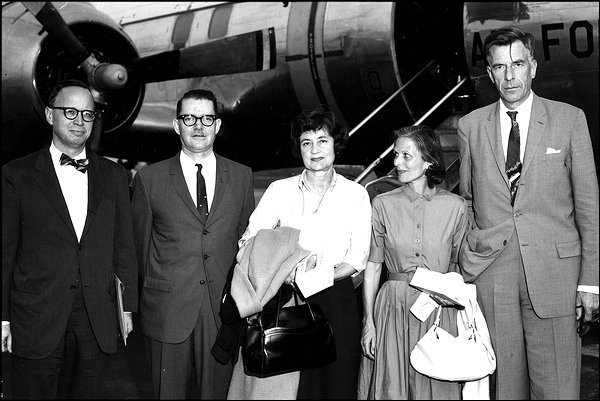
John Kenneth Galbraith with Arthur M. Schlesinger Jr. in Calcutta (1960).
1960
John Kenneth Galbraith greets First Lady Jacqueline Kennedy at Washington National Airport (1962).
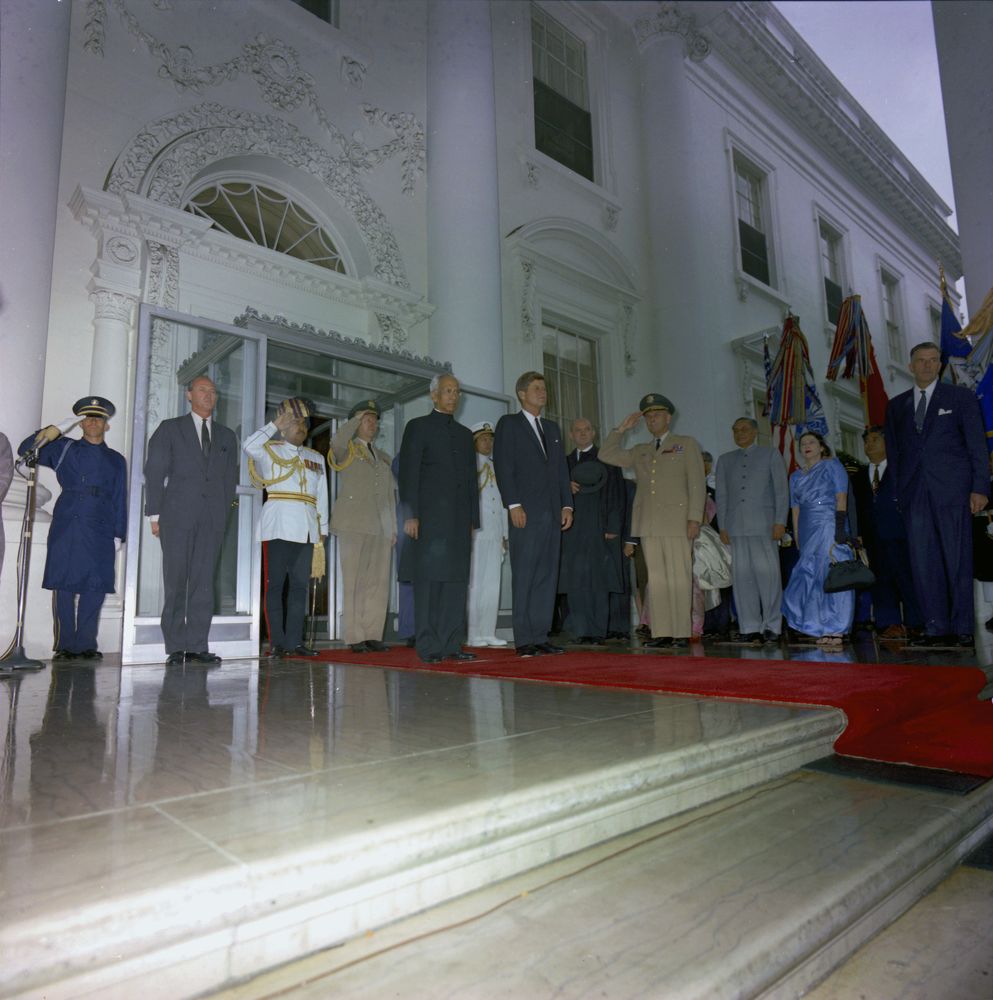
John Kenneth Galbraith at arrival ceremonies for President of India Dr. Sarvepalli Radhakrishnan at the White House (1963).
John Kenneth Galbraith attending a conference with business leaders in Amsterdam (1971).
John Kenneth Galbraith with Venezuelan presidents Rafael Caldera and Rómulo Betancourt in Caracas (1979).

🗓️ A Life in Moments

🕊️
Birth
Birth in Iona Station, Ontario
John Kenneth Galbraith was born in the rural town of Iona Station, Canada, to Scottish-Canadian parents, setting roots far from the economic centers he would later influence.
1908
📚
Education
Graduates Ontario Agricultural College
Galbraith earned a Bachelor of Science in Agriculture, an unusual academic background for a future economist, from the Ontario Agricultural College affiliated with the University of Toronto.
1931
⚡
Career
Deputy Director of Office of Price Administration
During World War II, Galbraith took charge of stabilizing prices, wages, and rents across the U.S. economy to prevent inflation and shortages, a critical wartime role.
1941
📖
Publication
Publishes 'American Capitalism'
Galbraith released the first volume of his influential economic trilogy, critiquing the concentration of corporate power and its effects on the market.
1952
⚡
Career
Appointed U.S. Ambassador to India
Under President Kennedy, Galbraith served as ambassador during a tense Cold War period, fostering diplomatic relations with India amid global geopolitical shifts.
1961
📖
Publication
Releases 'The New Industrial State'
This book argued that large corporations and their planners had reshaped the economy, challenging traditional free-market assumptions.
1967
🏅
Award
Receives Presidential Medal of Freedom
Galbraith was honored with the highest civilian award in the U.S., recognizing his long public service and economic contributions.
2000
🕊️
Death
Death at Age 97
Galbraith passed away, leaving behind a vast legacy of writings and public service that shaped 20th-century economic thought.
2006
More moments to come...
+ Add a moment

🗝️Discoveries

Swipe to uncover hidden stories
01 / 04
🏆ACHIEVEMENT

Galbraith wrote over four dozen books, including novels, and published more than a thousand essays and articles, making him one of the most prolific economists and public intellectuals of the 20th century.

02 / 04
🔍LESSER KNOWN

Despite being born in Canada, Galbraith became a central figure in U.S. economic policy, serving under four presidents from Roosevelt to Johnson and impacting both domestic and international affairs.

03 / 04
💡SURPRISING

Galbraith was placed on President Nixon’s infamous 'Enemies List' during the Watergate scandal, highlighting his outspoken political activism and opposition to Nixon’s policies.

“

"The modern conservative is engaged in one of man's oldest exercises in moral philosophy; that is, the search for a superior moral justification for selfishness."

— John Kenneth Galbraith

🌱 What changed because of them

Galbraith's economic theories, especially from "The Affluent Society" and "The New Industrial State," challenged mainstream free-market economics and influenced policy debates on public welfare and corporate power. His tenure as US Ambassador to India during the Kennedy administration helped shape Cold War diplomacy and fostered ties between the two nations. His wartime role in price controls helped stabilize the US economy during a critical period of scarcity and inflation.

💬 Social Buzz

💬

What are people saying about John Kenneth Galbraith?

Share posts from historians, journalists and notable voices about this icon. 🇮🇳

💭 Memories & Tributes

Share your memory of John Kenneth Galbraith...
Loading memories...
Is this profile accurate?