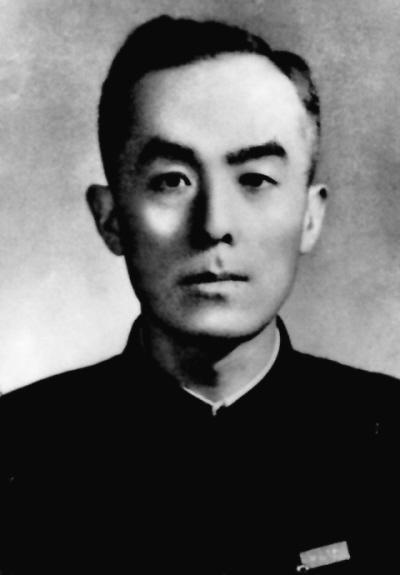
Ji Xianlin, Linguist, Indologist, and Scholar
Linguist, Indologist, and Scholar

Ji Xianlin

Born 6 August 1911 ยท China

Died 11 July 2009

Translated and preserved ancient Sanskrit and Tocharian texts into modern Chinese.

๐Ÿ”” Add birthday reminder

Ji Xianlin was a Chinese Indologist, linguist, paleographer, historian and writer who has been honored by the governments of both India and China. Ji was proficient in many languages including Chinese, Sanskrit, Arabic, English, German, French, Russian, Pali and Tocharian, and translated many works. He published a memoir, The Cowshed: Memories of the Chinese Cultural Revolution, about his persecution during the Cultural Revolution.

โœจ A detail that surprised us

During the Cultural Revolution, Ji Xianlin secretly translated the Ramayana into Chinese while risking imprisonment for intellectual dissent.

1. ๐ŸŒ In 1936, Ji Xianlin chose to study Sanskrit and ancient languages like Pali at the University of Gรถttingen, Germany, under Professor Ernst Waldschmidt, setting the stage for his pioneering Indological research.

2. ๐Ÿ“œ By 1941, Ji had earned his PhD and delved into the obscure Tocharian language with Emil Sieg, later translating rare fragments of the Tocharian Maitreyasamiti-Nataka discovered in Yanqi in 1974.

3. In 1946, Ji returned to China to become a professor at Peking University, where he founded the Department of Eastern Languages and authored 40 articles and 13 academic papers in just three years.

4. ๐Ÿ”ฅ During the Cultural Revolution (1966โ€“1976), Ji secretly translated the Ramayana from Sanskrit into Chinese, preserving its poetic form despite the grave risk of persecution.

5. ๐Ÿฌ In the 1960s, Ji unexpectedly became an expert in the history of sugar, sparked by a Dunhuang scroll sent to him in 1981 that inspired detailed research on the China-India sugar exchange.

6. In 1978, Ji was appointed vice president of Peking University and led the Chinese Academy of Sciences' Research Institute on South Asia, publishing over 200 papers across ten academic fields.

7. โ“ How did Ji Xianlinโ€™s mastery of nine languages, including the rare Tocharian, enable him to reveal forgotten cultural exchanges between India and China, reshaping our understanding of ancient Asian history?

Awards & Honours

  • ๐Ÿ…Padma Bhushan

๐Ÿ” One thing most people don't know

Ji Xianlin mastered at least nine languages, including the nearly extinct Tocharian, which he studied under Emil Sieg in Germany in the 1940s.

๐Ÿ–ผ๏ธ Through the Years

Ji Xianlin in 1936 showing his early academic years
1936
Ji Xianlin in 1952 during his scholarly career
1952

๐Ÿ“… The Journey

โ† Drag to explore โ†’
๐Ÿ•Š๏ธ

Born in Linqing, Shandong, China

Ji Xianlin was born in Linqing, Shandong province, setting the origin for his cross-cultural scholarly pursuits.

โ€” Wikipedia

๐Ÿ“š

Studies Sanskrit in Germany

At the University of Gรถttingen, Ji began studying Sanskrit and Pali under Ernst Waldschmidt, focusing on ancient languages.

๐Ÿ“š

Earns PhD and studies Tocharian

Ji received his PhD and studied the rare Tocharian language under Emil Sieg, deepening his linguistic expertise.

โšก

Joins Peking University faculty

Recommended by Chen Yinke, Ji began his career as professor and founder of the Eastern Languages Department at Peking University.

โšก

Cultural Revolution persecution

During the Cultural Revolution, Ji was persecuted and secretly translated the Ramayana into Chinese, preserving its poetic form.

โšก

Becomes vice president of Peking University

Ji was appointed vice president and director of the Chinese Academy of Sciences' South Asia Research Institute.

๐Ÿ“–

Publishes Tocharian text translation

Ji published analysis and translation of Tocharian Maitreyasamiti-Nataka fragments found in Yanqi in 1974.

๐Ÿ•Š๏ธ

Death in Beijing

Ji Xianlin passed away in Beijing at the age of 97, concluding a long scholarly life bridging China and India.

+Add a moment
1911Birth
1936
1941
1946
1966
1978
1998
2009

๐Ÿ—๏ธ Discoveries

๐Ÿ”

In the 1960s, an accidental research interest in sugar history emerged from Ji after receiving a Dunhuang scroll in 1981, leading him to become a specialist in the China-India sugar trade.

Source: Clausius Scientific Press article

๐Ÿ‘ค

Despite joining the Communist Party and participating in campaigns against dissenting intellectuals in the 1950s, Ji himself was persecuted during the Cultural Revolution, a harsh irony he detailed in his memoir 'The Cowshed.'

Source: Wikipedia

๐ŸŒ

Ji Xianlinโ€™s research revealed that paper, often thought to have spread from China westward, also traveled eastward into India, highlighting overlooked cultural exchanges.

Source: Wikipedia

๐Ÿ†

In 1998, Ji published a detailed translation and analysis of Tocharian fragments discovered decades earlier, contributing to the study of this rare Indo-European language.

Source: Wikipedia

โ€œ

"He studied Buddhism, [...] the depth of the language philology, the use of historical methods, and long-term thinking for Chinese and foreign cultural exchanges."

โ€” Ji Xianlin

๐ŸŽฅ Speeches & Recordings

๐ŸŽฅ Know a speech or documentary about Ji Xianlin?

๐Ÿ“– Curated Sources

๐ŸŒฑ What changed because of them

Ji Xianlin established the foundation for Eastern language studies at Peking University, which became a major center for Indology in China. His research on Buddhist migration and Sino-Indian cultural exchanges influenced academic institutions and deepened cross-cultural understanding. His translations and historical studies continue to inform both Chinese and Indian scholarly communities.

๐Ÿ’ฌ Social Buzz

๐Ÿฆ

What are people saying about Ji Xianlin?

Found a post from a historian, journalist or notable voice? Share it here and help tell their story. ๐Ÿ‡ฎ๐Ÿ‡ณ

๐Ÿ’ญ Memories & Tributes

Share your memory of Ji Xianlin...
Loading memories...
Is this profile accurate?