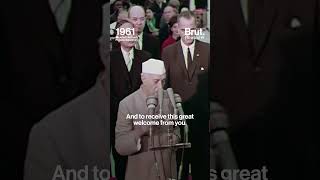
Jawaharlal Nehru
Born 14 November 1889 · Uttar Pradesh
Died 27 May 1964
Served as India's first Prime Minister from 1947 to 1964, shaping its early democratic institutions.
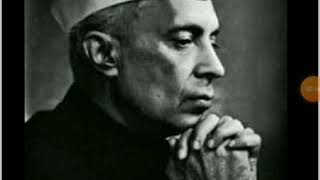
🔔 Add birthday reminderJawaharlal Nehru was an Indian anti-colonial nationalist, secular humanist, social democrat, and statesman who was a central figure in India during the middle of the 20th century. Nehru was a principal leader of the Indian nationalist movement in the 1930s and 1940s. Upon India's independence in 1947, he served as the country's first prime minister for 16 years. Nehru promoted parliamentary democracy, secularism, and science and technology during the 1950s, powerfully influencing India's arc as a modern nation.
✨ A detail that surprised us
Nehru wrote 'Letters from a Father to His Daughter' in 1929 while imprisoned, a book still widely read worldwide.
1. 🌍 Born in Allahabad in 1889, Jawaharlal Nehru was educated at Harrow School and Trinity College, Cambridge, before returning to India in 1912 to practice law at Allahabad High Court, where his interest in politics took root.
2. ✊ In 1929, as president of the Indian National Congress, Nehru shocked many by demanding complete independence from British rule, marking a decisive shift in the freedom movement's aims.
3. 🚩 During the Quit India Movement of 1942, Nehru was imprisoned for nearly three years, emerging in 1945 to a drastically changed political landscape shaped by growing communal tensions.
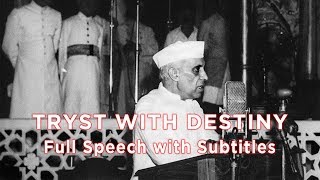
4. 🇮🇳 On 15 August 1947, Nehru delivered his iconic "Tryst with Destiny" speech at the stroke of midnight and raised the Indian flag at the Red Fort, officially becoming the first prime minister of independent India.
5. 🏛️ He oversaw the adoption of the Indian Constitution on 26 January 1950, transforming India into a secular republic within the Commonwealth, solidifying parliamentary democracy.
6. 🌐 Nehru pioneered the Non-Aligned Movement in the early 1950s, steering India through Cold War tensions by refusing to join either the US or Soviet blocs.
7. ❓ How did Nehru’s vision of secularism and scientific progress shape India’s identity amid the challenges of partition and emerging global conflicts?
Awards & Honours
- 🏅Bharat Ratna
🔍 One thing most people don't know
Nehru spent over nine years in British prisons across multiple incarcerations during the 1930s and 40s, often using this time to write influential books and letters.
🖼️ Through the Years
📅 The Journey
🗝️ Discoveries
"Long years ago we made a tryst with destiny, and now the time comes when we shall redeem our pledge."
— Jawaharlal Nehru
🎥 Speeches & Recordings
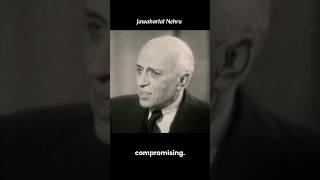
Jawaharlal Nehru’s first TV appearance | Archives | BBC News India
YouTube📖 Curated Sources
🌱 What changed because of them
Nehru’s leadership established the foundations of India’s parliamentary democracy and secular state, influencing the creation of key institutions like the Planning Commission and the establishment of premier scientific institutions such as the Indian Institutes of Technology. His foreign policy of nonalignment positioned India as an independent voice during the Cold War, shaping its diplomatic identity for decades.
💬 Social Buzz
🐦
What are people saying about Jawaharlal Nehru?
Found a post from a historian, journalist or notable voice? Share it here and help tell their story. 🇮🇳