Jamini Roy
Born 11 April 1887 · West Bengal
Died 24 April 1972
Popularizing Bengal folk art style in modern Indian painting.
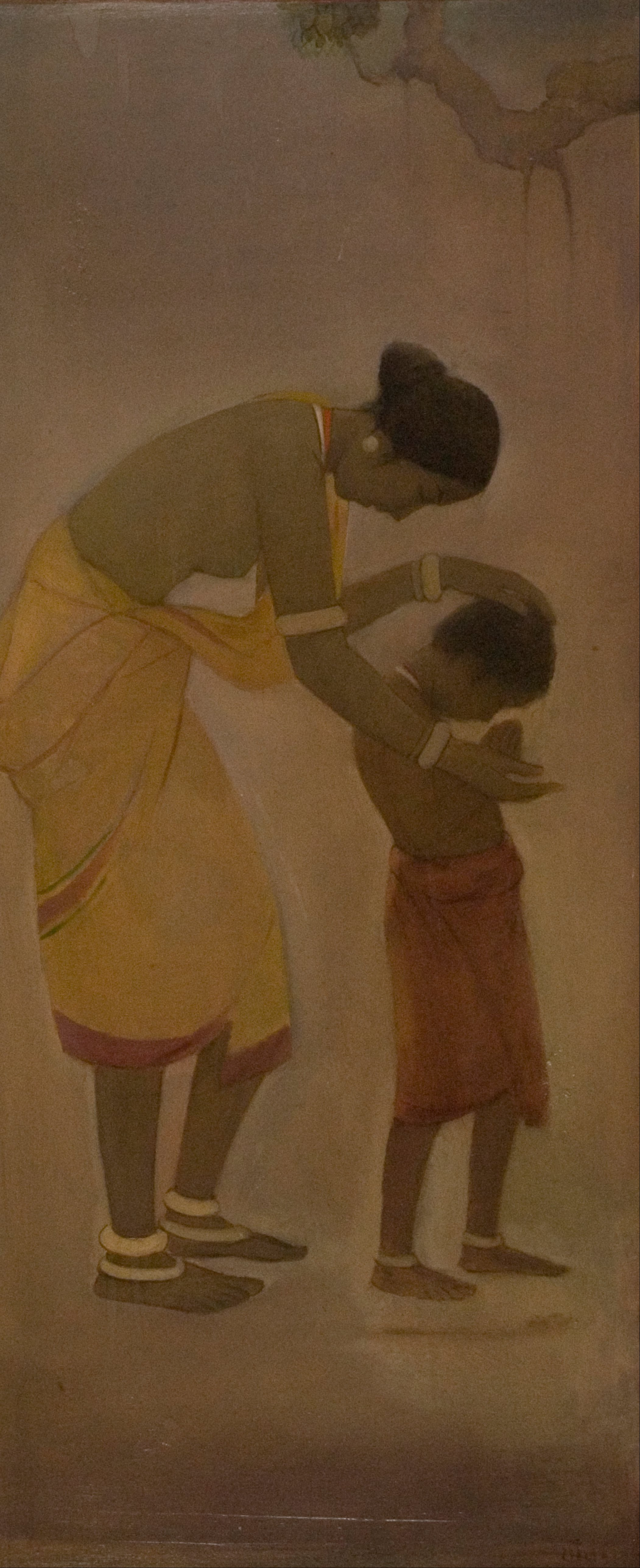
🔔 Add birthday reminderJamini Roy was an Indian painter. He was honoured by the Government of India the award of Padma Bhushan in 1954. He remains one of the most famous pupils of Abanindranath Tagore, another praised Indian artist and instructor. Roy's highly simplified, flattened-out style, and reminiscent of European modern art was influenced by the “bazaar” paintings sold at Indian temples as talismans.
✨ A detail that surprised us
Jamini Roy produced about 20,000 paintings in his lifetime, averaging nearly 10 paintings a day while adhering to a consistent folk-inspired style.
1. 🎨 In 1908, Jamini Roy graduated from the Government College of Art in Kolkata, trained in Western academic realism under Abanindranath Tagore, yet soon rejected this style to embrace indigenous folk traditions.
2. Between 1921 and 1924, he radically shifted his style inspired by Santhal tribal dances and Kalighat pat paintings, pioneering a flattened, bold line style with organic tempera pigments.
3. 🖌️ By 1938, Roy held his first solo exhibition in Calcutta, marking his emergence as a leading artist whose work was embraced by both the Bengali middle class and European communities.
4. In 1946, Roy exhibited in London, bringing Bengali folk art motifs to an international audience, a rare achievement for an Indian artist during colonial times.
5. 🏅 In 1954, the Government of India awarded him the Padma Bhushan, recognizing his role in reshaping Indian modern art by rooting it in local traditions rather than Western academic styles.
6. Collaborating closely with his son Amiya, Roy maintained a prolific studio practice, producing around 20,000 paintings, often working as a team to speed color filling of his outlined compositions.
7. 📜 In 1976, four years after his death, the Archaeological Survey of India declared Roy's artworks national treasures, banning their export under the Antiquities and Art Treasures Act.
8. ❓ How did Jamini Roy’s deliberate choice to use humble materials like lamp black and earth pigments challenge the colonial art establishment and redefine Indian identity in painting?
Awards & Honours
- 🏅Padma Bhushan · 1954
🔍 One thing most people don't know
Jamini Roy sometimes called himself a 'patua', identifying closely with the folk artists who produced Kalighat pats, the popular temple souvenirs that inspired his style.
🖼️ Through the Years
📅 The Journey
🗝️ Discoveries
"Peace is not good for an artist, Art is born of experience, of stress and strain, wrestling with problems, intellectual, and physical."
— Jamini Roy
🎥 Speeches & Recordings
The two talents of Bengal- Jamini Roy and Shantanu Moitra
YouTube📖 Curated Sources
🌱 What changed because of them
Jamini Roy redefined modern Indian art by rooting it firmly in Bengali folk traditions, challenging colonial art norms. His work influenced institutions like the Lalit Kala Akademi and Visva-Bharati University, and his paintings were legally protected as national treasures, ensuring preservation of indigenous art heritage. His approach inspired generations of artists to embrace local cultural expressions over Western academic influences.
💬 Social Buzz
🐦
What are people saying about Jamini Roy?
Found a post from a historian, journalist or notable voice? Share it here and help tell their story. 🇮🇳