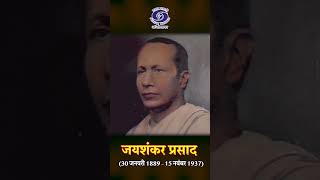
Jaishankar Prasad, Poet, Playwright
Poet, Playwright

Jaishankar Prasad

Born 30 January 1889 · Uttar Pradesh

Died 14 January 1937

Authored the Hindi play 'Skandagupta' which revived historical drama in modern Hindi literature.

🔔 Add birthday reminder

Jaishankar Prasad was a prominent figure in modern Hindi literature as well as Hindi theatre. Prasad was his pen name. He was also known as Chhayavadi kavi.

✨ A detail that surprised us

Prasad’s 1928 play 'Skandagupta' was revived in the 1960s with minimal changes by Shanta Gandhi at the National School of Drama, bridging early 20th-century and modern Hindi theatre.

1. Born on January 30, 1889, in Benares (now Varanasi), Jaishankar Prasad began his literary career writing poetry in the Braj dialect, capturing the cultural essence of early 20th-century Uttar Pradesh.

2. 🌊 In 1936, he published 'Kāmāyanī,' an epic poem blending mythology and philosophy, which became a cornerstone of the Chhayavad movement, shaping Hindi Romanticism.

3. Jaishankar Prasad's plays like 'Skandagupta' (1928) and 'Chandragupta' revived ancient Indian history on stage, with the National School of Drama's Shanta Gandhi reviving 'Skandagupta' in the 1960s, preserving its original script for modern audiences.

4. ✍️ His poetic language deliberately avoided Persian influences, favoring Sanskritized Hindi, a linguistic choice that distinguished his works in the evolving Hindi literary landscape of the 1920s and 30s.

5. His 1925 elegy 'Aansoo' (Tears) expressed profound personal grief after his wife's death, blending romantic sorrow with hopeful resilience, making it a lasting piece of Hindi literature.

6. 📜 Beyond poetry and drama, Prasad experimented with novels, stories, and essays, including the unfinished novel 'Iravati' and story collection 'Pratidhvani,' reflecting the intellectual currents of his era.

7. His death on November 15, 1937, at age 47 in Benares marked the end of a prolific but relatively brief literary career that deeply influenced Hindi literature's direction.

8. ❓ How did Jaishankar Prasad’s fusion of ancient themes and Sanskritized language shape the identity of Hindi literature during the pre-independence period?

Awards & Honours

🔍 One thing most people don't know

Jaishankar Prasad initially wrote poetry in the Braj dialect with his collection 'Chitradhar' but later shifted to Khadi dialect or Sanskritized Hindi to align with the Chhayavad movement’s ideals in the 1920s and 30s.

🖼️ Through the Years

Jaishankar Prasad featured on an Indian postage stamp honoring his literary contributions (1991)
1991

📅 The Journey

← Drag to explore →
🕊️

Birth in Benares, Uttar Pradesh

Jaishankar Prasad was born in Benares, a cultural hub of northern India, setting the stage for his future literary contributions.

Wikipedia

📖

Published 'Kānan kuwer'

One of Prasad's early poetry works, showcasing his evolving poetic style during the pre-Chhayavad period.

📖

Released 'Aansū' (Tears)

A deeply personal and romantic elegy written after the death of his first wife, blending sorrow with hope.

📖

Wrote drama 'Skandagupta'

This historical play on Emperor Skandagupta was later revived in the 1960s at the National School of Drama.

📖

Published epic poem 'Kāmāyanī'

'Kāmāyanī' became a defining work of Hindi Romanticism, combining mythological themes with philosophical depth.

🕊️

Death in Benares

Jaishankar Prasad passed away at age 47, leaving behind a rich legacy in Hindi literature and theatre.

🌟

Revival of 'Skandagupta' by Shanta Gandhi

The National School of Drama staged Prasad's play with minimal script changes, bringing his historical drama to new audiences.

+Add a moment
1889Birth
1913
1925
1928
1936
1937
1960

🗝️ Discoveries

💡

His epic poem 'Kāmāyanī' (1936) is based on the ancient story of Manu and the flood, blending mythology with philosophical reflections uncommon in Hindi literature of that time.

Source: Wikipedia

🌏

Shanta Gandhi’s 1960s revival of Prasad’s play 'Skandagupta' remained remarkably faithful to the original 1928 script, allowing modern audiences to experience early 20th-century Hindi drama with minimal alteration.

Source: Wikipedia

👤

Prasad’s 1925 elegy 'Aansoo' was composed after the death of his first wife, capturing deep personal anguish and blending romantic lyricism with philosophical optimism.

Source: Exotic India Art

🔍

Though Prasad left formal education after eighth grade, he continued self-study in literature, languages, and Vedic philosophy, which deeply influenced his literary style and thematic choices.

Source: nitum.wordpress.com

"Whenever I remember our poet, Prasad a particular image comes to my mind. A fir tree stands on the slope of the Himalaya, straight and tall as the mountain peaks themselves." - Mahadevi Verma

Jaishankar Prasad

🎥 Speeches & Recordings

Jaishankar Prasad | महाकवि | विचारात्मक, अनुसंधानात्मक, एवं भावात्मक

Explore the life and works of Jaishankar Prasad, a towering figure in modern Hindi literature and theatre.

YouTube

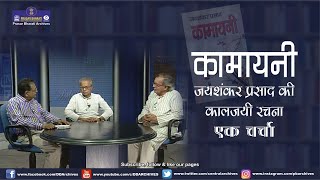
Kamayani | Classic Work of Jaishankar Prasad

Dive into 'Kamayani,' the timeless masterpiece by Jaishankar Prasad, celebrated as one of Hindi literature's greatest creations.

YouTube

📖 Curated Sources

🌱 What changed because of them

Jaishankar Prasad’s revival of historical and mythological themes in Sanskritized Hindi forged a new path for Hindi Romanticism, notably influencing the Chhayavad literary movement. His plays inspired theatrical revivals in institutions like the National School of Drama, ensuring continued engagement with ancient Indian history on modern stages. His linguistic choices helped establish a distinctly Sanskrit-rooted poetic diction that shaped Hindi literature’s evolution in the early 20th century.

💬 Social Buzz

🐦

What are people saying about Jaishankar Prasad?

Found a post from a historian, journalist or notable voice? Share it here and help tell their story. 🇮🇳

💭 Memories & Tributes

Share your memory of Jaishankar Prasad...
Loading memories...
Is this profile accurate?