Jagadish Chandra Bose, Indian physicist, biologist, botanist
Indian physicist, biologist, botanist

Jagadish Chandra Bose

Born 30 November 1858 · Bangladesh — Died 23 November 1937

Invented the crescograph to measure plant growth and response to stimuli.

Sir Jagadish Chandra Bose was a polymath with interests in biology, physics and writing science fiction. He was a pioneer in the investigation of radio microwave optics, made significant contributions to botany, and was a major force behind the expansion of experimental science on the Indian subcontinent. Bose is considered the father of Bengali science fiction. A crater on the Moon was named in his honour.

✨

A detail that
surprised us

“

Bose was among the earliest scientists to use semiconductor junctions to detect radio waves in 1895, years before similar experiments gained global fame.

The Story

1
In 1880, Jagadish Chandra Bose arrived at the University of London to study medicine but abandoned it due to health issues, shifting his focus to physics with Nobel Laureate Lord Rayleigh at Cambridge.
2
🌱 By 1902, Bose had built the crescograph, an instrument capable of measuring plant growth in microns, revealing that plants respond to stimuli almost like animals, challenging prevailing scientific views.
3📡 In 1895, he demonstrated the use of semiconductor junctions to detect radio waves, predating Marconi’s experiments on wireless communication by years, yet he chose not to patent this invention fully.
4In 1917, Bose founded the Bose Institute in Kolkata, the first interdisciplinary research center in Asia, where he served as director until his death in 1937, nurturing experimental science in India despite colonial constraints.

🏅 Awards & Honours

1903
Companion of the Order of the Indian Empire
1903
Companion of the Order of the Indian Empire; Companion of the Order of the Star of India; Knighthood
1911
Companion of the Order of the Star of India
1917
Knighthood

🔍 One thing most people don't know

“

In 1926, Bose demonstrated the electrical signals of a living plant’s heartbeat at Oxford, capturing real-time responses to stimuli such as sedatives and perfumes, which was unprecedented at the time.

🖼️

Through the Years

6 photographs from the archives
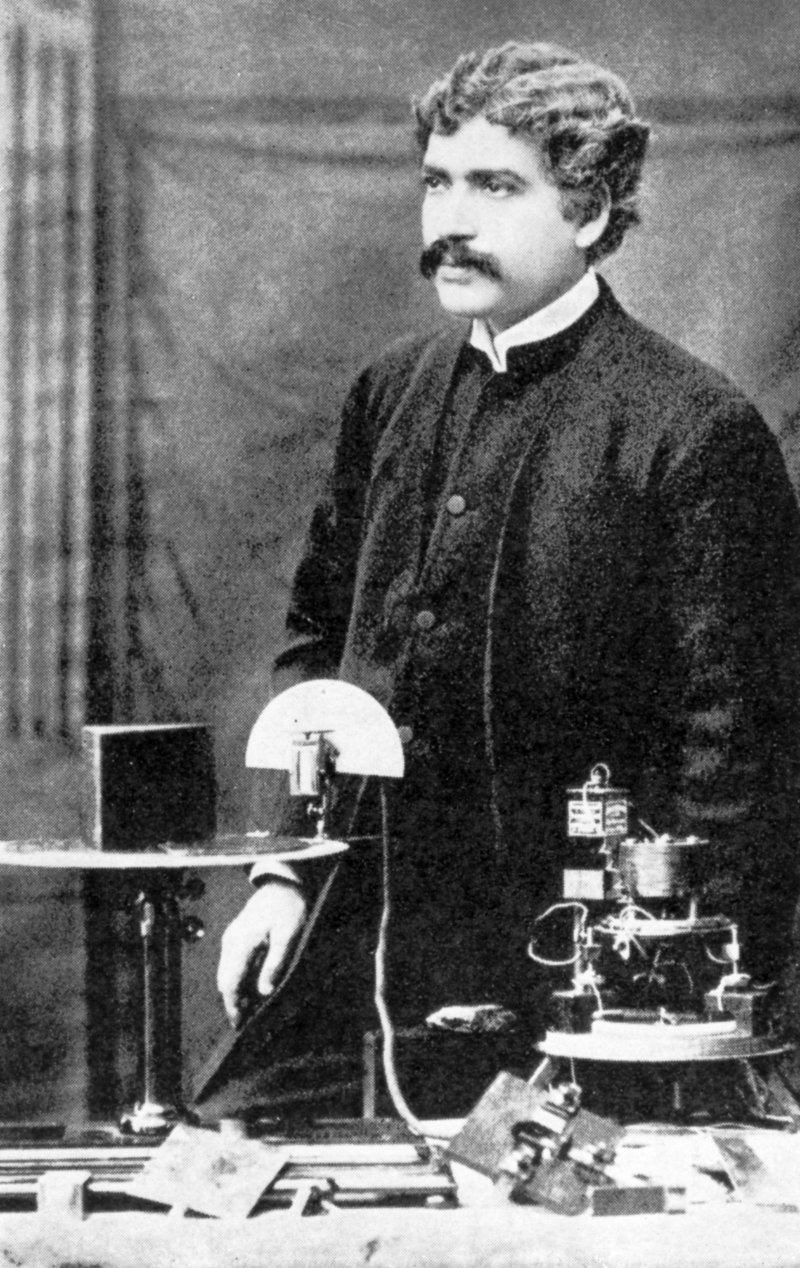
Spark ball oscillator used by Jagadish Chandra Bose to generate 60 GHz microwaves (1897).
1897
Jagadish Chandra Bose at the Royal Institution in London (1913).
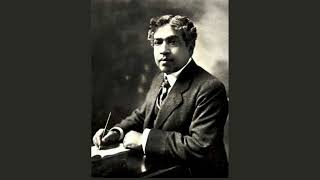
Portrait of Jagadish Chandra Bose in Boulogne-sur-Seine, France (1920).
Jagadish Chandra Bose lecturing on the nervous system of plants at the Sorbonne in Paris (1926).
Portrait of Sir Jagadish Chandra Bose, Indian scientist and inventor.

🗓️ A Life in Moments

🕊️
Birth
Birth in Mymensingh, Bengal Presidency
Jagadish Chandra Bose was born in present-day Bangladesh into a Bengali Kayastha family belonging to the Brahmo Samaj movement.
1858
📚
Education
Shifted to Physics at University of Cambridge
After abandoning medical studies at University of London due to health, Bose researched under Nobel laureate Lord Rayleigh at Cambridge.
1880
⚡
Career
Pioneered detection of radio waves
Bose used semiconductor junctions to detect radio waves, a breakthrough predating famous wireless experiments.
1895
📖
Publication
Published Response in the Living and Non-Living
Bose detailed his discoveries on plant electrophysiology and responsiveness using his crescograph instrument.
1902
⚡
Career
Founded Bose Institute in Kolkata
The institute became Asia’s first interdisciplinary research center, with Bose as director until 1937.
1917
⚡
Career
Demonstrated plant nervous mechanism at Oxford
Bose showcased the electrical heartbeat of plants, altering scientific views on plant life.
1926
🕊️
Death
Death of Jagadish Chandra Bose
Bose passed away while serving as director of the Bose Institute, leaving a legacy in multiple scientific fields.
1937
More moments to come...
+ Add a moment

🗝️Discoveries

Swipe to uncover hidden stories
01 / 04
🏆ACHIEVEMENT

Bose founded the Bose Institute in 1917, which became Asia’s first interdisciplinary research center, a pioneering move in scientific organization at that time.

02 / 04
👤PERSONAL

Though Bose’s research on radio waves predated Marconi, he never fully patented his innovations, reflecting his view that scientific discoveries should not be commercialized.

03 / 04
🌍HISTORICAL IMPACT

Bose was knighted by the British Empire but faced racial discrimination and lack of funding throughout his career at Presidency College, Calcutta.

No quote recorded for Jagadish Chandra Bose yet.

🎙️ Speeches & Recordings

These recordings preserve the legacy of Bharat's icons
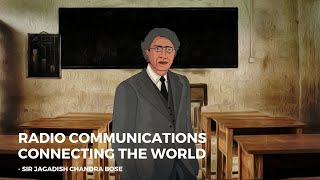
How Indian scientist Jagadish Chandra Bose changed the world forever
More from this archive

How Indian scientist Jagadish Chandra Bose changed the world forever
01
How Indian scientist Jagadish Chandra Bose changed the world forever
Acharya Jagdish Chandra Bose - A Polymath, Biologist, Physicist, Innovator & Science Writer
02
Acharya Jagdish Chandra Bose - A Polymath, Biologist, Physicist, Innovator & Science Writer
The Amazing Life of Jagadish Chandra Bose: From Botany to Physics
03
The Amazing Life of Jagadish Chandra Bose: From Botany to Physics

🌱 What changed because of them

Bose’s establishment of the Bose Institute in 1917 laid the foundation for interdisciplinary scientific research in India, fostering generations of physicists and biologists. His development of the crescograph introduced precise measurement techniques in plant physiology, influencing botanical science worldwide. Additionally, his demonstration of plant responsiveness challenged the scientific community's understanding of life, inspiring further research into plant neurobiology.

💬 Social Buzz

💬

What are people saying about Jagadish Chandra Bose?

Share posts from historians, journalists and notable voices about this icon. 🇮🇳

💭 Memories & Tributes

Share your memory of Jagadish Chandra Bose...
Loading memories...
Is this profile accurate?