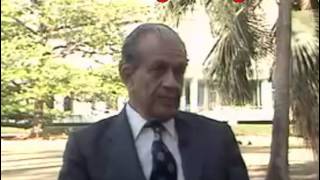
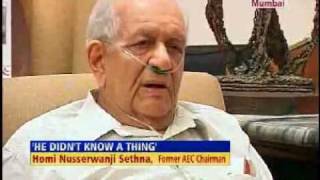
Homi Nusserwanji Sethna
Born 24 August 1923 · Maharashtra
Died 5 September 2010
Led India's first nuclear test, Smiling Buddha, at Pokhran in 1974 as Atomic Energy Commission Chairman.
🔔 Add birthday reminderHomi Nusserwanji Sethna was an Indian nuclear scientist and a chemical engineer, gaining international fame as the Chairman of the Atomic Energy Commission (India) during the time when the first nuclear test, codename Smiling Buddha in Pokhran Test Range in 1974 was conducted. He was the primary and central figure in India's civilian nuclear program as well as the construction of nuclear power plants. In 1991, he was appointed as Sheriff of Mumbai.
✨ A detail that surprised us
Homi Sethna’s introduction to nuclear science came unexpectedly when Homi Bhabha invited him for a job after a chance conversation during a swim at a Bombay club in the late 1950s.
1. In 1959, at the Trombay Nuclear Facility, Homi Sethna led the entirely Indian-designed construction of the Plutonium Plant, a critical step for India’s nuclear fuel cycle independence.
2. 🌟 On May 18, 1974, as Chairman of the Atomic Energy Commission, Sethna was a key supervisor at the Pokhran Test Range during India’s first nuclear explosion, codenamed Smiling Buddha.
3. He received the Padma Vibhushan in 1975, shortly after the nuclear test, marking recognition of his role in establishing India’s nuclear capabilities.
4. Sethna’s early work included setting up the Thorium extraction plant at Alwaye, Kerala, pioneering processing of rare earths from monazite sands crucial for India’s thorium-based nuclear program.
5. ⚙️ Between 1956 and 1958, he served as Project Manager for the Canada-India Reactor, a 40 MW nuclear reactor, showcasing Indo-Canadian scientific collaboration during the post-independence era.
6. In 1967, under his guidance, the Uranium Mill at Jaduguda, Jharkhand, was constructed, tapping domestic uranium resources vital for nuclear fuel production.
7. 🌐 Beyond science, Sethna was appointed Sheriff of Bombay in 1991, illustrating his engagement with civic duties beyond nuclear science.
8. ❓ How did Sethna’s strict discipline and insistence on indigenous technology shape India’s nuclear strategy amid Cold War pressures?
Awards & Honours
- 🏅Padma Bhushan
- 🏅Padma Vibhushan
🔍 One thing most people don't know
In 1959, Sethna oversaw the design and construction of the Plutonium Plant at Trombay entirely by Indian scientists, a rare achievement during a time when India largely depended on foreign technology.
🖼️ Through the Years
📷 No photos yet
📅 The Journey
🗝️ Discoveries
🎥 Speeches & Recordings
Dr. Homi Sethna - One Of The Architects Of India's Nuclear Programme
YouTube📖 Curated Sources
🌱 What changed because of them
Sethna’s leadership in constructing India’s nuclear infrastructure—from the Plutonium Plant at Trombay to the uranium mill at Jaduguda—cemented the country’s self-reliance in nuclear fuel production. His supervision of the 1974 nuclear test established India as a nuclear-capable nation, influencing subsequent policies on nuclear energy and defense. Sethna’s emphasis on indigenous technology fostered a culture of scientific independence within institutions like the Atomic Energy Commission and the Atomic Minerals Directorate.
💬 Social Buzz
🐦
What are people saying about Homi Nusserwanji Sethna?
Found a post from a historian, journalist or notable voice? Share it here and help tell their story. 🇮🇳