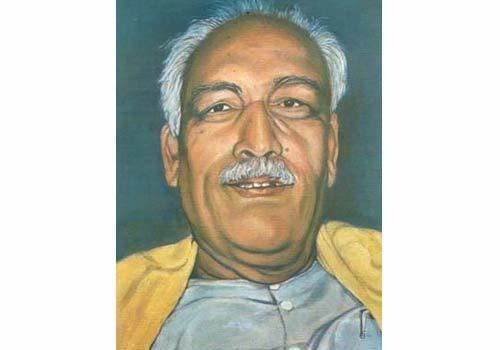
Hazari Prasad Dwivedi, Scholar, Writer
Scholar, Writer

Hazari Prasad Dwivedi

Born 19 August 1907 · Uttar Pradesh

Died 19 May 1979

Authored influential historical research on Kabir and Natha Sampradaya in Hindi literature.

🔔 Add birthday reminder

Hazari Prasad Dwivedi was a Hindi novelist, literary historian, essayist, critic and scholar. He penned numerous novels, collections of essays, historical research on medieval religious movements of India especially Kabir and Natha Sampradaya, and historical outlines of Hindi literature.

✨ A detail that surprised us

Dwivedi mastered not only Hindi and Sanskrit but also Bengali, Punjabi, Gujarati, Pali, Prakrit, and Apabhramsa, enabling him to study medieval Indian texts in their original languages.

1. In 1907, Hazari Prasad Dwivedi was born in Dubey Chapra village, Ballia district, Uttar Pradesh, into a family known for its astrologers, setting the stage for his lifelong mastery of ancient Indian texts and languages.

2. 🌟 By 1930, Dwivedi had joined Visva Bharati in Santiniketan, where he spent two decades absorbing the influences of Rabindranath Tagore, Nandalal Bose, and others, deeply shaping his literary and aesthetic sensibilities.

3. In 1949, he earned a Doctorate in Hindi literature from the University of Lucknow, cementing his scholarly foundation and launching prolific historical research on medieval religious movements like Kabir and the Natha Sampradaya.

4. 📚 Dwivedi’s 1957 Padma Bhushan award recognized his pioneering reinterpretation of Sahitya-sastra, where his deep knowledge of Sanskrit, Pali, and Prakrit revived the understanding of Indian literary traditions.

5. From 1950 to 1960, he served as Reader in Hindi at Banaras Hindu University, simultaneously contributing to the first Official Language Commission of India in 1955, influencing language policy in the newly independent nation.

6. ✍️ His 1973 Sahitya Akademi Award-winning collection 'Alok Parva' exemplified his skill in essay writing, blending humor and scholarship drawn from his vast multilingual expertise.

7. Dwivedi’s writings like 'Hindi Sahitya ka Adikala' reshaped Hindi literary criticism by tracing its origins and medieval context with unprecedented rigor.

8. ❓ How did Dwivedi’s unique blend of traditional Sanskrit scholarship and modern literary criticism transform the study of medieval Indian religious poetry and philosophy?

Awards & Honours

  • 🏅Padma Bhushan

🔍 One thing most people don't know

Dwivedi’s early education combined traditional Jyotisha (astrology) studies with formal university degrees, earning 'Acharya' in astrology and 'Shastri' in Sanskrit by 1930, a rare blend for a modern literary scholar.

🖼️ Through the Years

📷 No photos yet

📅 The Journey

← Drag to explore →
🕊️

Birth in Ballia, Uttar Pradesh

Hazari Prasad Dwivedi was born in Dubey Chapra village, Ballia district, into a family known for Sanskrit scholarship and astrology.

Wikipedia

📚

Earned Shastri in Sanskrit

Completed Shastri degree in Sanskrit literature, marking his formal entry into classical Indian scholarship.

Joined Visva Bharati Santiniketan

Started teaching Sanskrit and Hindi, and engaged with Tagore and other Bengali luminaries, influencing his literary style deeply.

📚

Doctorate from Lucknow University

Received doctorate in Hindi literature, focusing on historical and literary research that shaped his later works.

Joined Official Language Commission

Appointed member of India’s first Official Language Commission, influencing language policy post-independence.

🏅

Awarded Padma Bhushan

Received Padma Bhushan for contributions to Hindi literature and literary criticism.

🏅

Won Sahitya Akademi Award

Honored with Sahitya Akademi Award for his essay collection 'Alok Parva', blending scholarship with literary flair.

🕊️

Passed away in Delhi

Died at age 71, leaving behind a vast legacy in Hindi literary scholarship and criticism.

+Add a moment
1907Birth
1929
1930
1949
1955
1957
1973
1979

🗝️ Discoveries

💡

At Visva Bharati, Dwivedi engaged closely with Rabindranath Tagore and Nandalal Bose, absorbing Bengali literary and artistic culture that deeply influenced his Hindi writings despite his Uttar Pradesh roots.

Source: Wikipedia

🌏

Dwivedi was a member of India's first Official Language Commission in 1955, contributing to foundational decisions on Hindi’s role in independent India’s administration and education.

Source: Wikipedia

🏆

His 1973 Sahitya Akademi Award was for 'Alok Parva', a collection of essays blending scholarly insight with wit, marking a departure from purely academic prose in Hindi literature.

Source: Wikipedia

🌏

Dwivedi’s critical work 'Kabir' reevaluated the medieval saint’s poetry and philosophy, influencing not just Hindi literary criticism but also art criticism in India.

Source: IGNCA

🎥 Speeches & Recordings

🎥 Know a speech or documentary about Hazari Prasad Dwivedi?

📖 Curated Sources

🌱 What changed because of them

Hazari Prasad Dwivedi's scholarly works provided a critical framework for understanding medieval religious movements, especially Kabir and the Natha Sampradaya, influencing Hindi literary curricula across Indian universities. His role in the first Official Language Commission helped shape language policies in post-independence India. Institutions like Visva Bharati and Banaras Hindu University continue to honor his contributions through academic programs and research centers.

💬 Social Buzz

🐦

What are people saying about Hazari Prasad Dwivedi?

Found a post from a historian, journalist or notable voice? Share it here and help tell their story. 🇮🇳

💭 Memories & Tributes

Share your memory of Hazari Prasad Dwivedi...
Loading memories...
Is this profile accurate?