HK
Judge

Hans Raj Khanna

Born 3 July 1912 · Punjab

Died 25 February 2008

Propounded the basic structure doctrine in 1973 to limit constitutional amendments in India.

🔔 Add birthday reminder

Hans Raj Khanna was an Indian judge, jurist and advocate who propounded the basic structure doctrine in 1973 and attempted to uphold civil liberties during the time of Emergency in India in a lone dissenting judgement in 1976. He entered the Indian judiciary in 1952 as an Additional District and Sessions Judge and subsequently was elevated as a judge to the Supreme Court of India in 1971 where he continued till his resignation in 1977.

✨ A detail that surprised us

Before announcing his dissent in 1976, Khanna told his sister he had prepared a judgment that would cost him the Chief Justiceship of India.

1. In 1976, during the peak of the Indian Emergency, Justice Hans Raj Khanna stood alone as the sole dissenting voice in the Supreme Court's ADM Jabalpur v. Shiv Kant Shukla case, opposing the suspension of fundamental rights under Article 21.

2. ⚖️ In 1973, Khanna authored the basic structure doctrine in Kesavananda Bharati v. State of Kerala, a landmark judgment that limited Parliament's power to amend the Constitution, protecting its core principles from arbitrary changes.

3. In 1952, Khanna began his judicial career as an Additional District and Sessions Judge, a position from which he steadily ascended to the Supreme Court in 1971.

4. 🚨 After his historic dissent in 1976, Khanna was superseded for the Chief Justice of India post in January 1977 by Justice M.H. Beg, breaking the tradition of appointing the senior-most judge, leading to Khanna's resignation two months later.

5. Khanna briefly served as the Union Minister of Law and Justice for only three days in 1977 within the Charan Singh Ministry, an unusual political tenure following his judicial career.

6. 🏛️ In 1982, Khanna was nominated as the opposition-sponsored candidate for the Indian presidency, ultimately losing to Giani Zail Singh, reflecting his continued involvement in public life beyond the judiciary.

7. In 1999, the Government of India awarded Khanna the Padma Vibhushan, the nation’s second-highest civilian honor, recognizing his judicial contributions despite earlier controversies.

8. ❓ How did Khanna's lone dissent during the Emergency reshape the Indian judiciary’s approach to civil liberties and constitutional safeguards in later decades?

Awards & Honours

  • 🏅Padma Vibhushan

🔍 One thing most people don't know

In 1976, Khanna was the only Supreme Court judge to oppose the government's claim that fundamental rights could be suspended during Emergency, a stance that isolated him from his peers and led to his being passed over for Chief Justice.

🖼️ Through the Years

📷 No photos yet

📅 The Journey

← Drag to explore →
🕊️

Birth of Hans Raj Khanna

Born in Punjab on July 3, 1912, marking the beginning of a life that would influence Indian constitutional law.

Wikipedia

Judicial Career Begins

Khanna started as an Additional District and Sessions Judge, embarking on his path in the Indian judiciary.

Elevated to Supreme Court

Khanna was appointed a Supreme Court judge, positioning him to influence constitutional jurisprudence.

📖

Basic Structure Doctrine Authored

Khanna wrote the basic structure doctrine in Kesavananda Bharati v. State of Kerala, redefining Parliament’s amendment powers.

Dissent in ADM Jabalpur Case

Khanna delivered his lone dissent against suspension of fundamental rights during the Emergency, in a landmark judgment.

Superseded for CJI Post

Khanna was bypassed for Chief Justice of India in favor of M.H. Beg, breaking the seniority convention.

Resignation from Supreme Court

Following supersession, Khanna resigned from the Supreme Court, ending his judicial tenure.

🌟

Presidential Election Candidate

Khanna contested the Indian presidential election as opposition candidate but lost to Giani Zail Singh.

🏅

Awarded Padma Vibhushan

The Government of India honored Khanna with the Padma Vibhushan for his judicial services.

🕊️

Death of Hans Raj Khanna

Khanna passed away, leaving behind a complex legacy in Indian constitutional law.

+Add a moment
1912Birth
1952
1971
1973
1976
1977
1977
1982
1999
2008

🗝️ Discoveries

🔍

Khanna served as the Union Minister of Law and Justice for just three days in 1977, a notably brief tenure following his resignation from the Supreme Court.

Source: Wikipedia

🏆

In 1982, Khanna was the combined opposition's candidate for President of India but lost to Zail Singh, marking a rare transition from judiciary to high-stakes electoral politics.

Source: Wikipedia

🌏

The basic structure doctrine authored by Khanna in 1973 has been cited in numerous Supreme Court cases to prevent Parliament from altering the Constitution’s essential features.

Source: Wikipedia

👤

Khanna’s dissent was prepared in advance during a family trip to Haridwar, where he confided to relatives that the judgment might cost him the highest judicial post.

Source: Indian Express

"Article 21, in my opinion, was not the sole repository of the right to life and personal liberty. Those rights had existed even prior to the framing of the Constitution."

Hans Raj Khanna

🎥 Speeches & Recordings

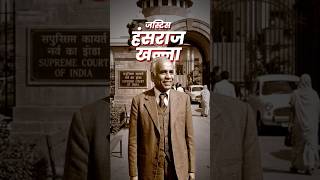
Justice Hansraj Khanna Ne Emergency Mein Kya Kiya? India Ka Sabse Brave Judge!

Explore the courageous role of Justice Hansraj Khanna during India's Emergency and his lasting impact on civil liberties.

YouTube

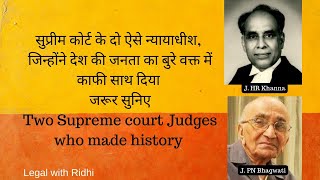
"Uncovering the Untold Story of India's Justice System: The Legacies of PN Bhagwati and HR Khanna"

Delve into the significant contributions of Justices PN Bhagwati and HR Khanna to India's judicial legacy.

YouTube

📖 Curated Sources

🌱 What changed because of them

Hans Raj Khanna's basic structure doctrine curbed Parliament's unchecked power to amend the Constitution, embedding a lasting safeguard for India's democratic framework. His 1976 dissent during the Emergency became a symbol of judicial independence, influencing future courts to uphold civil liberties even under political pressure. His stance forced reconsideration of executive overreach and reinforced the judiciary’s role as a protector of fundamental rights.

💬 Social Buzz

🐦

What are people saying about Hans Raj Khanna?

Found a post from a historian, journalist or notable voice? Share it here and help tell their story. 🇮🇳

💭 Memories & Tributes

Share your memory of Hans Raj Khanna...
Loading memories...
Is this profile accurate?