EC
Scientist

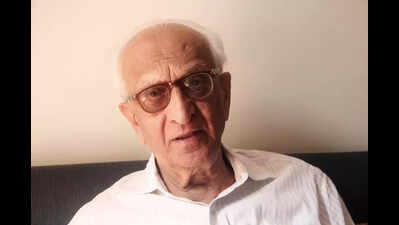
Eknath Vasant Chitnis

Born 25 July 1925 · verify

Died 22 October 2025

Serving as member secretary of INCOSPAR, which evolved into ISRO.

🔔 Add birthday reminder

Eknath Vasant Chitnis was an Indian space scientist and a member secretary at the Indian National Committee for Space Research (INCOSPAR), which evolved into the present-day Indian Space Research Organisation (ISRO). He was also a director of the Space Applications Centre of ISRO and a colleague of APJ Abdul Kalam, the erstwhile President of India. The Government of India awarded him the Padma Bhushan, the third highest civilian award, in 1985.

✨ A detail that surprised us

Chitnis personally scouted and selected the Thumba site in 1961, a location so close to the Earth’s magnetic equator that it became pivotal for India’s rocket launches.

1. In 1961, Eknath Vasant Chitnis conducted a critical location survey that led to the establishment of the Thumba Equatorial Rocket Launching Station near Thiruvananthapuram, directly influencing India’s early space launch capabilities.

2. 🌌 At the Physical Research Laboratory in Ahmedabad, Chitnis built Cerenkov Counters for cosmic ray research, collaborating with MIT’s Bruno Rossi group, marking India’s entry into experimental space physics in the early 1960s.

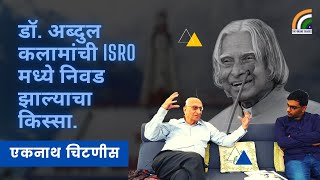
3. In 1969, he played a pivotal role in selecting A.P.J. Abdul Kalam for training under NASA, after personally reviewing Kalam’s resume and recommending him, shaping the future of India’s missile and space technology.

4. 📡 As director of ISRO’s Space Applications Centre in the 1970s, Chitnis led the Satellite Instructional Television Experiment (SITE) in 1975–76, using NASA’s ATS-6 to beam educational content to 2,400 remote Indian villages, laying the groundwork for India’s telecom revolution.

5. In 1985, he was awarded the Padma Bhushan by the Government of India, recognizing his role in evolving INCOSPAR into the Indian Space Research Organisation and advancing space science applications.

6. 📻 Early in his career, despite securing a government post at All India Radio, Chitnis chose to join the nascent Physical Research Laboratory, reflecting his dedication to pioneering scientific research over job security.

7. In 2008, decades after his scientific work, Chitnis was unanimously elected Chairman of the Press Trust of India, illustrating his influence beyond science into national media.

8. ❓ How did Chitnis’s early orphaned childhood and upbringing by his grandmother in Kolhapur shape his path to becoming a cornerstone of India’s space era?

Awards & Honours

  • 🏅Shanti Swarup Bhatnagar Prize for Science and Technology

🔍 One thing most people don't know

In 1961, Chitnis undertook a detailed geographical survey to identify Thumba as the ideal equatorial rocket launch site, a decision crucial for India’s space ambitions.

🖼️ Through the Years

📷 No photos yet

📅 The Journey

← Drag to explore →
🕊️

Born in Kolhapur, Maharashtra

Eknath Vasant Chitnis was born into the Satara Chitnis family with a historic lineage dating to the Maratha empire’s royal secretaries.

Wikipedia

Selected Thumba launch site

Chitnis conducted a location survey that resulted in choosing Thumba for India’s rocket launching station near the magnetic equator.

Recommended APJ Abdul Kalam for NASA training

After reviewing Kalam’s credentials, Chitnis recommended him for training under NASA, shaping a future Indian space icon.

Led Satellite Instructional Television Experiment

Directed SITE using NASA’s ATS-6 satellite to beam educational TV to 2,400 villages, pioneering satellite communication in India.

🏅

Awarded Padma Bhushan

Received the Padma Bhushan for his contributions to Indian space science and institution building.

🌟

Elected Chairman of Press Trust of India

Chitnis was unanimously selected to lead India’s principal news agency, expanding his influence beyond science.

🕊️

Passed away in Pune at age 100

Chitnis died, closing a century-long life that witnessed and shaped India’s space journey from its inception.

+Add a moment
1925Birth
1961
1969
1975
1985
2008
2025

🗝️ Discoveries

🏆

Chitnis recommended APJ Abdul Kalam for NASA training after personally interviewing him and reviewing his resume, shaping the future leader of India’s missile program.

Source: India Today

👤

Despite holding a secure government job at All India Radio, Chitnis chose to join the experimental physics group at Physical Research Laboratory, prioritizing scientific research over stability.

Source: Wikipedia

🏆

The SITE project led by Chitnis in 1975–76 used NASA’s ATS-6 satellite to deliver education to over 2,400 villages, a pioneering use of satellite tech for social development.

Source: India Today

🔍

In 2008, long after his scientific career, Chitnis was chosen unanimously as Chairman of the Press Trust of India, showing his leadership extended beyond science.

Source: Wikipedia

🎥 Speeches & Recordings

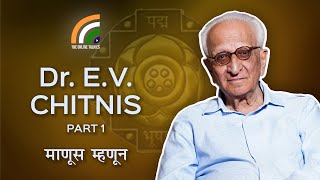
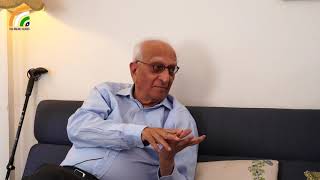
इसरो ची सुरुवात कशी केली | Manus Mhanun– Eknath chitnis-Part 1|एकनाथ चिटणीस–भाग १|The Online Talkies

Eknath Vasant Chitnis shares insights on the early days and foundation of ISRO in this detailed talk.

YouTube

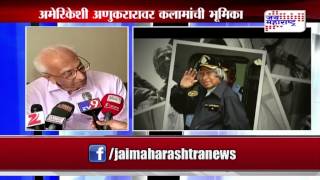
SLV is the invention of Dr. kalam: EV Chitnis

Eknath Vasant Chitnis discusses the invention of the SLV and highlights Dr. Kalam's contributions.

YouTube

📖 Curated Sources

🌱 What changed because of them

Chitnis’s work directly enabled India’s first steps into space exploration, from choosing the Thumba launch site to integrating satellite technology for rural education via SITE, which influenced the later INSAT program. His recruitment of A.P.J. Abdul Kalam brought in a visionary who would guide India's missile and space programs for decades, embedding a culture of scientific innovation and public service at ISRO.

💬 Social Buzz

🐦

What are people saying about Eknath Vasant Chitnis?

Found a post from a historian, journalist or notable voice? Share it here and help tell their story. 🇮🇳

💭 Memories & Tributes

Share your memory of Eknath Vasant Chitnis...
Loading memories...
Is this profile accurate?