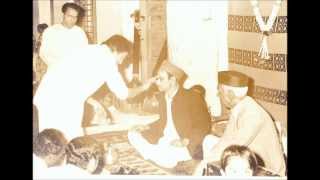
CRV
Classical Vocalist

C. R. Vyas

Born 9 November 1924 · Maharashtra — Died 10 January 2002

Reviving and popularizing the khyal singing style in Indian classical music.

Chintaman Raghunath Vyas, popularly known as C. R. Vyas, was an Indian classical singer. He was known for singing khyal style.

✨

A detail that
surprised us

“

C. R. Vyas composed more than 200 bandishes under the pseudonym Gunijaan, a rare practice among classical vocalists who typically preserve oral traditions.

The Story

1
In 1924, C. R. Vyas was born in Osmanabad, Maharashtra, into a family steeped in Sanskrit scholarship and the tradition of Hari kirtans, where episodes from the Ramayan and Mahabharata shaped his early musical inspirations.
2
🌟 For over a decade, he trained under Govindrao Bhatambrekar of the Kirana gharana before expanding his style through study with Rajarambua Paradkar of Gwalior and Jagannathbuwa Purohit of the Agra gharana, blending three gharana styles uniquely.
3Despite his classical prowess, Vyas maintained a white-collar job at ITC, asserting in his own words that in his era, music was not pursued for fame or money, highlighting a rare duality between art and livelihood.
4🎤 His open-throated voice became distinctive on All India Radio and television, where he performed not only across India but also internationally, bringing traditional khyal singing to diverse audiences.

🏅 Awards & Honours

—

🔍 One thing most people don't know

“

Though a revered vocalist, C. R. Vyas worked a white-collar job at ITC, balancing corporate responsibilities with a flourishing classical music career.

📸 Through the Years

📷

No photos yet

Help preserve history — add a photo of this icon

🗓️ A Life in Moments

🕊️
Birth
Born in Osmanabad, Maharashtra
Chintaman Raghunath Vyas was born into a family of Sanskrit scholars and Hari kirtankars, setting the stage for his lifelong classical music journey.
1924
📚
Education
Began training under Govindrao Bhatambrekar
Started over a decade of rigorous training in the Kirana gharana, foundational for his vocal technique.
c.1930
📚
Education
Studied with Rajarambua Paradkar and Jagannathbuwa Purohit
Expanded his musical education by learning Gwalior and Agra gharana styles, enriching his khyal singing.
c.1950
🌟
Other
Founded Maharashtra Lalit Kala Nidhi
Established this institution to promote Indian classical music and arts in Maharashtra.
1973
🌟
Other
Started Gunidas Sangeet Sammelan
Created a music festival honoring his guru Jagannathbuwa Purohit, fostering classical music culture.
1977
🏅
Award
Received Sangeet Natak Akademi Award
Official recognition for his contributions to Hindustani classical music.
1987
🏅
Award
Awarded Padma Bhushan
One of India's highest civilian honors acknowledging his musical excellence.
1992
🕊️
Death
Passed away in Kolkata
Died unexpectedly while attending a concert, leaving a legacy of music and scholarship.
2002
More moments to come...
+ Add a moment

🗝️Discoveries

Swipe to uncover hidden stories
01 / 04
💡SURPRISING

He studied under masters from three distinct gharanas—Kirana, Gwalior, and Agra—blending their styles into his unique khyal renditions.

02 / 04
🏆ACHIEVEMENT

His pen name 'Gunijaan' is attached to over 200 bandishes he composed, a substantial contribution to the classical music repertoire.

03 / 04
🌍HISTORICAL IMPACT

In 1977, he established the Gunidas Sangeet Sammelan festival in memory of his guru, a rare personal tribute institutionalizing musical legacy.

“

"In our time we did not think of earning either fame or money through music."

— C. R. Vyas

🎙️ Speeches & Recordings

These recordings preserve the legacy of Bharat's icons
Pt.C.R.Vyas (Radhe Radhe)
More from this archive
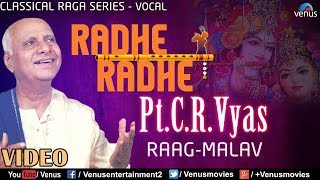
Pt.C.R.Vyas (Radhe Radhe)
01
Pt.C.R.Vyas (Radhe Radhe)
Padmabhushan Pt C R Vyas speaking after one of the performances of Pt Ganapati Bhat Hasanagi in Mumb
02
Padmabhushan Pt C R Vyas speaking after one of the performances of Pt Ganapati Bhat Hasanagi in Mumb

🌱 What changed because of them

By founding the Gunidas Sangeet Sammelan in 1977 and the Maharashtra Lalit Kala Nidhi in 1973, C. R. Vyas created institutional platforms that continue to promote Hindustani classical music. His unique synthesis of Kirana, Gwalior, and Agra gharanas enriched the khyal tradition and his disciples have carried forward his stylistic innovations, ensuring the survival and evolution of this art form within modern contexts.

💬 Social Buzz

💬

What are people saying about C. R. Vyas?

Share posts from historians, journalists and notable voices about this icon. 🇮🇳

💭 Memories & Tributes

Share your memory of C. R. Vyas...
Loading memories...
Is this profile accurate?