KR
Engineer, Administrator

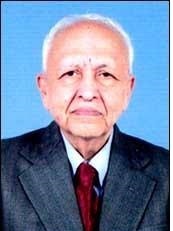
C. R. Krishnaswamy Rao

Born 26 July 1892 · Tamil Nadu

Died 12 February 2013

Serving as the 15th Cabinet Secretary of India from 1981 to 1985.

🔔 Add birthday reminder

Colathur Rama Krishnaswamy Rao Sahib was an Indian civil servant who served as 15th Cabinet Secretary of India from 1981-1985. He also served as the Secretary to Prime Minister Charan Singh. when Indira Gandhi became the Prime Minister of India. He was awarded the second highest civilian honor of India, Padma Vibhushan in 2006, besides the Great Maratha Award in 2009.

✨ A detail that surprised us

In the 1980s, Rao Sahib’s push for India’s missile development programme survived intense criticism and led to orders valued at over ₹93 lakh crore, laying foundations for modern Indian defense capabilities.

1. Born in Madras in 1927 into the junior branch of the Colathur family, C.R. Krishnaswamy Rao Sahib’s lineage included a title granted by the Sultanate of Bijapur and a grandfather who supported Srinivasa Ramanujan’s early career.

2. In 1950, he joined the Indian Administrative Service, a career beginning that positioned him to serve as Secretary to Prime Minister Charan Singh and later as Cabinet Secretary from 1981 to 1985.

3. 🌟 In the early 1980s, amid skepticism from the Armed Forces, he championed the Integrated Guided Missile Programme, encouraging simultaneous development of missiles like Prithvi, Agni, and Akash, a vision later valued at over ₹93 lakh crore in production orders.

4. His education at Presidency College, Chennai, where he earned a B.Sc. in physics, preceded a civil service career that navigated turbulent political shifts, including Indira Gandhi’s return as Prime Minister.

5. Awarded the Padma Vibhushan in 2006, he also received the Great Maratha Award in 2009, recognitions highlighting his bureaucratic influence beyond conventional administrative roles.

6. 🌟 Dr. A.P.J. Abdul Kalam credited Rao Sahib for decisive leadership during the missile programme’s critical phases, a moment when bureaucratic courage offset military criticism and altered India’s defense trajectory.

7. Despite spanning a career in administration, his family roots and personal history intersect with India’s intellectual heritage through his maternal grandfather’s connection to Ramanujan.

❓ How did Rao Sahib’s blend of inherited legacy and bureaucratic acumen shape India’s defense and administrative policies during the transition from post-Independence to modern India?

Awards & Honours

  • 🏅Padma Vibhushan

🔍 One thing most people don't know

In 2006, he was awarded the Padma Vibhushan, India’s second highest civilian honor, decades after his tenure as Cabinet Secretary, recognizing his enduring influence on administration and defense policy.

🖼️ Through the Years

📷 No photos yet

📅 The Journey

← Drag to explore →
🕊️

Born in Madras, British India

C.R. Krishnaswamy Rao Sahib was born into the junior branch of the Colathur family with ancestral title and a grandfather linked to Ramanujan.

Wikipedia

Joined Indian Administrative Service

Started his civil service career shortly after Indian independence, entering a key administrative role.

Supported Integrated Guided Missile Programme

Convinced political leadership to pursue integrated missile development despite military criticism.

Appointed 15th Cabinet Secretary of India

Led the Cabinet Secretariat during a politically turbulent era until 1985.

🏅

Received Padma Vibhushan Award

Honored with India’s second highest civilian award recognizing lifetime service.

🏅

Received Great Maratha Award

Recognized for contributions connected to the Maratha heritage and public service.

🕊️

Passed away

Died leaving a legacy of administrative and defense policy impact.

+Add a moment
1927Birth
1950
c.1980
1981
2006
2009
2013

🗝️ Discoveries

🌏

His maternal grandfather, R. Ramachandra Rao, served as Collector of Nellore and played a crucial role in supporting the mathematician Srinivasa Ramanujan during his formative years, linking Rao Sahib’s family to India’s scientific heritage.

Source: Wikipedia

💡

Despite being a civil servant, Rao Sahib’s vision directly propelled the Integrated Guided Missile Programme, a defense sector initiative valued at over ₹93 lakh crore in orders, showing rare bureaucratic involvement in strategic military technology.

Source: Wikipedia

🔍

He began his Indian Administrative Service career on 1 February 1950, just a few years after India’s independence, marking him among the early civil servants forming the new nation’s bureaucracy.

Source: Wikipedia

🌏

The title 'Rao Sahib' was originally conferred upon his ancestor Vedaji Bhaskar Rao Pant by the Sultanate of Bijapur, embedding his family within centuries-old Indian nobility traditions.

Source: Wikipedia

“Hon'ble Minister sir, I heard all the discussion. But I would like to convey one thing. The time has come, we have to take a decision, exploring new path with courage...” — C.R. Krishnaswamy Rao Sahib

C. R. Krishnaswamy Rao

🎥 Speeches & Recordings

🎥 Know a speech or documentary about C. R. Krishnaswamy Rao?

📖 Curated Sources

🌱 What changed because of them

Rao Sahib’s advocacy for the Integrated Guided Missile Programme transformed India’s defense approach, enabling concurrent development of key missile systems such as Prithvi and Agni. His tenure as Cabinet Secretary and close work with Prime Ministers influenced bureaucratic efficiency and strategic policy decisions during a critical phase in India’s post-Independence history.

💬 Social Buzz

🐦

What are people saying about C. R. Krishnaswamy Rao?

Found a post from a historian, journalist or notable voice? Share it here and help tell their story. 🇮🇳

💭 Memories & Tributes

Share your memory of C. R. Krishnaswamy Rao...
Loading memories...
Is this profile accurate?