C. D. Deshmukh, Economist, RBI Governor
Economist, RBI Governor

C. D. Deshmukh

Born 14 January 1896 · Maharashtra

Died 2 October 1982

First Indian Governor of the Reserve Bank of India appointed in 1943.

🔔 Add birthday reminder

Sir Chintaman Dwarakanath Deshmukh ICS was an Indian civil servant and the first Indian to be appointed the Governor of the Reserve Bank of India in 1943 by the British Raj authorities. He subsequently served as the Finance Minister in the Union Cabinet (1950–1956). It was during this time that he also became a founding member of the Governing Body of NCAER, the National Council of Applied Economic Research in New Delhi, India's first independent economic policy institute established in 1956 at the behest of Prime Minister Jawaharlal Nehru. After resignation from Union Cabinet he worked as Chairman of UGC (1956–1961).

✨ A detail that surprised us

Chintaman Deshmukh translated classical Sanskrit works such as Kalidasa’s Meghaduta into Marathi and the ancient Amarakosha into English, revealing his deep engagement with classical literature alongside economics.

1. In 1918, Chintaman Dwarakanath Deshmukh topped the Indian Civil Service Examination in London, a feat that positioned him among the elite administrators of British India.

2. 🌟 In August 1943, Deshmukh became the first Indian Governor of the Reserve Bank of India, a British colonial institution, where he initiated the demonetisation of ₹500 and above banknotes during World War II.

3. Between 1943 and 1949, as RBI Governor, he championed rural credit reforms that led to the All India Rural Credit Survey Committee and paved the way for the nationalisation of the Imperial Bank of India.

4. 🌍 Deshmukh played a crucial role as a delegate at the 1944 Bretton Woods Conference, influencing the creation of the IMF and World Bank, thereby linking India directly to global post-war economic systems.

5. From 1950 to 1956, he served as India’s Finance Minister, navigating complex post-independence economic policies and becoming a founding member of the National Council of Applied Economic Research in 1956.

6. 🎓 After resigning from the Union Cabinet, Deshmukh became Chairman of the University Grants Commission (1956–1961) and then Vice-Chancellor of Delhi University (1962–1967), steering educational reforms in early independent India.

7. In 1959, he founded the India International Centre and remained its Lifetime President, fostering cultural and intellectual exchange in the nation’s capital.

8. ❓ How did Deshmukh’s early training in natural sciences and botany influence his approach to economic policy and institution building in India?

Awards & Honours

  • 🏅Padma Vibhushan · 1975

🔍 One thing most people don't know

In 1944, Deshmukh attended the Bretton Woods Conference, becoming one of the few Indian officials involved in founding the IMF and the World Bank, linking India to the global financial order early on.

🖼️ Through the Years

Minister for Finance C. D. Deshmukh departing from Palam Airport in 1952.
1952
C. D. Deshmukh reviewing the 1954-55 budget before Parliament presentation in New Delhi.
1954
C. D. Deshmukh with Queen Elizabeth II and Commonwealth leaders at 1952 Economic Conference.
1952
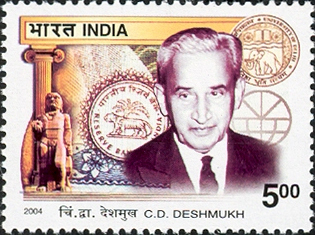
Indian postage stamp featuring C. D. Deshmukh issued in 2004.
2004

📅 The Journey

← Drag to explore →
🕊️

Born in Nategaon, Maharashtra

Chintaman Dwarakanath Deshmukh was born into a CKP family near Fort Raigad, Maharashtra.

Wikipedia

📚

Graduated from Cambridge in Natural Sciences

Received Frank Smart Prize in Botany and led the Majlis Society at Jesus College, Cambridge.

Topped Indian Civil Service Exam in London

Achieved first rank in the ICS exam, then held only in London.

Appointed Governor of Reserve Bank of India

Became the first Indian Governor of RBI, initiating demonetisation of ₹500+ notes.

Attended Bretton Woods Conference

Represented India at the conference that created the IMF and World Bank.

Became Union Finance Minister

Succeeded John Matthai as Finance Minister, overseeing early economic planning.

Helped found NCAER

Joined the Governing Body of India's first independent economic research institute.

Founded India International Centre

Established the cultural and intellectual hub in New Delhi and served as Lifetime President.

🕊️

Passed away

Died after a career spanning administration, finance, education and culture.

+Add a moment
1896Birth
1917
1918
1943
1944
1950
1956
1959
1982

🗝️ Discoveries

👤

Though a career civil servant, Deshmukh was awarded the Frank Smart Prize in Botany at Cambridge in 1917, showing his early scientific talent before entering administrative service.

Source: Wikipedia

🔍

Deshmukh opposed blanket prohibition in India, notably defending mahua liquor consumption by tribal communities, influencing regional policy decisions in the 1930s.

Source: Tiger and Palm Tree

👤

He upheld strict administrative ethics when he supported objections to the Governor’s ADC claiming travel allowance for a personal trip, demonstrating his commitment to accountability.

Source: Tiger and Palm Tree

🏆

Deshmukh’s tenure as RBI Governor saw the creation of the Reserve Bank’s Research and Statistics Department in 1943, marking a new era of data-driven economic policymaking in India.

Source: Wikipedia

🏆

He was Vice-Chancellor of Delhi University from 1962–1967, a period when the university expanded significantly under his leadership.

Source: Wikipedia

🎥 Speeches & Recordings

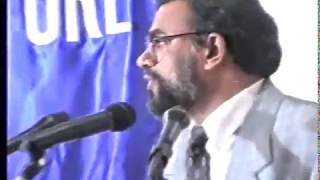
Dr Narendra Jadhav, (1996) Own Book Release C D Deshmukh Memorial Lectures, Reserve Bank of India.

Watch Dr. Narendra Jadhav deliver introductory remarks at the release of the 'CD Deshmukh Memorial Lectures' book, honoring the legacy of C. D. Deshmukh.

YouTube

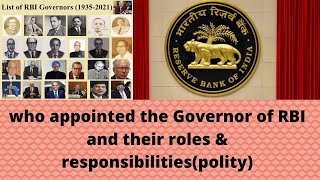
who appointed the Governor of RBI and their roles & responsibilities(polity)

Explore the appointment process and key responsibilities of RBI Governors, including the pioneering role of Sir C. D. Deshmukh as the first Indian Governor.

YouTube

📖 Curated Sources

🌱 What changed because of them

Deshmukh’s policies as RBI Governor laid the groundwork for India’s rural credit system and banking reforms, directly influencing the nationalisation of key banks. As Finance Minister, his founding role in the National Council of Applied Economic Research established India’s first independent economic policy institute, shaping decades of economic planning. His leadership in education and cultural institutions like the University Grants Commission and India International Centre helped modernise India’s academic and intellectual infrastructure.

💬 Social Buzz

🐦

What are people saying about C. D. Deshmukh?

Found a post from a historian, journalist or notable voice? Share it here and help tell their story. 🇮🇳

💭 Memories & Tributes

Share your memory of C. D. Deshmukh...
Loading memories...
Is this profile accurate?