Buddhadeb Dasgupta
Born 11 February 1944 · West Bengal
Died 10 June 2021
Directed five National Award-winning Bengali films including Bagh Bahadur and Charachar.
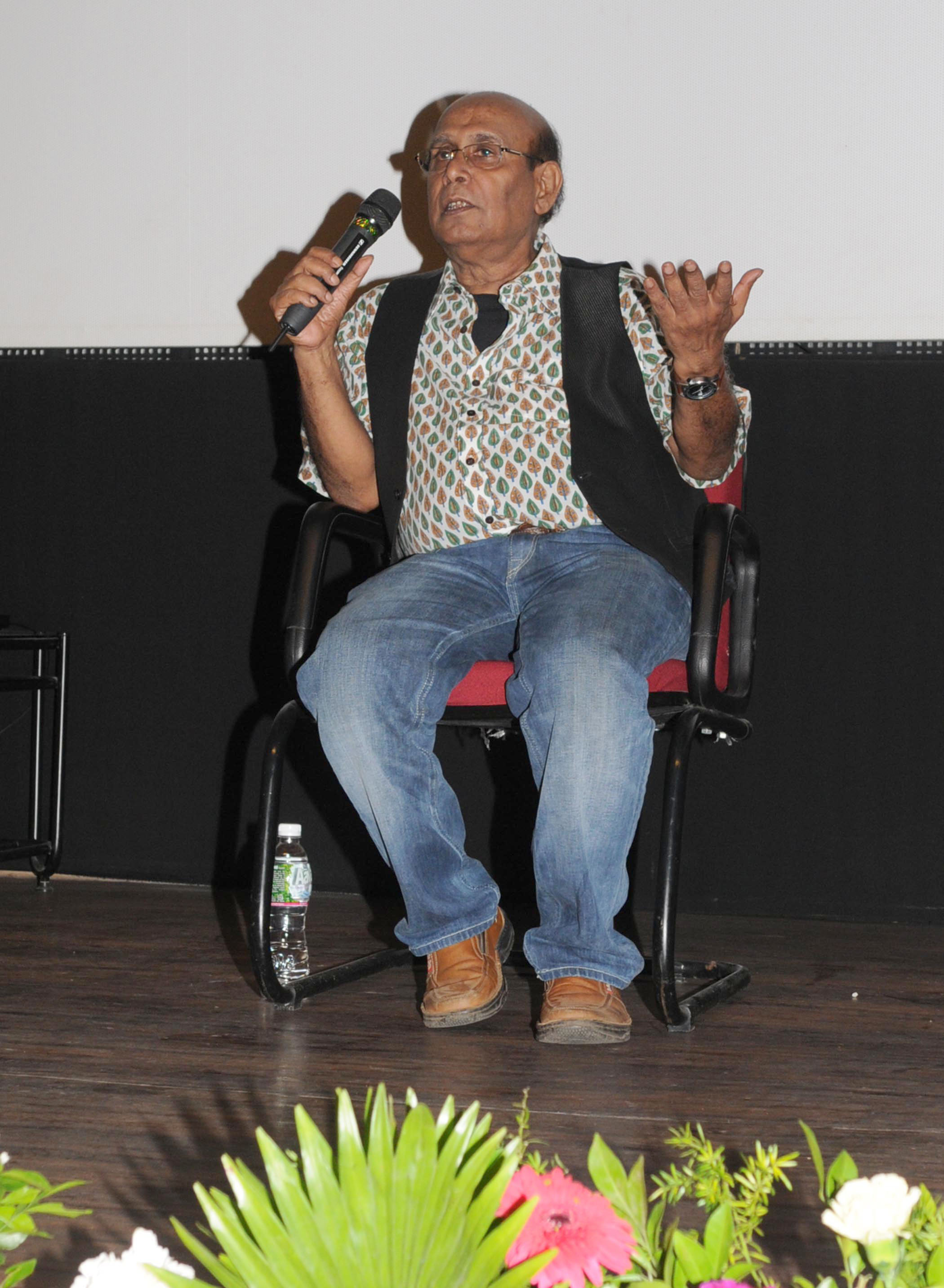
🔔 Add birthday reminderBuddhadeb Dasgupta was an Indian filmmaker and poet best known for his Bengali-language films like Bagh Bahadur, Tahader Katha, Charachar and Uttara. Five of his films have won the National Film Award for Best Feature Film, Bagh Bahadur (1989), Charachar (1993), Lal Darja (1997), Mondo Meyer Upakhyan (2002) and Kaalpurush (2008), while Dooratwa (1978) and Tahader Katha (1993) have won the National Film Award for Best Feature Film in Bengali. As a director, he has won National Film Award for Best Direction twice, for Uttara (2000) and Swapner Din (2005). Over the years he has published several works of poetry including Govir Araley, Coffin Kimba Suitcase, Himjog, Chhaata Kahini, Roboter Gaan, Sreshtha Kabita, and Bhomboler Ascharya Kahini O Ananya Kabita.
✨ A detail that surprised us
Despite a successful career as an economics lecturer, Buddhadeb Dasgupta left academia in 1976 to pursue filmmaking after being inspired by masters like Bergman and Kurosawa through the Calcutta Film Society.
1. In 1944, Buddhadeb Dasgupta was born in Anara, Purulia district of Bengal Presidency, in a family where his father was a railway doctor and his mother played piano to Brahmo hymns and Tagore songs, seeding his lifelong artistic sensibility.
2. 🎬 In 1968, Dasgupta debuted his filmmaking career with a 10-minute documentary titled 'The Continent of Love' and the short fiction 'Samayer Kachhe', marking his shift from economics lecturer to filmmaker.
3. By 1978, he released 'Dooratwa' (Distance), his first full-length feature film, which earned the National Film Award and drew admiration from Satyajit Ray for its poetic narrative.
4. 🐅 'Bagh Bahadur' (1989), depicting a fading folk performer in rural Bengal, won the National Film Award for Best Feature Film, highlighting Dasgupta's focus on marginalized lives rooted in his native Purulia's red earth soil.
5. Between 1989 and 2008, five of his films including 'Charachar' (1993) and 'Kaalpurush' (2008) won National Awards for Best Feature Film, underscoring his continuous exploration of surrealism blended with social realities.
6. 📚 Alongside filmmaking, Dasgupta published several poetry collections such as 'Govir Araley' and 'Roboter Gaan', demonstrating his dual identity as a poet-filmmaker influencing Bengali literature and cinema.
7. Twice honored with National Film Awards for Best Direction, for 'Uttara' (2000) and 'Swapner Din' (2005), he maintained a unique voice distinct from contemporaries like Ray and Sen, focusing on lyricism within stark realities.
8. ❓ How did Buddhadeb Dasgupta’s roots in economics and poetry shape his cinematic language that bridges harsh social truths with surreal, poetic imagery?
Awards & Honours
- 🏅Padma Shri
🔍 One thing most people don't know
Born into a family where his mother played piano to Brahmo hymns and Tagore songs, Buddhadeb’s early exposure to music deeply influenced the lyrical quality of his films and poetry.
🖼️ Through the Years
📅 The Journey
🗝️ Discoveries
"When I told my father that I wanted to go to the Pune film institute, he vehemently opposed it. That was painful for me but I was also in love with economics. I taught economics but there came a time when I decided that I can't continue because I had to make films."
— Buddhadeb Dasgupta
🎥 Speeches & Recordings
IN CONVERSATION- BUDDHADEB DASGUPTA
YouTube📖 Curated Sources
🌱 What changed because of them
Buddhadeb Dasgupta redefined Bengali cinema by integrating poetic sensibility with political and social realities, influencing new filmmakers who seek narrative depth beyond commercial cinema. His films brought rural Bengal’s disappearing cultures and struggles to national and international attention, expanding the thematic scope of Indian art cinema. His dual role as a poet and filmmaker enriched both Bengali literature and film, inspiring interdisciplinary approaches in Indian arts.
💬 Social Buzz
🐦
What are people saying about Buddhadeb Dasgupta?
Found a post from a historian, journalist or notable voice? Share it here and help tell their story. 🇮🇳