
✨A detail that
A detail that
surprised us
The Story
1. 🎸 In 1937, Asad Ali Khan was born in Alwar into the seventh generation of rudra veena players, inheriting a legacy tied to royal courts of Rampur and Jaipur dating back to the 18th century.
2. His grandfather Musharraf Khan performed in London in 1886, marking an early global presence of his family's music tradition, which Khan continued by performing across continents including Australia, the US, and Europe.
3. 🏛️ For 17 years, Khan taught sitar at the University of Delhi's Faculty of Music and Fine Arts, blending academic rigor with the intricate rudra veena tradition.
4. Despite his mastery, Khan lamented the dwindling interest among Indians in learning the rudra veena, noting that most of his students were foreign, highlighting a cultural paradox.
5. 🏅 Awarded the Padma Bhushan in 2008 by President Pratibha Patil, Khan stood as one of the last custodians of the Khandar school of dhrupad, a near-vanishing style of Indian classical music.
6. Khan believed the rudra veena to be created by Shiva himself, and actively promoted its spiritual and cultural significance through organizations like SPIC MACAY.
7. ❓ How did Asad Ali Khan balance the burden of preserving a centuries-old musical lineage with the realities of modern India's shifting cultural tastes?
🏅 Awards & Honours
—
🔍 One thing most people don't know

🗓️ A Life in Moments
c.1886
1937
1977
2008
2011
More moments to come...
+ Add a moment
🗝️Discoveries
Swipe to uncover hidden stories
No quote recorded for Asad Ali Khan yet.
🎙️ Speeches & Recordings
These recordings preserve the legacy of Bharat's icons
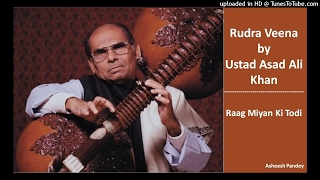
Ustd Asad Ali Khan tells about Rudra Veena
More from this archive
🌱 What changed because of them
💬 Social Buzz
💬
What are people saying about Asad Ali Khan?
Share posts from historians, journalists and notable voices about this icon. 🇮🇳
💭 Memories & Tributes
Share your memory of Asad Ali Khan...
Loading memories...
Is this profile accurate?