Amartya Sen
Born 3 November 1933 ยท West Bengal
Awarded the 1998 Nobel Prize in Economic Sciences for contributions to welfare economics.
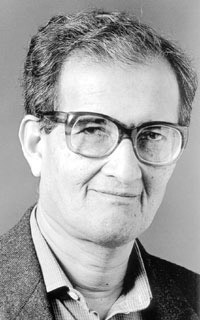
๐ Add birthday reminderAmartya Kumar Sen is an Indian economist and philosopher. Sen has taught and worked in England and the United States since 1972. In 1998, he received the Nobel Prize in Economic Sciences for his contributions to welfare economics. He has also made major contributions to social choice theory, economic and social justice, economic theories of famines, decision theory, development economics, public health, and the measures of well-being of countries.
โจ A detail that surprised us
Amartya Sen was named by Rabindranath Tagore himself, with 'Amartya' meaning 'immortal' or 'heavenly' in Bengali.
1. In 1941, young Amartya Sen entered Patha Bhavana in Santiniketan, a school shaped by Rabindranath Tagore's vision, which rejected exams and embraced global cultural diversity, setting the stage for his unconventional thinking.
2. ๐ Diagnosed with oral cancer during his Presidency College years in 1951 and given only a 15% chance to live five years, Sen survived through radiation treatment, a fight that coincided with his academic excellence topping Cambridge's economics list in 1955.
3. From 1972, Sen built his career across England and the United States, holding positions at London School of Economics, Oxford, and Harvard, where he uniquely combined economics and philosophy, culminating as the Thomas W. Lamont University Professor.
4. ๐ In 1998, Sen won the Nobel Prize in Economic Sciences for demonstrating that famines are not caused solely by food shortages but by failures in entitlements and social arrangements, radically changing famine prevention policies worldwide.
5. As Master of Trinity College, Cambridge from 1999 to 2004, Sen was the first Indian to lead an Oxbridge college, a position that highlighted his bridging of cultures and academic fields.
6. ๐ Senโs 1999 book, Development as Freedom, argued that economic development must expand individual freedoms, influencing international development agenciesโ approach to poverty.
7. In 2020, the German Peace Prize recognized his scholarship combating social inequality in education and healthcare, underscoring his ongoing influence beyond economics into global justice.
8. โ How did Senโs early experiences in Bengalโs turbulent mid-20th century shape his lifelong focus on social justice and welfare economics?
Awards & Honours
- ๐ Bharat Ratna
๐ One thing most people don't know
In 1951, while a student at Presidency College, Sen was diagnosed with oral cancer and given only a 15% chance of surviving five years, yet he overcame this with radiation treatment and continued to excel academically.
๐ผ๏ธ Through the Years
๐ท No photos yet
๐ The Journey
๐๏ธ Discoveries
"Development requires the removal of major sources of unfreedom: poverty as well as tyranny, poor economic opportunities as well as systematic social deprivation."
โ Amartya Sen
๐ฅ Speeches & Recordings
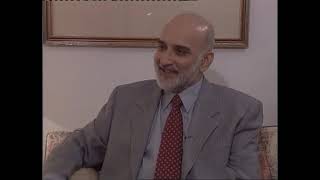
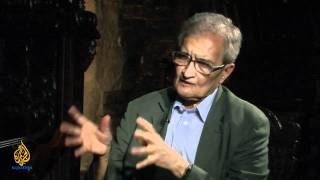
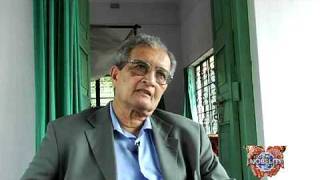
IN CONVERSATION- AMARTYA SEN
YouTube๐ Curated Sources
๐ฑ What changed because of them
Sen transformed the understanding of famines by showing they result from social and economic failures, not just food scarcity, which reshaped humanitarian aid and policy. His concept of development as freedom influenced international bodies like the UN Development Programme to adopt broader measures of human welfare. His leadership at Trinity College opened doors for Indian scholars in global academia, while his interdisciplinary work bridged economics and philosophy in new ways.
๐ฌ Social Buzz
๐ฆ
What are people saying about Amartya Sen?
Found a post from a historian, journalist or notable voice? Share it here and help tell their story. ๐ฎ๐ณ